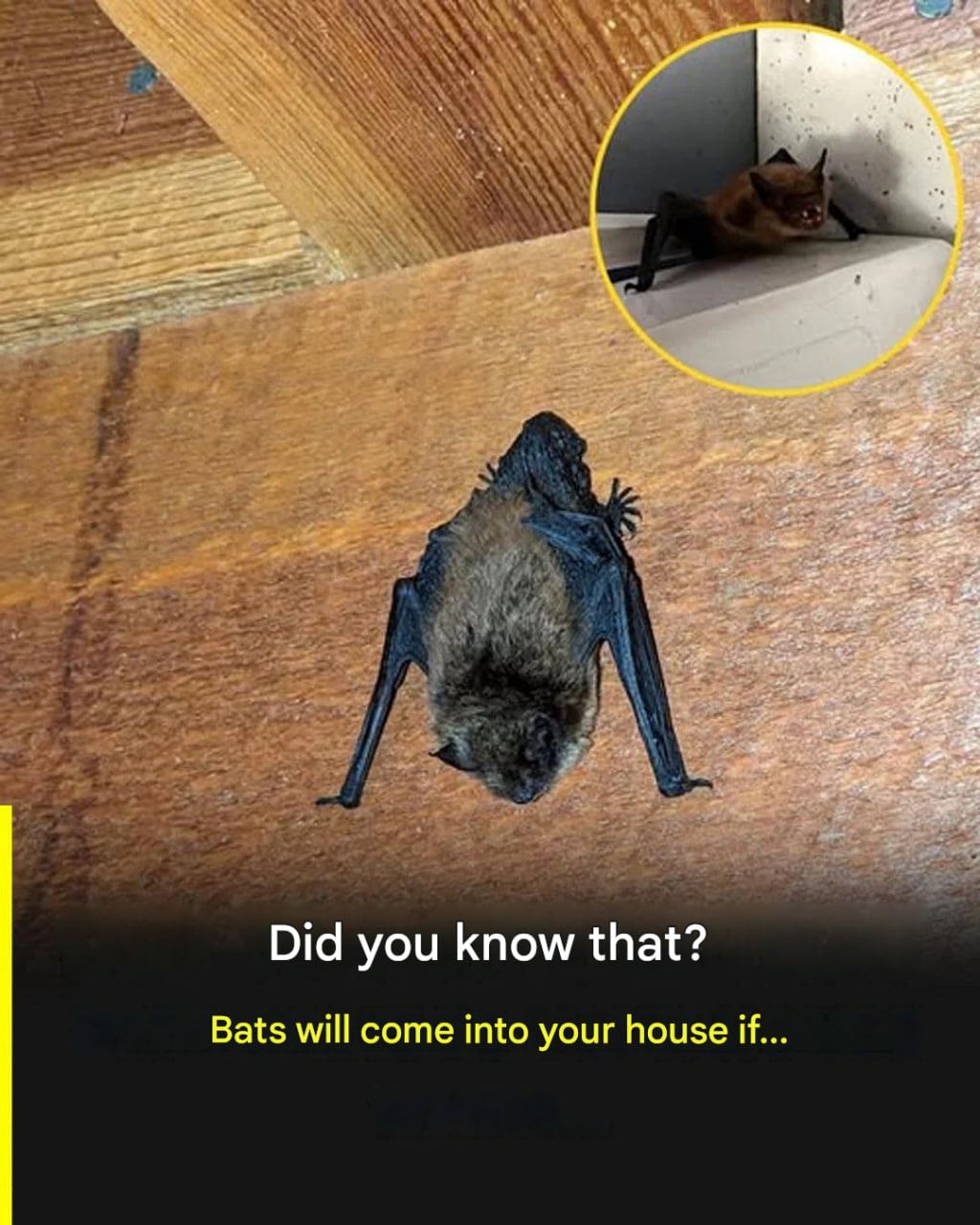
The appearance of a bat in the house often triggers surprise, concern, and curiosity. Many people immediately wonder: Is it just a coincidence, or is there a deeper meaning behind it? Over time, various beliefs have attempted to interpret these situations symbolically, but science offers a much clearer answer based on the natural behavior of these animals.
From a biological point of view, the presence of a bat in the house is not due to mysterious intentions, but to specific environmental factors.
One of the most common reasons is nighttime disorientation.
Bats use a system called echolocation, which allows them to navigate in the dark by emitting sounds and interpreting their echoes. However, artificial light, reflective surfaces, or open windows can disrupt their orientation and inadvertently lead them into enclosed spaces.
Another common factor is the search for food.
Many bats feed primarily on insects, so the lighting in a house can attract mosquitoes and other small creatures. While searching for this food source, a bat may unintentionally enter the house. In such cases, its presence is simply a natural survival behavior.
It is also possible that the bat is looking for temporary shelter.
Sudden weather changes, such as rain or strong winds, can cause bats to seek sheltered roosting places. Human dwellings, with their dark and quiet corners, can act as suitable shelters under certain circumstances. Furthermore, small openings in roofs, ventilation shafts, or cracks can serve as entry points, especially in urban areas where bats often live near humans.
Despite these scientific explanations, the collective imagination has given rise to numerous symbolic interpretations surrounding bats. In some cultures, bats are associated with good luck, prosperity, or positive change. In other traditions, they represent the unknown or are surrounded by negative myths and misunderstandings. However, it is important to clarify that there is absolutely no scientific evidence that a bat entering a house has any supernatural or spiritual significance.
As far as safety is concerned, most situations do not pose a direct risk if handled carefully.
The most important recommendation is to avoid direct contact, remain calm, and facilitate the bat’s escape by opening doors or windows. It is also advisable to keep children and pets away to prevent incidents. Although bats can transmit diseases in rare cases, the risk is very low as long as they are not touched.
Aside from the negative perceptions often associated with them, bats play a fundamental role in maintaining ecological balance.
They are important allies in pest control, as they devour enormous numbers of insects every night. Furthermore, they contribute to vital processes such as pollination and seed dispersal, thus helping to maintain diverse ecosystems.
In this context, a bat’s visit to a house should be understood as a natural and usually random occurrence. It is neither a hidden sign nor a mysterious message, but simply the result of the interaction between the animal and its environment. Understanding this behavior allows us to replace fear with knowledge and appreciate the importance of these species in nature.
Ultimately, the presence of a bat in the house, far removed from myths and popular beliefs, can be explained by simple and natural causes. This knowledge not only helps us react appropriately to such situations but also fosters a deeper understanding of the role bats play in our shared world.