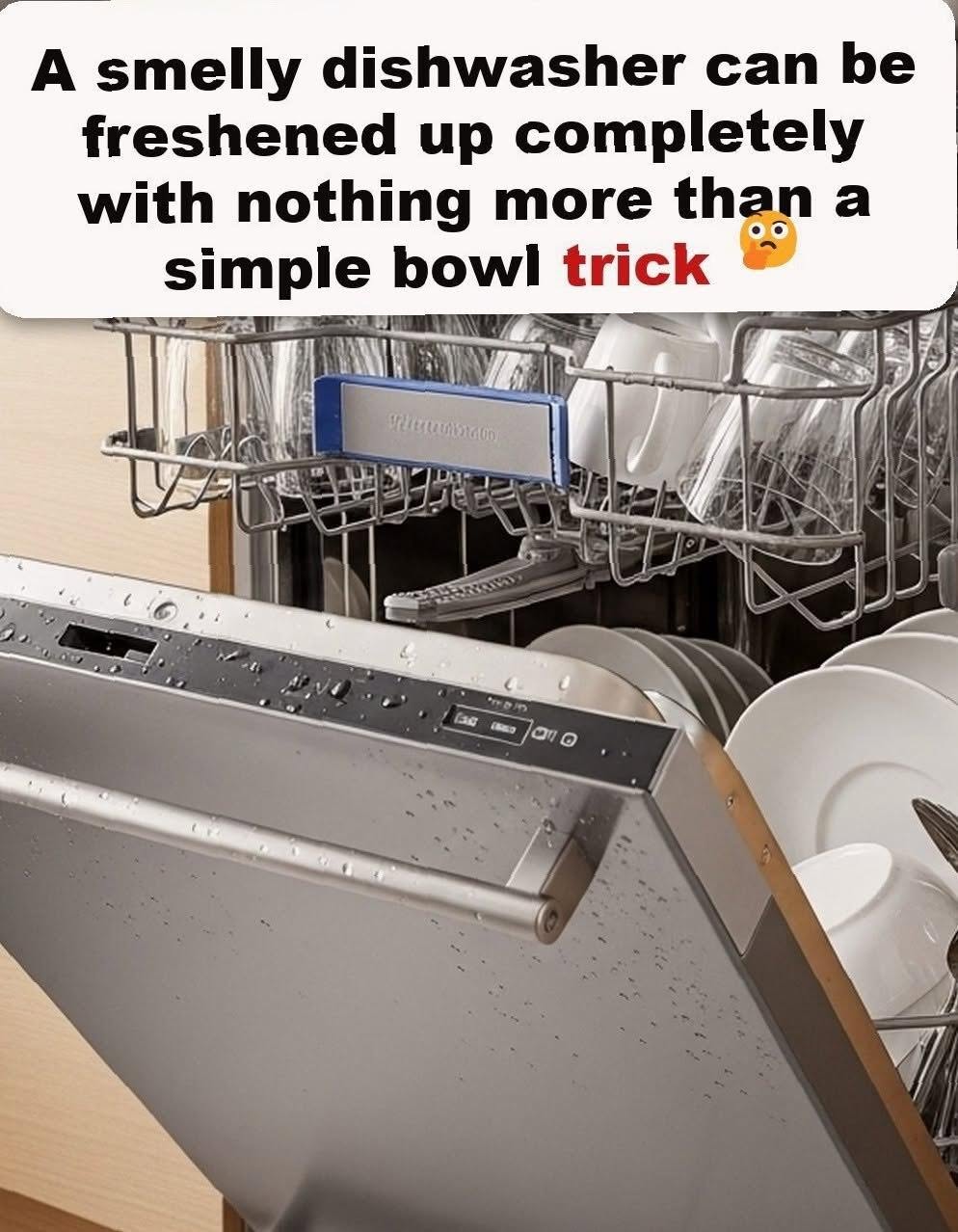
Have you ever opened your dishwasher expecting the smell of fresh, clean dishes, only to be greeted by a sour, musty, or unpleasant odor? You are not alone. Even a dishwasher that looks spotless on the outside can develop lingering smells caused by trapped food particles, grease, standing water, and residue hidden in places that are easy to overlook.
Fortunately, there is a simple cleaning technique that can help freshen your dishwasher without requiring expensive products or complicated procedures. It is often called the bowl method, and it involves placing a bowl containing an appropriate cleaning ingredient inside the dishwasher and running a cycle.
Although this trick is popular because of its simplicity, the best results come from understanding what causes dishwasher odors, which ingredients are safe to use, and why the bowl method should be combined with regular maintenance.
What Is the Dishwasher Bowl Method?
The bowl method is a simple approach to freshening a dishwasher using a bowl of white vinegar placed inside the empty appliance.
The basic idea is to allow the vinegar to be exposed to the dishwasher’s warm water and circulating air during a cleaning cycle. Vinegar’s acidity can help loosen some mineral deposits and certain types of residue, while its own smell dissipates as it dries.
However, vinegar is not a complete dishwasher cleaner. It cannot reliably remove every type of grease, eliminate all odor-causing buildup, or replace the cleaning action of a dishwasher detergent.
It is also important to check your dishwasher manufacturer’s instructions before using vinegar. Some manufacturers advise against it because repeated exposure to acidic substances may damage certain rubber seals, hoses, or other components.
If your owner’s manual prohibits vinegar, use a dishwasher cleaner specifically approved for your appliance instead.
Why Does Your Dishwasher Smell Bad?
Before trying to eliminate the smell, it helps to understand where it comes from. Several common problems can cause unpleasant dishwasher odors.
1. Food Particles Trapped in the Filter
One of the most common causes of a smelly dishwasher is a dirty filter.
Small pieces of food, grease, and other debris can accumulate in the filter at the bottom of the appliance. As this material breaks down, it may produce a strong, unpleasant smell.
Even if your dishes appear clean, a clogged or dirty filter can allow odors to linger inside the machine.
2. Grease and Detergent Residue
Over time, grease and detergent residue can collect along the door edges, around the seals, and in other areas where water does not circulate as effectively.
This buildup can trap odors and make the dishwasher smell stale, particularly when the door remains closed between uses.
3. Standing Water
A small amount of water may remain in certain parts of a dishwasher after a cycle, depending on the appliance’s design. However, excessive standing water can indicate a drainage problem.
If water containing food debris remains in the bottom of the machine, it can contribute to unpleasant smells.
4. A Dirty Drain Hose or Drain Connection
Sometimes, the odor does not originate inside the dishwasher itself. A drainage hose that is improperly installed, clogged, or connected incorrectly may allow unpleasant smells to enter the appliance.
If cleaning the filter and interior does not solve the problem, the drainage system may need inspection.
5. Mold or Mildew Around Seals
Moisture can remain around the rubber gasket, door edges, and other damp areas after a wash cycle.
When these areas are not cleaned regularly, grime and mildew may develop, producing a musty smell.
How to Try the Bowl Method Safely
If your dishwasher manufacturer permits the use of vinegar, the following steps can help you freshen the appliance.
Step 1: Empty the dishwasher.
Remove all dishes, glasses, utensils, and racks containing loose debris. An empty dishwasher allows the cleaning cycle to reach its interior surfaces without food or dishware interfering.
Step 2: Inspect and clean the filter.
Check your owner’s manual for instructions on removing the filter. Rinse it under warm running water and use a soft brush to remove trapped food and grease.
Avoid sharp tools that could damage the filter.
Step 3: Wipe the interior.
Use a damp cloth to clean the door edges, accessible seals, and areas around the detergent dispenser. Remove visible food particles and greasy residue.
Step 4: Place a dishwasher-safe bowl on the upper rack.
If vinegar is permitted by the manufacturer, pour approximately one cup of white vinegar into a suitable bowl and place it securely on the upper rack of the empty dishwasher.
Do not pour vinegar directly into the detergent dispenser unless the manufacturer specifically instructs you to do so.
Step 5: Run an appropriate cycle.
Select a suitable hot-water cycle according to your appliance’s instructions. Do not add dishwasher detergent to this cleaning cycle unless the product instructions recommend it.
Step 6: Allow the dishwasher to dry.
When the cycle finishes, open the door slightly if it is safe and practical to do so. Allowing moisture to escape can help reduce musty smells between uses.
If your dishwasher manual advises against vinegar, skip this method and use a compatible commercial dishwasher-cleaning product according to its label.
Does the Bowl Method Really Work?
The bowl method may help freshen a dishwasher and loosen some mineral residue, but its effectiveness depends on the source of the smell.
If the odor comes from light residue or mineral buildup, a cleaning cycle may help. If the problem comes from food trapped in the filter, the filter still needs to be cleaned.
Similarly, vinegar will not fix a blocked drain, a damaged hose, or a mechanical problem.
For many households, the most effective approach is not the bowl method alone. It is a combination of filter cleaning, interior wiping, proper detergent use, and occasional maintenance with a dishwasher cleaner approved for the appliance.
Important Mistakes to Avoid
A few common cleaning mistakes can make dishwasher maintenance less effective or even damage the appliance.
Do not mix vinegar with bleach. Mixing these substances can release dangerous chlorine gas. Never combine cleaning chemicals unless their labels explicitly confirm that doing so is safe.
Do not use excessive amounts of vinegar. More vinegar does not necessarily mean better cleaning. Repeated or concentrated exposure may damage certain appliance materials.
Do not substitute dishwashing liquid for dishwasher detergent. Ordinary hand-washing liquid can create excessive foam and cause leaks or operational problems.
Do not ignore persistent drainage problems. If water remains pooled in the bottom of the dishwasher or the odor resembles sewage, investigate the drain connection or contact a qualified technician.
Do not forget the door seals. These areas can collect grease and grime even when the main dishwasher compartment looks clean.