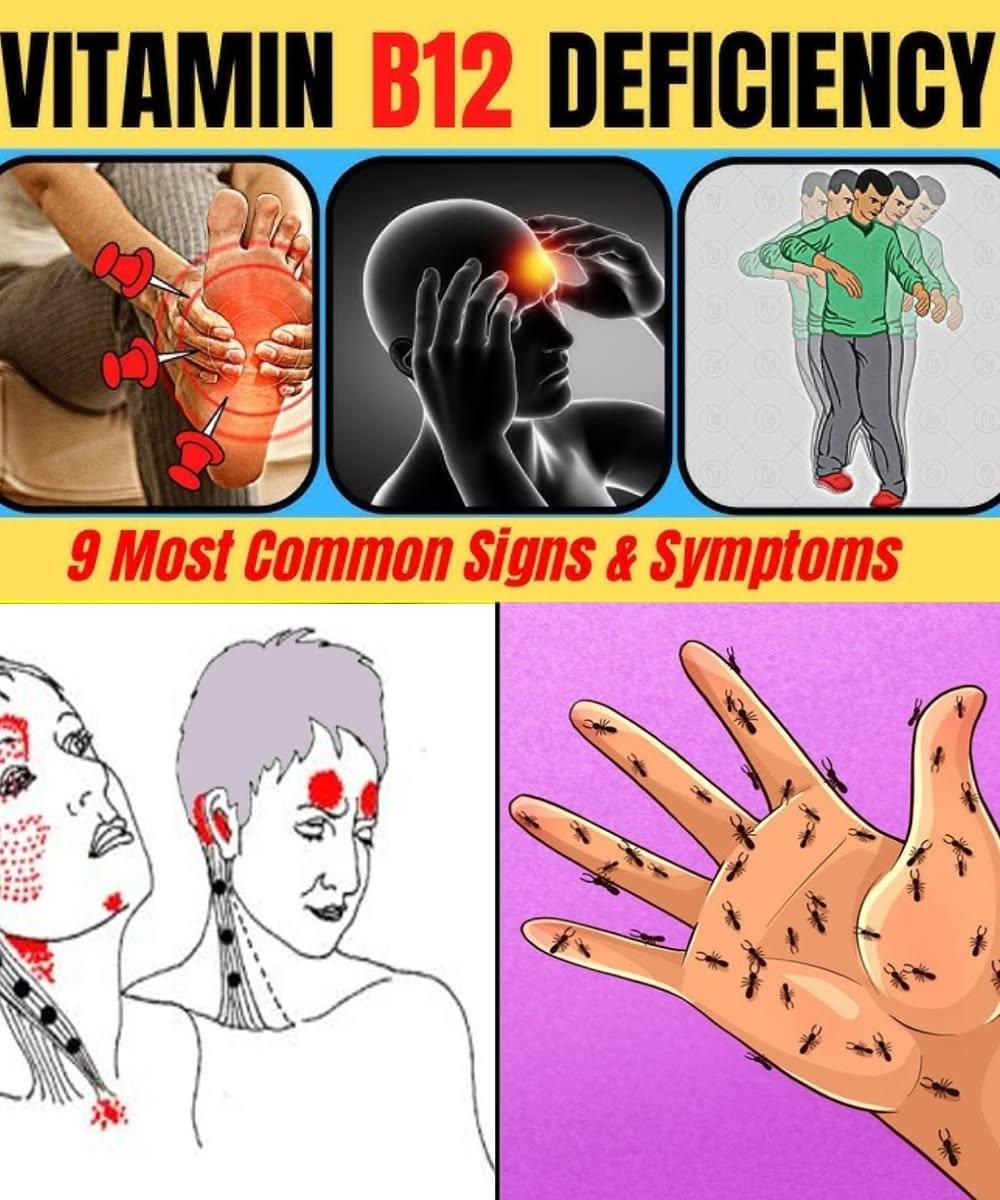
Feeling unusually tired, noticing tingling in your feet, or struggling with your memory can have many explanations. One possible cause is vitamin B12 deficiency—a condition that can affect your blood and nervous system.
These symptoms do not confirm a deficiency on their own. However, recognizing persistent changes and seeking medical assessment can help prevent complications.
1. Persistent Tiredness and Weakness
Vitamin B12 deficiency can cause megaloblastic anemia, which affects red blood cells. You may feel unusually tired or weak, even when your daily routine has not changed.
Pale skin anda noticeable pounding or racing heartbeat can also occur. Fatigue alone has many possible causes, so testing is more useful than guessing.
2. Tingling or Numbness
Pins and needles or numbness in the hands and feet can be signs of nerve involvement. Importantly, B12-related nerve problems can develop even without anemia.
Persistent or unexplained numbness deserves medical attention rather than being dismissed as a circulation problem or a normal part of aging.
3. Problems With Balance or Coordination
Vitamin B12 deficiency can affect balance, coordination, and muscle strength. You mightfeel unsteady or find walking more difficult than usual.
These symptoms can have other neurological causes, so arrange a medical assessment rather than assuming that a vitamin supplement will solve them.
4. Memory, Thinking, or Mood Changes
Poor memory, difficulty understanding information, confusion, and changes in mood can occur with B12 deficiency. Depression is another possible symptom.
These changes are not specific to low B12. A healthcare professional can evaluate your symptoms alongside your medical history and blood tests.
5. A Sore Tongue or Mouth Ulcers
A sore, red tongueor mouth ulcers may occur with vitamin B12 or folate deficiency. Although mouth discomfort often has other explanations, recurring symptoms—particularly alongside fatigue or tingling—are worth discussing with a clinician.
Who May Be at Risk?
A deficiency can develop when your diet provides too little B12 or when your body cannot absorb it properly. Possible causes include:
A vegan diet without adequate B12-fortified foods or supplements.
Pernicious anemia, which interferes with B12 absorption.
Certain stomach or intestinal operations.
Long-term use of medicines such as metformin or proton pump inhibitors.
Do notstop prescribed medication on your own; discuss any concerns with your prescriber.
How Is It Diagnosed and Treated?
Diagnosis involves reviewing symptoms and blood tests, including vitamin B12 levels and checks for anemia. Further testing may help identify the cause.
Treatment may involve B12 tablets or injections. The appropriate approach and duration depend on the cause and whether the nervous system is affected. Food sources include fish, meat, eggs, dairy products, and foods fortified with B12, but dietary changes alone may not correct an absorption problem.
When to Seek MedicalAdvice
Arrange an appointment if you have persistent symptoms, especially numbness, balance difficulties, or changes in thinking. Early assessment matters: although many symptoms improve with treatment, some neurological damage can become permanent if deficiency remains untreated.
This article is for general information and does not replace medical diagnosis or personalized treatment.