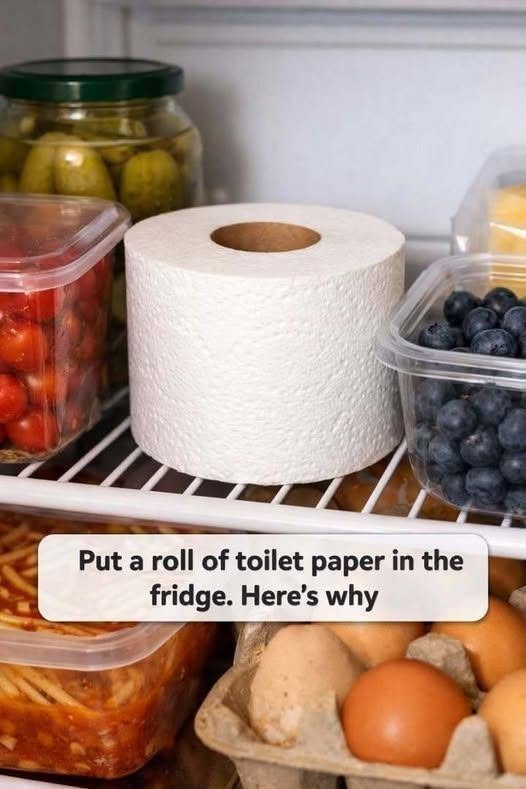
At first glance, placing a brand-new roll of toilet paper next to your milk and vegetables sounds like a strange mistake. Yet this viral housekeeping trick has quietly gained popularity among home organizers and frugal homeowners for one surprisingly practical reason: paper pulp acts as a natural moisture absorber and odor trap inside a refrigerator.
While it isn’t a replacement for regular deep cleaning, tucking an unscented roll of toilet paper on a fridge shelf can help tackle two everyday kitchen annoyances—lingering food smells and excess condensation.
How the Toilet Paper Fridge Trick Works
Toilet paper is made from tightly wound, porous cellulose fibers specifically engineered to absorb liquid quickly. When placed inside the closed environment of a refrigerator, that structure works in two ways:
Absorbs Excess Humidity and Condensation: Every time you open the fridge door, warm, humid kitchen air rushes inside and condenses on cold surfaces and produce drawers. Excess moisture speeds up mold growth and causes fruits, vegetables, and herbs to spoil faster. A dry roll of toilet paper naturally wicks up ambient moisture from the air.
Traps Airborne Food Odors: Many stubborn fridge smells—from onions, garlic, leftover fish, and strong cheeses—travel through microscopic moisture droplets circulating in the cold air. By absorbing that damp air, the porous paper helps capture and dull unpleasant odors before they cling to other foods.
How to Try It Safely and Effectively
If you want to test this trick in your own refrigerator, follow a few simple rules to keep things hygienic and effective:
Use a Brand-New, Unscented Roll: Always start with a fresh roll straight from the package. Avoid scented or lotion-infused toilet paper, as synthetic fragrances can transfer to butter, milk, and uncovered produce.
Place It Toward the Back Corner: Set the roll upright on a middle or lower shelf toward the back of the fridge, where air circulation is steady and it won’t get bumped by heavy jars or wet items.
Boost Its Odor-Fighting Power (Optional): For extra freshness, dissolve 1 to 2 tablespoons of baking soda in a small splash of water and lightly dampen the cardboard tube or outer edge of the roll before placing it on a small saucer in the fridge.
Replace It Every 3 to 4 Weeks: Once the roll feels slightly damp or limp, remove it and replace it with a fresh one. (Tip: Don’t put a fridge-dampened roll back in the bathroom—use it for wiping down spills or trash can liners instead.)
How It Compares to Classic Fridge Deodorizers
While toilet paper works well in a pinch—especially if you run out of baking soda—it helps to know how it stacks up against traditional pantry staples:
Deodorizer Best For How Long It Lasts
Roll of Toilet Paper Absorbing excess moisture and mild food odors 3–4 weeks
Open Box of Baking Soda Neutralizing acidic and basic food smells 1–3 months
Activated Charcoal Pouch Heavy-duty odor elimination and humidity control 3–6 months
Dry Coffee Grounds Masking strong smells with a warm coffee aroma 2–3 weeks
Don’t Forget the Root Cause of Fridge Odors
A roll of toilet paper is a clever, low-cost helper for keeping air drier and fresher between cleanings, but no absorbent trick can outwork forgotten leftovers. Checking expiration dates weekly, storing cut onions and garlic in airtight glass containers, and wiping down sticky shelf spills promptly will keep your refrigerator smelling clean all year long.