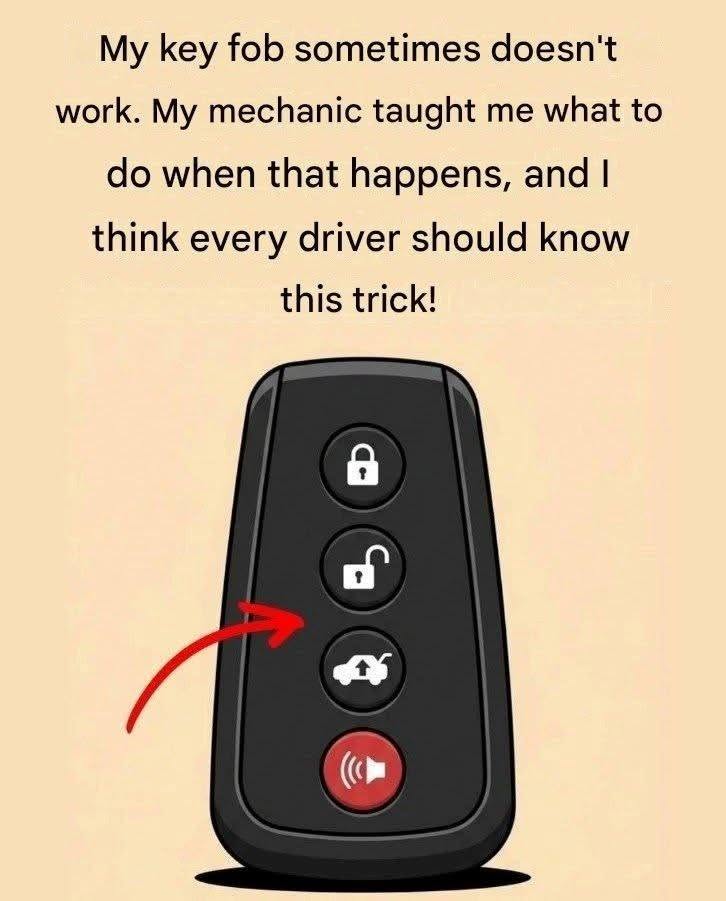
Standing in a parking lot clicking a dead key fob is one of the most frustrating moments any driver can face. Fortunately, mechanics and automotive technicians point out that a completely unresponsive remote rarely leaves you stranded—most modern key fobs come with built-in backup features that work even when the internal coin battery is completely dead.
Before calling a tow truck or locksmith, try these proven mechanic-approved tricks to unlock your doors and start your engine.
1. Extract the Hidden Emergency Key Blade
Almost every modern push-to-start key fob houses a physical metal key tucked neatly inside its casing.
How to find it: Look at the back or bottom edge of the fob for a small sliding latch, button, or release tab. Push or slide the latch while pulling on the keyring loop to slide out the physical blade.
How to use it: On many newer cars, the keyhole on the driver’s door handle is hidden beneath a small plastic cap. Insert the tip of the physical key into the slot at the bottom of that cap, gently pop the cover off, and unlock the door manually. (Note: Opening the door this way may trigger your car alarm until you start the engine—that is completely normal.)
2. Press the Start Button Using the Key Fob Itself
Once you are inside the car, pressing the “Start/Stop” button with your finger won’t work if the fob’s battery is dead. However, key fobs contain a passive RFID transponder chip that does not require battery power—it only needs to be within an inch or two of the vehicle’s receiver coil.
The Mechanic’s Trick: Hold the dead key fob directly against the Push-to-Start button (literally pressing the button with the nose or back of the fob) while pressing your foot firmly on the brake pedal.
Alternative Locations: On some models (like certain Ford, Hyundai, Kia, or Nissan vehicles), the backup sensor is located inside the center console cupholder, inside the glove box, or on the right side of the steering column where a traditional ignition cylinder would sit.
3. The “Chin Trick” to Boost a Weak Signal
If your fob battery isn’t totally dead—just too weak to reach your car across a crowded parking lot—you can actually use your own body to amplify its range.
How it works: Hold the key fob directly underneath your chin, open your mouth slightly, and press the unlock button. The fluid inside your head acts as a makeshift radio conductor, turning your skull into a natural signal booster that can noticeably extend the fob’s range.
4. Rule Out Radio Interference
Sometimes your key fob isn’t broken at all—its signal is simply being drowned out. High-voltage power lines, cell towers, airport radar, or even a malfunctioning wireless charger inside your own car can temporarily jam the radio frequency between your fob and vehicle. If your remote suddenly fails in one specific spot, walk right up to the driver’s window or use the backup start-button method above to bypass wireless interference.
Quick Maintenance Tip: Replace the Battery Before It Dies Completely
Most key fobs use an inexpensive CR2032 or CR2025 lithium coin battery that costs just a few dollars. If you notice your dashboard displaying a “Key Battery Low” warning—or you have to press the buttons two or three times before the doors respond—pop the fob casing open with a small flathead screwdriver or coin and swap in a fresh battery right away.