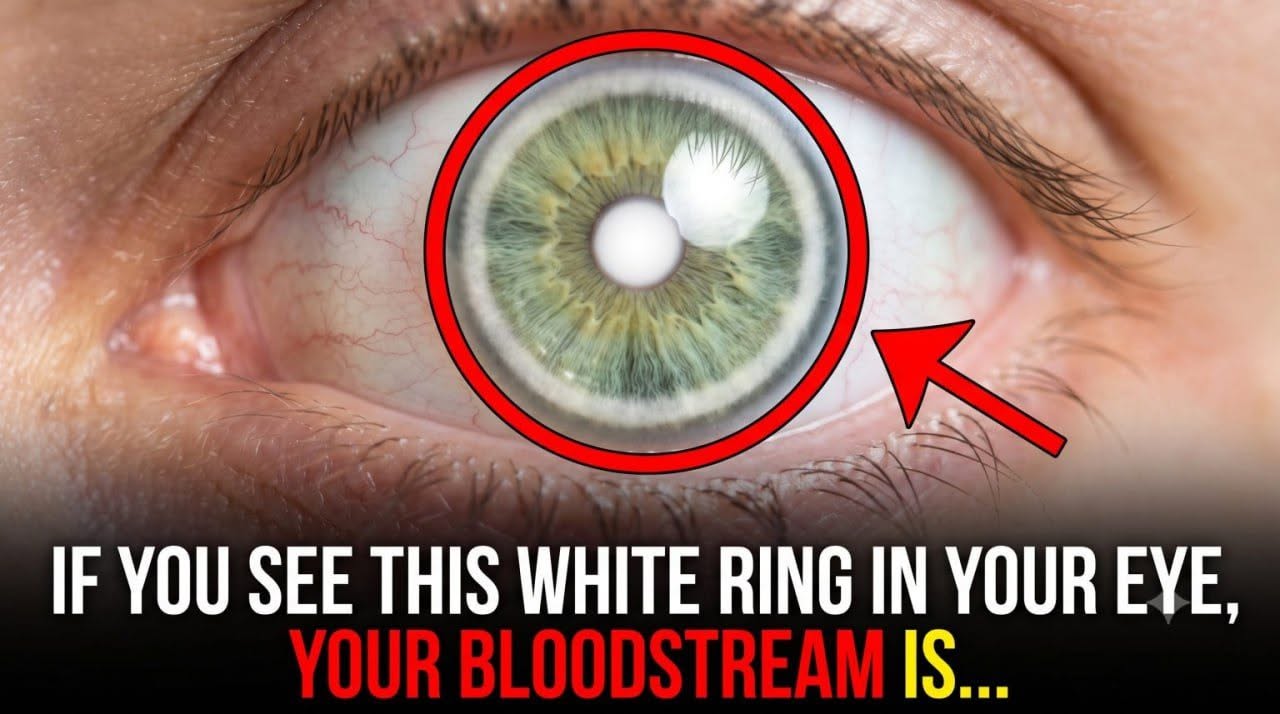
They say the eyes are the windows to the soul, but in modern medicine, they are actually the windows to your cardiovascular system. Eye doctors can detect dozens of systemic diseases simply by looking into your eyes, from diabetes and high blood pressure to autoimmune disorders. But there is one specific, highly visible warning sign that you don’t need a microscope to see. It appears right on the surface of the eye, and if you spot it before the age of 45, it is a medical red flag that demands immediate attention.
If you look closely at the colored part of your eye (the iris) and notice a distinct white, light gray, or blueish halo forming around the outer edge, you are observing a condition known as Arcus Senilis (or Arcus Juvenilis when it appears in younger people).
What Exactly is the White Ring?
To the naked eye, it looks as though the color of the iris is fading at the edges, or that a milky white ring has been painted onto the cornea. However, this ring is not a change in pigmentation, nor is it a cataract affecting your vision.
The cornea is the clear, dome-like surface that covers the front of the eye. It is unique because it contains no blood vessels; it relies entirely on the fluid in the eye and the surrounding capillaries at the very edge (the limbus) for nourishment. The white ring of Arcus Senilis is actually composed of solid lipid deposits—specifically, cholesterol and triglycerides—that have leaked from the blood vessels and become trapped in the peripheral tissue of the clear cornea.
Over time, these fat deposits accumulate, forming a continuous, opaque halo that encircles the entire iris.
Age vs. Danger: When to Worry
The medical term “Arcus Senilis” translates roughly to “bow of the elderly.” As the name suggests, this condition is incredibly common in senior citizens. In fact, by the time people reach the age of 80, nearly 100% of them will have some degree of this white ring. In older adults, it is generally considered a benign, normal sign of aging as the blood vessels naturally become more permeable over decades.
However, the danger arises when this exact same lipid ring appears in younger adults—specifically those under the age of 45. When it occurs in youth or middle age, doctors refer to it as Arcus Juvenilis.
When a young, seemingly healthy person develops a visible ring of fat in their eye, it strongly indicates that their bloodstream is dangerously overloaded with lipids. It is considered one of the primary clinical markers for Familial Hypercholesterolemia (FH), a genetic condition that causes the liver to struggle to recycle LDL (bad) cholesterol.
People with FH have astronomically high cholesterol levels from birth. Because the cholesterol has nowhere to go, it begins depositing itself in the tissues, including the eyes and, much more dangerously, the walls of the coronary arteries. If left unchecked, young adults with Arcus Juvenilis are at an extremely high risk for premature heart attacks and strokes, often striking in their 30s or 40s.
The Action Plan: What to Do If You See the Halo
Because Arcus Senilis does not affect vision or cause any physical pain, it is incredibly easy to ignore. Many people simply assume their eye color is changing as they get older. If you or someone you know under the age of 45 develops this ring, action must be taken.
Demand a Comprehensive Lipid Panel: Do not wait for an annual physical. Schedule an appointment and explicitly ask for a full fasting lipid panel to check your Total Cholesterol, LDL, HDL, and Triglyceride levels.
Cardiovascular Screening: Because the presence of the ring strongly suggests that lipids are aggressively depositing into tissues, you should request an evaluation of your cardiovascular health, including an ultrasound of the carotid arteries or a cardiac CT scan to check for internal plaque buildup.
Aggressive Dietary and Medical Management: If diagnosed with severe hyperlipidemia or FH, diet and exercise alone are rarely enough, as the issue is genetic. You will likely need to work closely with an endocrinologist or cardiologist to begin statin therapy or PCSK9 inhibitors to rapidly clear the lipids from your bloodstream and halt arterial damage.
The human body is an extraordinary machine that desperately tries to alert us when things go wrong. If you see a white halo forming around your iris, realize that your body is physically pushing excess fat out into your eye tissue because your bloodstream is overflowing. It is a visual alarm bell—make sure you listen to it.