When we think about checking our respiratory or cardiovascular health, we usually picture stethoscopes, blood pressure cuffs, or running on a treadmill. We are taught to look out for chest pain, persistent coughs, or shortness of breath. But what if one of the most accurate, immediate indicators of severe oxygen deprivation is hiding right at the tips of your fingers?
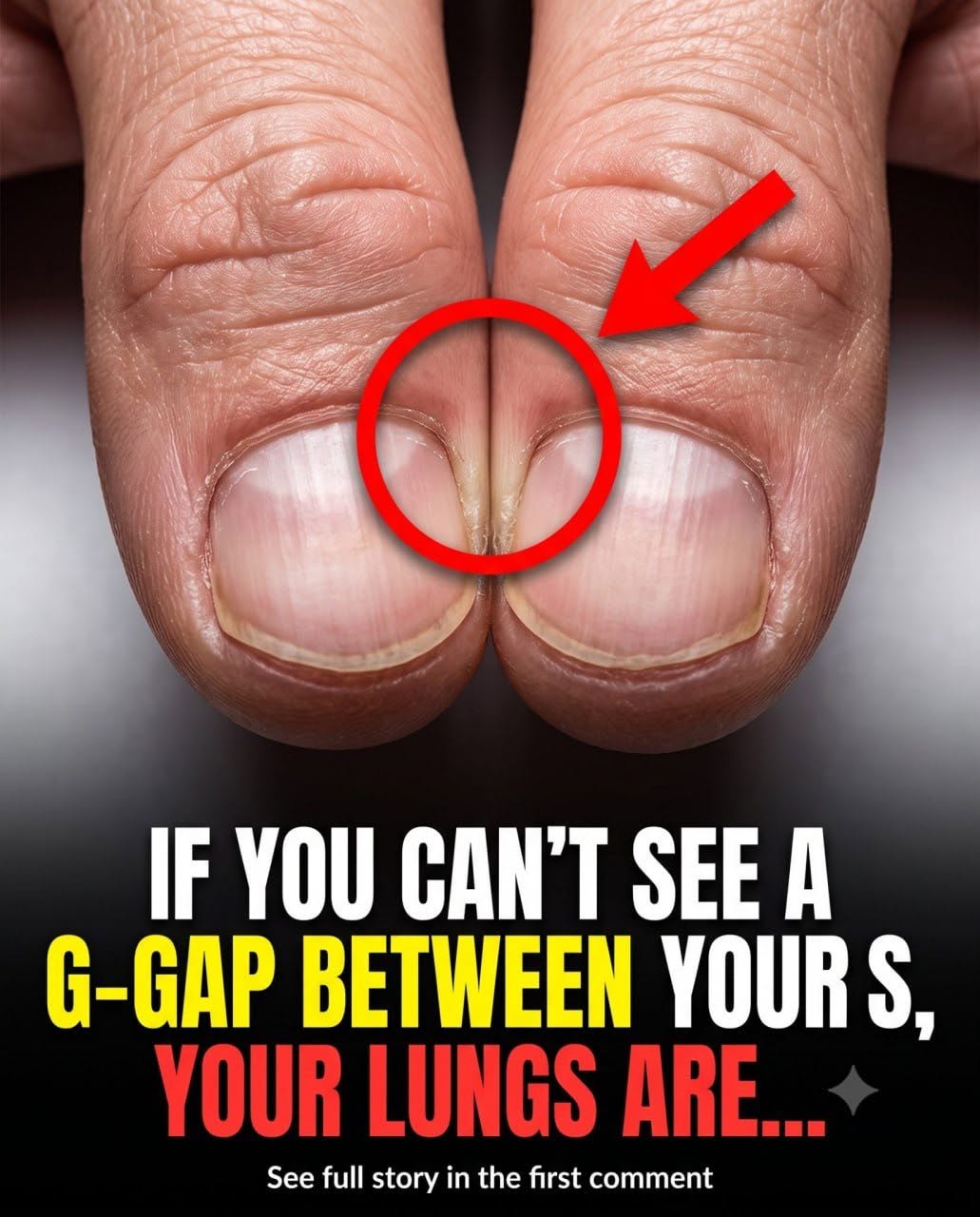
Medical professionals across the globe rely on a two-second visual assessment known as the “Schamroth Window Test.” By simply pressing your two index fingernails together, you can uncover a startling biological warning sign that points directly to the health of your lungs and heart. If you cannot see a tiny, diamond-shaped gap of light between your cuticles, your body is sounding a massive alarm.
What is Fingertip Clubbing?
The phenomenon where the ends of the fingers become enlarged, bulbous, and the nails curve dramatically downward is known clinically as “nail clubbing” or “digital clubbing.”
Interestingly, this is not a new medical discovery. The condition was first documented over 2,400 years ago by Hippocrates, the ancient Greek physician, who noticed that patients suffering from severe lung infections often developed these swollen, drumstick-like fingertips. Because of this, it is sometimes still referred to as “Hippocratic fingers.”
Despite its ancient origins, the biological mechanism behind clubbing is deeply rooted in modern vascular science. When your body is not getting enough oxygen—a state known as chronic hypoxia—your blood vessels undergo extreme stress.
The Biological Trigger: VEGF and Hypoxia
To understand why the fingertips swell, we have to look at how the body attempts to save itself when oxygen levels plummet.
When tissues are starved of oxygen due to a failing heart or struggling lungs, the body panics. It releases massive amounts of a protein called Vascular Endothelial Growth Factor (VEGF). The primary job of VEGF is to stimulate the growth of brand new blood vessels, a process called angiogenesis. The body is essentially trying to build a wider highway system to deliver whatever small amount of oxygen is left in the blood to the peripheral tissues.
Because the fingertips are at the very end of the circulatory line, they become hyper-saturated with this growth factor. The blood vessels in the nail beds dilate and multiply rapidly, causing the soft tissue beneath the nail plate to swell, thicken, and become spongy. As the tissue expands, it physically pushes the fingernail upward and forces it to curve sharply downward over the tip of the finger, completely obliterating the normal angle of the cuticle.
The Diseases Connected to Clubbing
Digital clubbing is rarely a harmless anatomical quirk. If you develop clubbed fingers, it is almost always a secondary symptom of a major systemic illness. The most common culprits include:
Lung Cancer: Clubbing is heavily associated with non-small cell lung cancer. In fact, nearly 30% of patients diagnosed with this type of cancer exhibit nail clubbing before they ever develop a cough.
Idiopathic Pulmonary Fibrosis: A severe, progressive disease where the lung tissue becomes thick and scarred, drastically reducing the lungs’ ability to transfer oxygen into the bloodstream.
Congenital Heart Defects: Heart conditions present from birth that cause a mixing of oxygen-rich and oxygen-poor blood can trigger chronic clubbing.
Cystic Fibrosis and Bronchiectasis: Chronic, heavy infections that permanently damage the airways and reduce blood oxygen saturation over time.
How to Perform the Schamroth Window Test
Dr. Leo Schamroth, a renowned South African cardiologist, popularized this simple diagnostic test after he developed clubbing himself due to a severe heart condition. You can perform this test right now in under five seconds:
Hold your hands up in front of your face.
Curl the fingers of both hands inward, as if making a half-fist.
Bring your two index fingers together so that the fingernails are touching face-to-face.
Make sure the topmost knuckles and the cuticles are pressed firmly against each other.
Hold your hands up to a light source.
Analyzing Your Results
The Healthy Result: If your lungs and vascular system are healthy, the natural angle of your nail beds will create a tiny, distinct, diamond-shaped gap of light right at the base of the nails (near the cuticles).
The Warning Sign (Positive Test): If your fingertips are clubbed, the swollen tissue fills in that natural angle. When you press your nails together, there will be absolutely no gap of light. The nails will touch completely from top to bottom, forming a wide “V” shape.
Your Next Steps
If you fail the Schamroth window test, it is critical that you do not ignore it. While it can occasionally be a harmless genetic trait inherited from your parents, sudden onset clubbing is a major medical red flag.
Schedule an appointment with your primary care doctor immediately. Request a comprehensive metabolic panel, a chest X-ray to look for lung abnormalities, and an echocardiogram to assess your heart valves and pumping efficiency. Catching chronic hypoxia early through this simple finger test can be the key to stopping a life-threatening illness in its tracks.