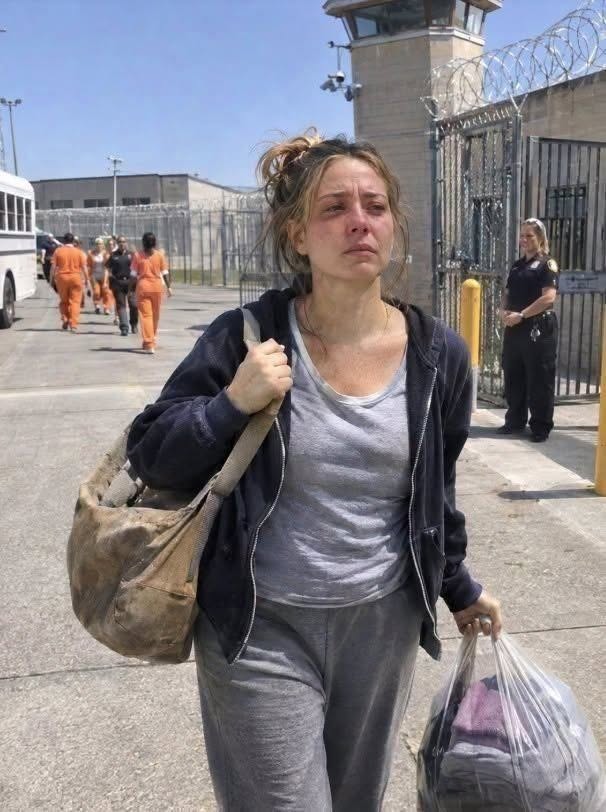
The following morning, I called Russell Keane from Opal’s kitchen.
My hands shook so badly that I dialed the wrong number the first time.
When he answered, his voice was calm and businesslike.
“Russell Keane.”
“Mr. Keane, my name is Rebecca Hale. Opal Hargrove gave me your number.”
There was a brief silence.
“How is Opal?”
“She’s doing well.”
“Good. What can I do for you, Ms. Hale?”
I looked toward the dining room, where Opal was reading the newspaper.
“I was convicted of financial fraud almost four years ago. I believe my husband and sister framed me. Mrs. Hargrove thought you might be able to look at the records.”
Russell didn’t immediately respond.
Then he asked, “Do you have your trial transcripts?”
“Not all of them.”
“Bank statements?”
“Some.”
“Original business records?”
“A few copies I saved before my arrest.”
“Then bring everything you have.”
I swallowed.
“Mr. Keane, I should tell you that I can’t afford an investigator.”
“Opal already mentioned that.”
I closed my eyes.
“Then I’m sorry for wasting your time.”
“Ms. Hale, I haven’t said I won’t help you.”
I gripped the telephone.
He continued.
“I’ll review the available documents without charging you for an initial assessment. If there’s something worth pursuing, we’ll discuss the next steps.”
For a moment, I couldn’t speak.
“Thank you.”
“Don’t thank me yet. Financial records can tell us where money went. They don’t always tell us who committed a crime.”
“I understand.”
“One more thing. Have you told your husband you’re investigating?”
“No.”
“Keep it that way for now. And don’t try to obtain records you’re no longer authorized to access.”
I glanced toward the front window.
The gray sedan wasn’t there.
But I still felt watched.
“There’s something else,” I said.
I told him about the unfamiliar car.
Russell listened carefully.
“Did you get the license plate?”
“Only part of it.”
“Bring your notes. Don’t approach the driver if you see the vehicle again.”
We arranged to meet the following afternoon.
When I hung up, Opal looked over her newspaper.
“Well?”
“He agreed to review my case.”
She folded the paper.
“Then we’d better find that box of records you mentioned.”
I stared at her.
“You really think there’s a chance?”
Opal considered the question.
“I think you’ve spent four years being told that nobody wants to hear your side. That’s reason enough to make certain somebody finally does.”
That evening, I retrieved the documents I’d hidden before my arrest.
A former employee had agreed to keep a sealed storage box for me while I was in prison. After my release, she’d arranged for me to collect it without asking questions.
Inside were old invoices, supplier contracts, several bank statements, and a flash drive containing backup reports from our accounting software.
I’d almost forgotten about the flash drive.
At the time, I had saved those files because I suspected something was wrong with the company’s accounts.
But my trial attorney had focused on the documents prosecutors presented.
He’d argued that Trevor and Monica could have manipulated the records, yet we hadn’t been able to establish how.
Now I wondered whether the answer had been sitting in that box all along.
Russell’s office was in a modest brick building outside downtown Columbus.
He was sixty-two, with silver hair, wire-rimmed glasses, and the patient expression of someone accustomed to listening to complicated explanations.
His office contained two desks, several filing cabinets, and a large whiteboard covered with financial diagrams.
He offered me coffee.
Then he spent nearly three hours examining my records.
He asked about my business.
How I’d started it.
Who controlled the bank accounts.
Who approved payments.
Who had access to the accounting software.
I answered every question.
When I explained that Monica maintained the financial records while Trevor managed supplier relationships, Russell made a note.
“Did either of them have permission to approve transactions in your name?”
“No. Monica could prepare payments, but substantial transfers required my authorization.”
“How was that authorization recorded?”
“Through the accounting system. And for certain transactions, through bank approval procedures.”
“Who controlled your login credentials?”
“I did.”
He looked up.
“Did you ever share your password?”
I hesitated.
“Trevor knew it.”
Russell stopped writing.
“Why?”
“He was my husband.”
He nodded without judgment.
“Did Monica know it?”
“Not that I was aware of.”
He opened one of the backup reports.
“Rebecca, your conviction appears to have depended heavily on transactions recorded as being authorized by you.”
“Yes.”
“But these reports don’t establish that you were physically present when those approvals occurred.”
I leaned forward.
“That’s what I kept telling everyone.”
“Unfortunately, saying someone else could have used your credentials isn’t the same as proving it.”
He pointed to a line on the screen.
“However, these backup files may help us identify discrepancies between the original records and the reports presented at trial.”
My heart began pounding.
“Do you see something?”
“Possibly.”
He turned the monitor toward me.
There were two versions of the same supplier payment.
One showed a payment approval under my username.
The other contained a revision history indicating that the approval information had been modified later.
I stared at the screen.
“Modified by whom?”
Russell adjusted his glasses.
“That’s what we need to determine.”
He leaned back.
“Rebecca, I don’t want to give you false hope. But I do think these records deserve a proper forensic examination.”
I felt tears gathering.
For years, people had looked at those transactions and seen proof of my guilt.
Russell was the first person who looked at them and asked whether they were genuine.
Before I left, I showed him my notes about the gray sedan.
He studied the partial license plate.
Then he asked whether anyone besides Trevor and Monica might have reason to monitor me.
“Not that I know of.”
“Have you received threats?”
“Not directly.”
“Then document anything else you observe. If someone threatens you or trespasses, contact the police.”
He handed back my notebook.
“And Rebecca?”
“Yes?”
“Don’t contact Monica or Trevor until you’ve spoken with a lawyer experienced in post-conviction cases.”
I nodded.
But as I left his office, I couldn’t stop thinking about my sister.
Monica had testified against me.
She’d sat in the courtroom wearing a cream-colored blouse and cried while describing how I’d supposedly manipulated the company accounts.
She’d told the jury that discovering my dishonesty had devastated her.
I remembered watching her wipe her eyes.
At the time, I’d almost believed she was genuinely upset.
Now I wondered how much of that performance she’d rehearsed.
Over the next several days, Russell reviewed the backup files and compared them with the trial exhibits I was able to obtain.
He also referred me to an attorney named Daniel Mercer.
Daniel specialized in appeals and post-conviction litigation.
He explained that reopening a criminal case wasn’t simple.
“My job isn’t to prove that your husband and sister are unpleasant people,” he told me during our first meeting. “We need new, credible evidence that materially undermines the conviction.”
“I understand.”
“And even if we uncover misconduct, the legal process could take months or longer.”
“I’ve already lost almost four years.”
Daniel looked at me.
“I know. But I won’t promise you an outcome I can’t guarantee.”
That was one of the reasons I trusted him.
He didn’t tell me everything would be fine.
He told me what needed to be done.
Russell’s first major discovery came six days later.
He called while I was cleaning Opal’s kitchen.
“Rebecca, are you somewhere private?”
I set down the dish towel.
“Yes.”
“I found a discrepancy involving the supplier that received the disputed payments.”
My pulse quickened.
“What kind of discrepancy?”
“The company was called Meridian Clinical Logistics, correct?”
“Yes.”
“Your trial records describe it as an outside supplier that received payments for equipment that was never delivered.”
“That’s right.”
“According to the corporate registration records, Meridian was formed shortly before the first suspicious transfer.”
I gripped the phone.
“Who owned it?”
“The registered agent was a commercial filing service. That made the ownership less obvious.”
He paused.
“But I found a connection through an address used on an earlier filing.”
“What address?”
He told me.
I recognized it immediately.
It belonged to Trevor’s cousin.
A man named Jason Mallory.
Jason had occasionally helped Trevor with deliveries when Buckeye Medical Supply was short-staffed.
He’d never been a formal employee.
And as far as I knew, he’d never operated a medical distribution company.
“Are you certain?” I whispered.
“The address is documented. That alone doesn’t prove Jason controlled Meridian or that Trevor was involved. But it gives us a specific lead.”
I sat down.
“Trevor told investigators he’d never heard of Meridian before the payments appeared.”
“Then that statement deserves closer examination.”
For the first time, I felt the shape of something I’d suspected for years.
Trevor hadn’t simply blamed me after the fraud was discovered.
He might have been connected to the company receiving the stolen money.
Russell continued investigating.
He obtained publicly available corporate records, examined the transaction dates, and worked with Daniel to identify what evidence could be requested through legal procedures.
Meanwhile, I kept working for Opal.
I cooked her meals.
Maintained the house.
Organized her bills.
And tried to rebuild the ordinary habits prison had taken from me.
Some mornings were easier than others.
On difficult days, I woke before sunrise with my heart racing.
I would sit on the edge of the bed, waiting for a guard who wasn’t coming.
Opal never asked me to explain.
Sometimes she simply left a cup of tea outside my door.
Other times, she invited me to walk through the garden with her.
One afternoon, while we were pruning roses, she asked about my father.
I stopped cutting.
“He died about a year before I was arrested.”
“Were you close?”
“Very.”
I smiled faintly.
“He was a mechanic. Worked with his hands his entire life. He used to say that if something was worth building, it was worth building properly.”
Opal listened.
“He gave me his watch shortly before he died.”
“What happened to it?”
I looked down.
“It was in my house when I was arrested. I haven’t seen it since.”
She nodded.
“Was it valuable?”
“Not especially. But it was valuable to me.”
I remembered the worn leather strap.
The small scratch across the glass.
The way my father used to tap the watch whenever I was late for dinner.
“I’d give almost anything to have it back.”
Opal rested her hand on my shoulder.
“Then perhaps that’s another thing worth asking about when the time comes.”
Two days later, the gray sedan returned.
I was carrying groceries into the house when I saw it parked beneath a maple tree across the street.
This time, the driver didn’t immediately leave.
I stepped inside and called Russell.
He told me to stay in the house and contact the police if I felt threatened.
I gave the dispatcher the description and partial plate number.
An officer arrived about fifteen minutes later.
By then, the sedan was gone.
The officer took my statement.
He explained that parking on a public street wasn’t automatically illegal, but he recorded the repeated appearances and the reported photography.
Opal insisted that I shouldn’t have to handle the situation alone.
She had exterior security cameras installed.
And she made sure I knew that I could call her at any hour.
That night, as I checked the locks, she stood beside me.
“Rebecca, are you frightened?”
I hesitated.
“Yes.”
She nodded.
“Good. Fear can make you careful. Just don’t let it make every decision for you.”
I looked at her.
“How do you do that?”
“By deciding what you can control.”
She pointed toward the kitchen.
“You can control whether you keep your records organized. Whether you tell the truth. Whether you follow your attorney’s advice.”
Then she smiled.
“You cannot control whether Trevor Mallory behaves like a decent human being.”
Despite everything, I laughed.
It was the first time I’d laughed that freely since leaving prison.
The following week, Russell discovered something even more important.
He’d been comparing the timestamps in my backup files with hospital records that had been introduced during my trial.
Several disputed payments had been approved while I was visiting Loretta in the hospital.
That fact wasn’t new.
The prosecution had argued that I could have authorized transactions remotely.
But the backup files contained additional technical information.
The approval records had been edited after the payments were processed.
And the revisions had been made through an administrative account assigned to Monica.
Russell showed me the reports in his office.
“Look here.”
He pointed to a column containing user identifiers.
“These original entries were generated before the audit reports were prepared.”
I leaned closer.
“The approval field was changed?”
“Yes. The payment records initially identified an administrative processing account. Later, the approval field was revised to display your username.”
I felt my throat tighten.
“Monica.”
“The account was assigned to her. We still need to establish who actually used it.”
I stared at the screen.
“She told the jury those records proved I authorized everything.”
Russell nodded.
“And if the files are authentic and the revision history is reliable, they may show that the records presented at trial concealed important changes.”
I covered my mouth.
For almost four years, I’d replayed the trial in my head.
The prosecutor pointing toward the screen.
Monica explaining the accounting system.
Trevor shaking his head when I denied the accusations.
The jury watching me.
The judge reading the sentence.
Five years.
I’d heard those words and felt my entire future collapse.
Now, sitting in Russell’s office, I was looking at evidence that might explain how it happened.
“Can Daniel use this?” I asked.
“He’s arranging for an independent forensic examiner to verify the files and document their origin.”