“Rebecca, does your mother-in-law still not know what really happened that night?”
The man’s voice on the recording was quiet, but clear enough to freeze my blood.
My daughter-in-law stood by my bed. Her eyes were filled with tears and she held a small first aid kit in her hands.
“No,” she replied. “And please don’t tell Michael. Not yet.”
The man opened the briefcase and took out tools.
Then he looked at my right shoulder.
“The wound has reopened. If he continues to move during the night, there is a risk of the condition worsening.”
Rebecca covered her face.
“I know. But I can’t lie to him anymore. I can’t do this anymore.”
At this point I stopped the video.
My hands were shaking so much that I almost dropped the phone.
For three months I thought my daughter-in-law wanted to hurt me.
Now I had something completely different before my eyes.
But I still didn’t understand why they had to hide the truth from me.
I picked up the phone and called my son.
“Michael, you need to come home. Right now.”
“Mom? What’s going on?”
“I saw the security camera footage. I know Rebecca isn’t alone when she comes into my room at night.”
There was silence on the other end.
Then my son said something I will never forget.
“Mom… please tell me you didn’t watch the whole movie.”
***
My name is Margaret, I am seventy-four years old, and until a few months ago I was convinced that I knew every corner of my family.
After my husband Arthur died, I moved into Michael and Rebecca’s house.
It wasn’t an easy decision.
I lived in the same house for forty-two years, surrounded by memories of my husband. I knew every creak of the stairs, every tile in the hallway, and every small flaw in the kitchen.
But after his death, the house became too big and too quiet.
Michael insisted that I move in with them.
“Mom, I don’t want you to be alone. We have a spare room and we want you to stay with us.”
Rebecca was equally nice.
“You will never be a burden to us. This is your home.”
For the first few months, everything went well.
I helped prepare dinner, fold laundry, and sometimes baked Michael’s favorite desserts.
Then, about three months ago, strange things started happening.
Every evening, at exactly nine o’clock, Rebecca came to my room with a glass of water.
“Mom, you have to drink all of this. At your age, it’s important to stay hydrated.”
At first I thought it was just concern.
But I soon noticed that he didn’t leave until I was finished.
One evening I told her I wasn’t thirsty.
His face changed immediately.
“Please drink this. We can’t let this happen again.”
“What can’t happen again?”
Rebecca remained motionless for a few seconds.
Then he smiled nervously.
“Nothing, Mom. I’m just worried about your health.”
This answer did not convince me.
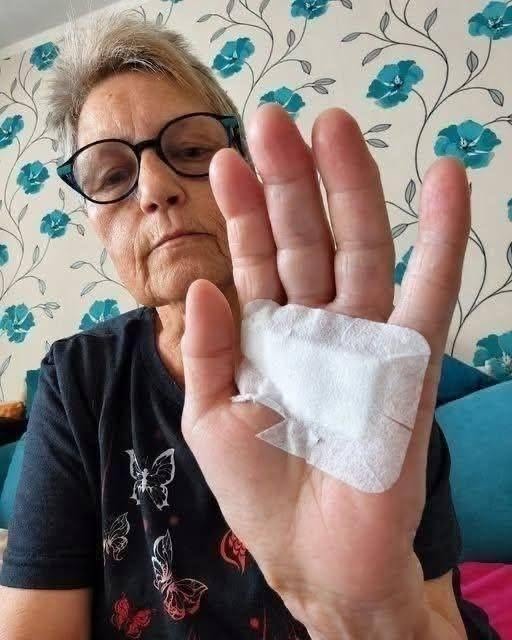
The next morning I woke up with a severe headache and a white bandage on my right hand.
I don’t remember being injured.
Rebecca explained to me that I had probably hit the nightstand during the night.
But there was no blood on the sheets and I didn’t remember any pain.
Over the next few days I began to notice other details.
The sneakers I always left near the closet appeared next to the door.
The chair next to the bed was moved.
One morning I even found a rug folded in a corner in the hallway.
When I mentioned this to Michael, he ignored me with a smile.
“Mom, maybe you wake up at night and don’t remember anything. This happens to a lot of people.”
But I knew something was wrong.
I was old, not stupid.
***
A phone conversation I overheard one evening changed everything.
Rebecca was in the kitchen. She thought I was already in bed.
The door of my room was ajar and I could hear his voice.
“Yes, it starts all over again.”
There was a moment of silence.
“No, Michael doesn’t know anything yet. If he knew what happened at night, everything would change.”
Then I heard her cry.
“I can’t go on like this. I’m afraid one day it will be too late.”
I didn’t sleep that night.
The next morning I decided to install a small camera in my room.
I didn’t want to accuse anyone without evidence. I simply wanted to understand what happens when I close my eyes.
I hid it on the shelf, behind the books.
That evening, Rebecca arrived on time with her usual glass of water.
I drank it.
She adjusted my pillow and wished me good night.
I waited for him to come out.
Then I closed my eyes.
At 2:17 the door opened.
The camera captured Rebecca slowly entering.
Behind her appeared a man I had never seen before.
He had a first aid kit with him.
They approached the bed.
The man checked my pulse, examined the bandage, and began to speak quietly.
That’s when they said those words.
“Rebecca, does your mother-in-law still not know what really happened that night?”
And Rebecca burst into tears.
***
Michael returned home less than twenty minutes after my call.
He came into my room with a pale face.
“Mom, did you watch everything?”
“Enough to understand that you are hiding something from me.”
Rebecca was behind him.
His eyes were red and he looked like he hadn’t slept.
Michael sat on the edge of the bed.
“Mom, before you think something terrible, you need to know that we never meant to hurt you.”
“Then explain to me why your wife brings me a glass of water every evening and why a man comes into my room in the middle of the night.”
Rebecca started crying.
“I’m so sorry”.
“I don’t want your apology. I want the truth.”
Michael looked at his wife.
Then he took a deep breath.
“It all started three months ago when you fell down the stairs.”
I looked at him.
“What stairs?”
“The ones from the old apartment. Two days before you moved in.”
I remained motionless.
I don’t remember any falls.
Michael continued.
“You came over for dinner. After you left, you called your dad because you’d forgotten your keys. He was already in bed and didn’t hear you. You tried to climb the stairs alone and fell.”
I raised my hand to my mouth.
“I don’t remember.”
We found you the next morning. You were disoriented, had a head wound, and a deep cut on your right hand.
“Why didn’t you tell me anything?”
Michael lowered his gaze.
We took you to the hospital. The doctors said you had a head injury and needed to be monitored.
“And then?”
Rebecca sat down next to him.
“During testing, we discovered something we didn’t expect.”
He looked at me.
“You had episodes of memory loss. You couldn’t remember certain conversations, and sometimes you couldn’t immediately recognize where you were.”
I felt my heart start beating faster.
“Do you mean I’m losing my memory?”
Michael shook his head.
“We don’t know yet. The doctors mentioned the possibility of neurological episodes after the injury. You should have had more tests.”
“Why didn’t you let me do that?”
No one responded immediately.
Then Rebecca said:
“Because you thought you were fine. When we tried to talk to you about it, you became agitated. The doctor told us not to leave you alone at night and to monitor your episodes.”
I looked at her.
“So you decided to lie to me?”
“We were scared,” she whispered.
“Are you afraid of what?”
Michael lowered his head.
“That something serious will happen to you before we can figure out what’s going on.”
But something still wasn’t right.
I pointed to the bandage.
“What about my hand? Why do I wake up every morning with a different wound?”
Rebecca covered her face.
“This is what we tried to hide from you.”
Michael showed me the second video.
The recording was made a week earlier.
At 2:03 a.m. he saw me get out of bed.
I walked slowly, with my eyes open but my gaze completely blank.
I opened the drawer of the nightstand, looked for something, and then headed for the door.
Rebecca walked in a few seconds later.
“Mom, go back to bed.”
I didn’t answer.
I continued walking towards the corridor.
She tried to stop me gently.
At one point I felt I was having difficulty and hit the wall with my right hand.
Rebecca immediately called someone.
“It’s happening again. Please come.”
The movie ends with him sitting next to my bed and holding my hand.
I was speechless.
“What is happening to me?”
Michael replied with a breaking voice.
Doctors suspect you’re experiencing episodes of complex sleepwalking, possibly related to trauma and other sleep disorders. However, we don’t yet have a definitive diagnosis.
Rebecca added:
“During these episodes, you get up, walk around, and sometimes try to leave the room. You seem to be out of your mind. One night, you even tried to open the front door.”
I looked at her in disbelief.
“And a glass of water?”
Michael sighed.
Your doctor recommended you stay well hydrated. Rebecca turned that advice into a small evening routine for you to drink something. But she shouldn’t have insisted if you weren’t willing.
Rebecca nodded.
“I was afraid you’d get dehydrated. I thought I could help you.”
Then I finally understood the meaning of that sentence.
*I can’t let this happen again.*
He wasn’t talking about the fall.
He was talking about another accident that happened at night.
But I still had one question.
“Who was the man with the briefcase?”
Michael replied:
“Dr. Harris. This is your neurologist.”
“Why did he come home at night?”
Rebecca quickly explained everything.
“He didn’t intend to do anything to you secretly. That night we called an ambulance because you had an unusually long episode and injured yourself. He came to examine you and make sure there were no complications.”
“Why didn’t you call an ambulance?”
“We’ve done this before. We’ve contacted a doctor to monitor the situation and coordinate testing.”
I resisted.
For months I imagined my daughter-in-law was trying to poison me.
I actually had the impression that he wanted to protect me from hurting myself.
But that did not justify them making decisions about my health without my input.
That morning I asked Michael to personally accompany me to the doctor.
I didn’t want to have any secrets anymore.
I wanted to talk to the doctor who was taking care of me, get all my test results, and understand exactly what was happening to my body.
Dr. Harris welcomed us into his office.
He explained to me that nocturnal episodes can have various causes: sleep disorders, the effects of certain medications, neurological problems, or the consequences of head injuries.
We had to go deeper.
He ordered further tests and recommended immediate precautions to avoid further falls.
He also explained to me that I should not take any medication or undergo any treatment without informing me and without first discussing these matters with him.
Then he told me something that got me thinking.
Mrs. Margaret, it’s crucial that you participate in making decisions about your own health. Your family can help, but they shouldn’t override your wishes.
Anniversary.
That was exactly what I wanted to hear.
***
In the following days the situation changed.
Rebecca stopped coming to my room with a glass of water as if it were an obligation.
He just asked me:
“Mom, do you want some water before bed?”
If I said no, he left the glass on the bedside table and left.
Michael installed night lights and a security system in the hallway to prevent me from accidentally leaving during the show.
My room is designed to minimize the risk of falling.
Most importantly, we started talking openly.
One evening Rebecca came into my room without bringing anything.
He sat down on a chair next to the bed.
“Margaret, can I tell you something?”
“Normal.”
He started playing with his fingers.
“When you moved here, I was really happy. But after the fall, I started to get scared. Every time you got up at night, I thought you were going to hurt yourself.”
I looked at her.
“Why didn’t you tell me?”
“Because I didn’t want to scare you. I thought hiding things from you would protect you.”
I took her hand.
“Rebecca, I don’t need you to protect me from the truth. I need you to help me face it.”
She burst into tears.
“Sorry”.
“I know”.
We remained in silence for several minutes.
Then I added:
“And I want to thank you for looking after me. But from now on, no more secrets.”
Rebecca nodded.
“I promise you.”
A few weeks have passed.
Tests didn’t immediately provide a definitive answer, but the doctor was able to identify factors that may have contributed to the nocturnal episodes. With appropriate treatment, better sleep management, and some home modifications, the number of episodes began to decrease.
My hand was slowly healing.
Michael started coming home from work early when he could. Rebecca continued to help me, but she didn’t treat me like I couldn’t make decisions.
One Sunday morning I prepared breakfast for everyone.
Michael entered the kitchen and was surprised.
“Mom, did you make pancakes?”
Sure. I’m not too old to cook yet.
Rebecca burst out laughing.
For the first time in months, our home felt like a normal place again.
But there was one thing I didn’t forget.
That evening, while watching the video, I called my son, convinced that I had discovered a terrible betrayal.
Instead, I discovered that fear can turn even the people who love us into people incapable of telling the truth.
Rebecca tried to protect me, but she made the mistake of excluding me.
Michael tried to spare me the worry, but he forgot that I was a woman who could make her own decisions.
And I learned that asking for an explanation does not mean accusing someone.
This means demanding respect.
Today I am still seventy-four years old. I still live with my son and his wife, but things have changed.
In the evening, when Rebecca comes to my room, she no longer brings the glass that I absolutely have to empty.
Sometimes he asks me if I want tea.
Other times he just sits next to me and we talk.
And when the lights go out, I know no one is hiding anything behind closed doors.
Because the most important thing a family can offer an elderly person is not just a roof over their head, a warm meal and a glass of water.
This is a chance to be heard, respected and engaged in your own life.
**I wasn’t afraid of growing old. I was afraid of becoming invisible in my own family. And that was a lesson we all had to learn.**