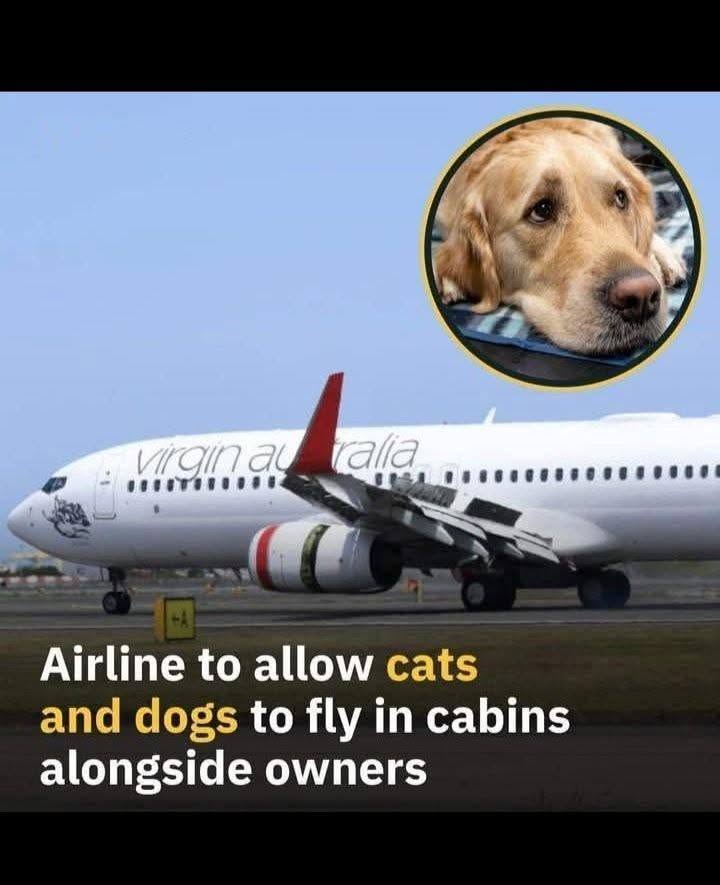
Flying With Your Dog or Cat? These Airlines May Let Your Pet Stay in the Cabin
For many pet owners, leaving a beloved dog or cat behind when traveling can be one of the hardest parts of a trip.
Fortunately, flying with a pet in the cabin is possible on a number of airlines. But there is an important catch: every airline has its own rules, and permission can depend on the route, aircraft, pet size, carrier, and destination.
So before booking a ticket, it pays to understand how pet-friendly air travel actually works.
Which Airlines Allow Dogs and Cats in the Cabin?
Several major airlines offer cabin travel for at least some small dogs and cats.
Examples include:
Air Canada
Air France
Delta Air Lines
Lufthansa
United Airlines
KLM
American Airlines
Alaska Airlines
JetBlue
Turkish Airlines
The exact requirements differ considerably. Some airlines accept pets only on certain routes, while others restrict the number of animals allowed in the cabin.
The U.S. Federal Aviation Administration also emphasizes that individual airlines decide whether pets may travel in the passenger cabin and establish their own procedures.
Your Pet Usually Has to Stay in a Carrier
One of the most important rules is surprisingly simple: your pet generally cannot walk freely around the aircraft cabin.
When cabin pets are permitted, the carrier normally has to fit underneath the seat in front of you. The animal must remain inside the carrier during the flight according to the airline’s rules.
This means that the size of your dog or cat matters.
A small cat may fit comfortably inside an approved carrier, while a large dog will generally not qualify for ordinary cabin travel.
Weight Limits Can Make a Big Difference
Airlines often impose a maximum combined weight for the pet plus carrier.
For example, Royal Air Maroc currently allows dogs and cats in the cabin when the total weight of the animal and container does not exceed 8 kg, with specific carrier dimensions and advance-booking requirements.
Other airlines use different limits, so never assume that a pet accepted by one carrier will automatically qualify on another.
You’ll Usually Need to Reserve a Pet Spot
Buying your own plane ticket is not necessarily enough.
Many airlines limit the number of pets permitted in the cabin on each flight. As a result, passengers may need to request approval or add the pet to the reservation before traveling.
The U.S. Department of Transportation notes that airlines have their own pet procedures and that many charge an additional pet fee.
In other words, don’t wait until airport check-in to announce that you’re traveling with a pet.
Pet Fees Can Add to the Cost
Discover more
Learn DIY Skills
Browse Art Prints
Find Recipes
Traveling with a pet usually comes with an additional charge.
The amount can vary according to:
Airline
Route
Domestic or international travel
Cabin or cargo transportation
Number of pets
Carrier requirements
Some airlines charge a fixed pet fee, while others have different prices depending on the itinerary.
Always check the airline’s current fee schedule before purchasing your ticket.
International Travel Is More Complicated
A pet-friendly airline does not necessarily mean your pet can enter every country without additional paperwork.
International trips can involve:
Vaccination requirements
Health certificates
Microchip requirements
Import permits
Quarantine rules
Destination-specific veterinary documents
These requirements come from governments and border authorities as well as airlines.
A carrier can therefore approve your pet for the flight while the destination country has separate requirements that you must satisfy.
Service Animals Are Different From Pets
It is also important not to confuse ordinary pets with service animals.
A pet traveling for companionship is generally subject to the airline’s pet policy.
Service animals are treated differently under applicable regulations. In the United States, for example, service animals are not considered pets under Department of Transportation rules.
If you are traveling with a service animal, you should check the specific legal and airline requirements that apply to your situation.
How to Make Flying Easier for Your Pet
Even when an airline allows your dog or cat in the cabin, flying can be stressful.
A few preparations can make the experience easier.
Choose the right carrier
Make sure the carrier meets the airline’s required dimensions and allows adequate ventilation.
Get your pet comfortable with it
If your animal rarely spends time inside a carrier, introduce it well before the trip.
Check the paperwork early
For international travel especially, don’t leave vaccinations and documentation until the last minute.
Avoid surprises at the airport
Confirm your pet reservation and airline requirements before departure.
Ask your veterinarian about health concerns
Some animals may have medical conditions or characteristics that make air travel more difficult. A veterinarian can help determine whether flying is appropriate.
Don’t Assume Every Airline Is Pet-Friendly
One of the biggest mistakes travelers make is assuming that because one airline allows cabin pets, all airlines do.Get Writing Tools
That is not the case.
Some carriers do not permit ordinary pets in the passenger cabin at all, while others allow only certain animals, routes, or aircraft. The FAA specifically recommends contacting the airline or checking its current policy before traveling.
And policies can change.
What About Larger Dogs?
Discover more
Book Pest Control
Get Toiletries
Protect Privacy
For owners of large dogs, cabin travel on ordinary commercial flights can be much more difficult.
Most cabin programs are designed around animals that can comfortably remain inside an approved carrier under the seat. A large dog therefore may not qualify even if the airline describes itself as pet-friendly.
Some airlines have separate options for animals traveling in the hold or through cargo services, but those arrangements have different requirements and should be researched carefully.
The Bottom Line
Traveling by plane with a dog or cat is possible, but it requires more planning than simply buying a ticket.
The best approach is to:
Choose an airline that accepts pets on your specific route.
Confirm that your pet meets the size and carrier requirements.
Reserve the pet’s space in advance.
Check all fees and documentation.
Review the destination country’s rules if traveling internationally.
Confirm the airline’s current policy shortly before departure.
Your pet may be able to sit right beside you throughout the journey—but the key is making sure every requirement is handled before you arrive at the airport.
A little preparation can turn a stressful trip into a much smoother journey for both you and your four-legged companion.