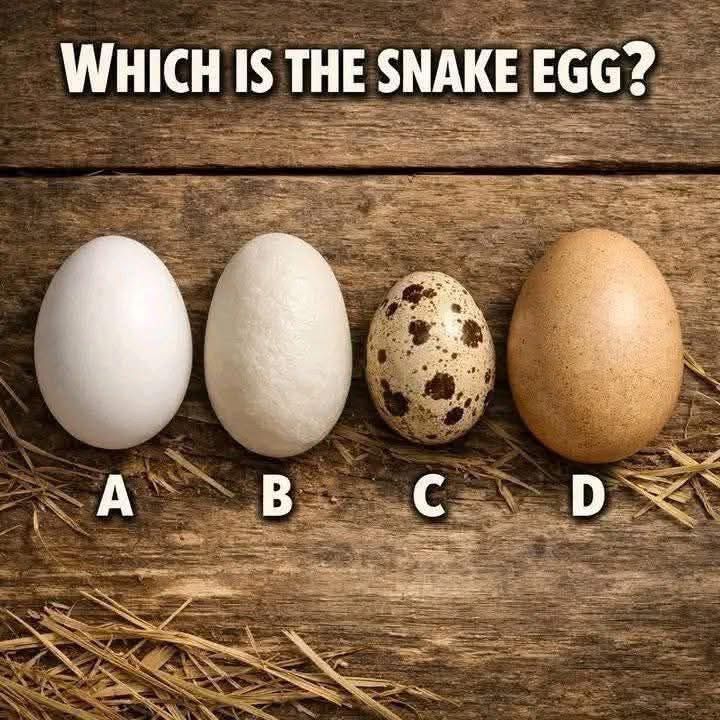
🐍 How to Identify Snake Eggs
A Simple Guide to Telling Them Apart from Other Eggs
While working in your garden or exploring outdoor areas, you might come across unusual eggs and wonder: are they snake eggs or something else? Knowing how to identify them is important for your safety and to handle the situation correctly.
🥚 What Do Snake Eggs Look Like?
Snake eggs have some unique characteristics that set them apart:
Shape: Oval or slightly elongated, not perfectly round
Shell: Soft and leathery—not hard like chicken eggs
Color: Usually white or off-white
Size: Varies by species, but generally small to medium
✔ The soft, flexible shell is the most important clue.
📍 Where Are They Usually Found?
Snakes choose hidden, safe places to lay their eggs, such as:
Under soil or leaf piles
Inside wood stacks
In holes, cracks, or burrows
Warm, damp environments
✔ Well-hidden eggs are a strong indicator.
🔍 Snake Eggs vs Bird Eggs
Feature Snake Eggs Bird Eggs
Shell Soft, leathery Hard and brittle
Location Hidden (underground, covered) Visible nests
Shape Slightly elongated Smooth oval
Color Usually plain white Often colored or speckled
⚠️ Is It Safe to Touch Them?
It’s best not to touch snake eggs
The mother may be nearby and defensive
Some snake species can be dangerous
✔ Keep your distance for safety.
🚨 What Should You Do If You Find Them?
Do not break or move the eggs
Keep children and pets away
If they are near your home, contact local wildlife services or a professional
💡 Important Fact
Not all snakes lay eggs! Some species give birth to live young, so the presence of eggs depends on the type of snake.
✨ Final Thoughts
Identifying snake eggs becomes easier when you know what to look for:
✔ Soft, leathery shell
✔ Plain white color
✔ Hidden, protected location
Always prioritize safety and respect nature—observe, but don’t disturb 🐍🌿