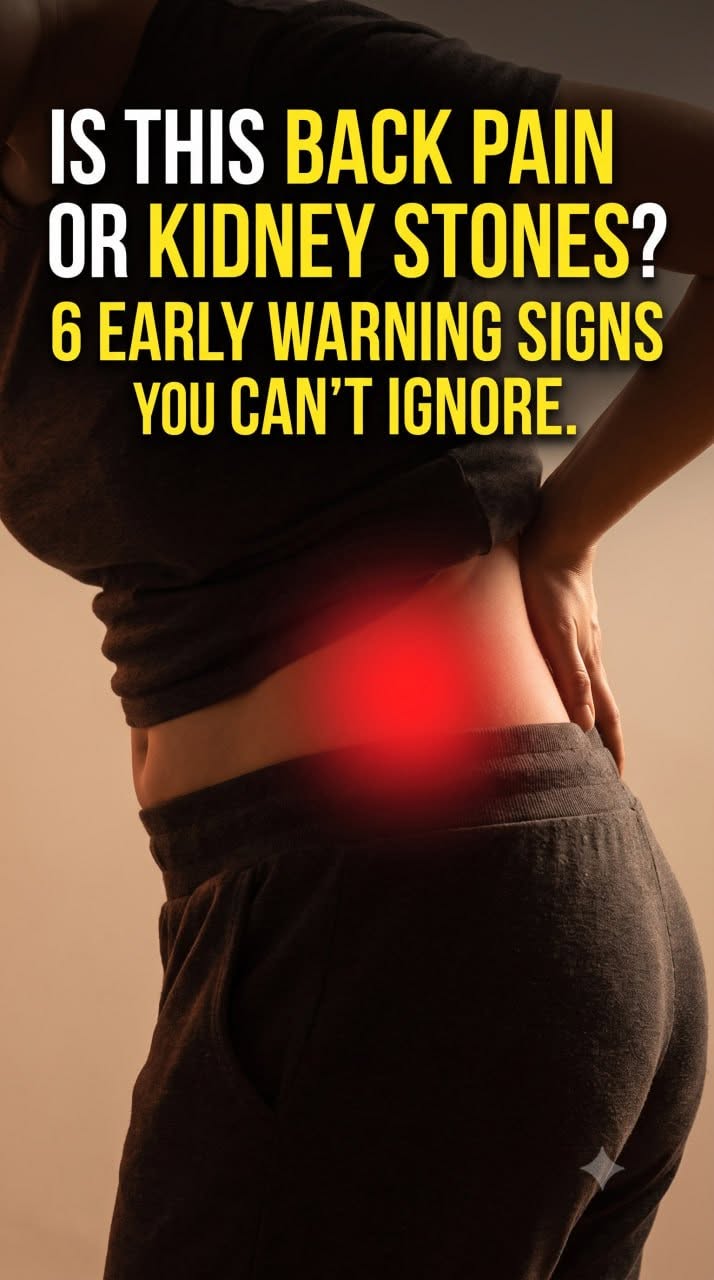
Stop Ignoring the Ache: 8 Early Warning Signs That Signal Kidney Stones Are Forming
We’ve all experienced it: that dull ache in your lower back after a long day of yard work, or maybe a tweak in your side that you dismiss as a muscle strain. You tell yourself, “I just need to stretch” or “I must have slept wrong.”
But what if that harmless pinch is actually your body firing a critical alarm?
Kidney stones (nephrolithiasis) affect millions of people every year, yet they are one of the most frequently misdiagnosed and misunderstood sources of intense pain. Often, the agony is described by patients as “worse than childbirth.” And the scary truth is, by the time that “worse than childbirth” pain hits, the stone has likely already caused significant disruption.
Ignoring the early warning signs of kidney stones is like hitting the snooze button on a fire alarm. When diagnosed early, small stones can often be passed relatively easily with lifestyle adjustments and increased hydration. Waiting until the classic, incapacitating pain (renal colic) strikes frequently leads to emergency room visits, complex urological procedures, and a long road of painful recovery.
What Are Kidney Stones, Anyway?
To understand the signs, you first must understand what is happening inside your urinary tract. Your kidneys are masterful filters, processing hundreds of quarts of blood daily to create urine. This urine contains waste products—like calcium, oxalate, and uric acid—which are normally dissolved.
When these minerals become too concentrated, they can “precipitate” out of the solution and form tiny crystals. Over time, these crystals stick together, growing larger and larger, until they form a hard, solid mass. Think of it like making rock candy, but inside your vital organs.
A small stone may sit in the kidney (the main body of the organ) causing little or no pain. The excruciating pain occurs when that stone moves out of the kidney and tries to travel down the ureter, the narrow tube that connects the kidney to the bladder. The ureter is extremely sensitive and not designed to stretch or pass sharp solid objects.
The 8 Critical Warning Signs You Cannot Ignore
It is time to look at those subtle signals you’ve been dismissing. If you or a loved one are experiencing several of these, it is crucial to consult a healthcare provider.
1. Pain That ‘Wanders’ and Changes Intensity
The hallmark of kidney stone pain isn’t just that it hurts; it’s how it hurts. This is known as renal colic, and it often presents in waves. You might feel intense, unbearable pressure one minute, only for it to dull to a severe ache the next.
Furthermore, the location of the pain often shifts. It might start in your flank (the area on your side, below the ribs) and then “travel” down into your abdomen and into the groin area as the stone moves down the ureter. If you find your pain source migrating over several hours or days, pay close attention.
2. Cloudy or Foul-Smelling Urine
Healthy urine should be relatively clear and odor-free (beyond a light ammonia smell). If your urine is consistently cloudy, milky, or has a strong, pungent, unpleasant odor, this is a major red flag. This often signals that your urine is overly concentrated with the minerals that create stones, or it may indicate a urinary tract infection (UTI) that has developed alongside a stone.
3. Blood in the Urine (Hematuria)
This is one of the more direct signals, but it is often missed in its early stages. Blood in the urine can make it appear pink, red, or even cola-colored (brownish). This happens because the sharp edges of the stone are scratching the sensitive lining of the kidney or the ureter as they attempt to pass. In many cases, the blood is microscopic and only detectable with a medical urinalysis. Any visible blood in your urine, however small, requires immediate medical investigation.
4. A Persistent, Relentless Urge to Urinate
Do you find yourself needing to rush to the bathroom frequently, only to find that very little urine actually comes out? When a stone enters the lower urinary tract, particularly near the bladder junction, it irritates the bladder wall. Your brain interprets this irritation as “The bladder is full and needs to be emptied now,” creating a persistent and urgent feeling of needing to go.
5. Burning Sensation During Urination (Dysuria)
If you have a stone stuck in the lower ureter, near the urethral opening, you will likely experience significant pain, stinging, or burning while you urinate. This symptom is identical to a bladder infection (UTI), which is why kidney stones are often misdiagnosed. If you have been treated for UTIs but the pain keeps coming back, a hidden kidney stone might be the culprit.
6. Nausea and Vomiting
It might seem strange that kidney pain is felt in your stomach, but your kidneys and the gastrointestinal tract share common nerve pathways. When a kidney is irritated, obstructed, or inflamed by a stone, the nervous system can trigger nausea and severe vomiting. This is the body’s sympathetic response to intense visceral pain. If your “stomach flu” is paired with pain in your side or back, the cause may actually be your kidneys.
7. The Subtle “Muscle Strain” that Never Goes Away
This is the sneakiest symptom. A stone that is currently stuck in the kidney may not cause excruciating pain. Instead, it creates a dull, nagging, persistent ache that feels like a deep-seated back injury or a pulled muscle. You may feel it in your flank or mid-back area. Unlike muscle pain, this ache will not improve with rest, stretching, or massage, and it may slightly worsen after you eat certain foods or become dehydrated.
8. Pain that Arrives in the Early Morning
Our kidneys are naturally less active during sleep, leading to more concentrated urine when we first wake up. Many people report their first encounter with intense renal colic occurs in the very early morning hours. If you are waking up in the middle of the night with severe, inexplicable flank or side pain, it is highly indicative of a kidney stone event.
What To Do Next: Actionable Steps to Take Right Now
If you recognize these symptoms in yourself, do not panic, but do take action. Early intervention is your greatest defense.
See a Doctor Immediately: Make an appointment with your primary care physician or a urologist. Mention specifically that you suspect you may have kidney stones. They will likely perform a physical exam, a urine test (urinalysis), and possibly imaging tests (like a CT scan or ultrasound) to confirm the stone’s presence, size, and location.
Hydration is Your Best Friend: Start drinking water—aggressively. This is the most crucial step you can take. Aim for at least 8 to 12 cups of fluid daily. This helps dilute your urine and can help flush out small stones before they grow larger. Water is best; avoid soda, as the high fructose corn syrup can contribute to stone formation.
Lemon is Your Weapon: Add fresh lemon juice to your water. Lemons contain citrate, which binds with calcium in the urine and prevents it from forming crystals, significantly reducing your risk.
Watch Your Sodium: A high-salt diet increases the amount of calcium your kidneys must filter, making calcium stones much more likely. Limit your intake of processed foods, canned soups, and salty snacks.
Know When to Head to the ER: While early warning signs are manageable, a full kidney stone blockage is a medical emergency. You must go to the emergency room immediately if you experience:
Pain so severe you cannot find a comfortable position or stand up.
Fever and chills (a sign of a serious kidney infection).
Inability to pass urine at all (indicating a complete blockage).
A Final Takeaway: Protect Your Health
Kidney stones are incredibly painful, but your body provides warnings long before the pain becomes unbearable. Do not dismiss persistent back aches, frequent urination, or changes in your urine as “just getting older” or minor issues. Listen to the silent agony your body is attempting to avoid. By recognizing the early red flags, increasing your hydration, and seeking medical attention promptly, you can manage this common condition, avoid significant suffering, and protect your vital kidney function.