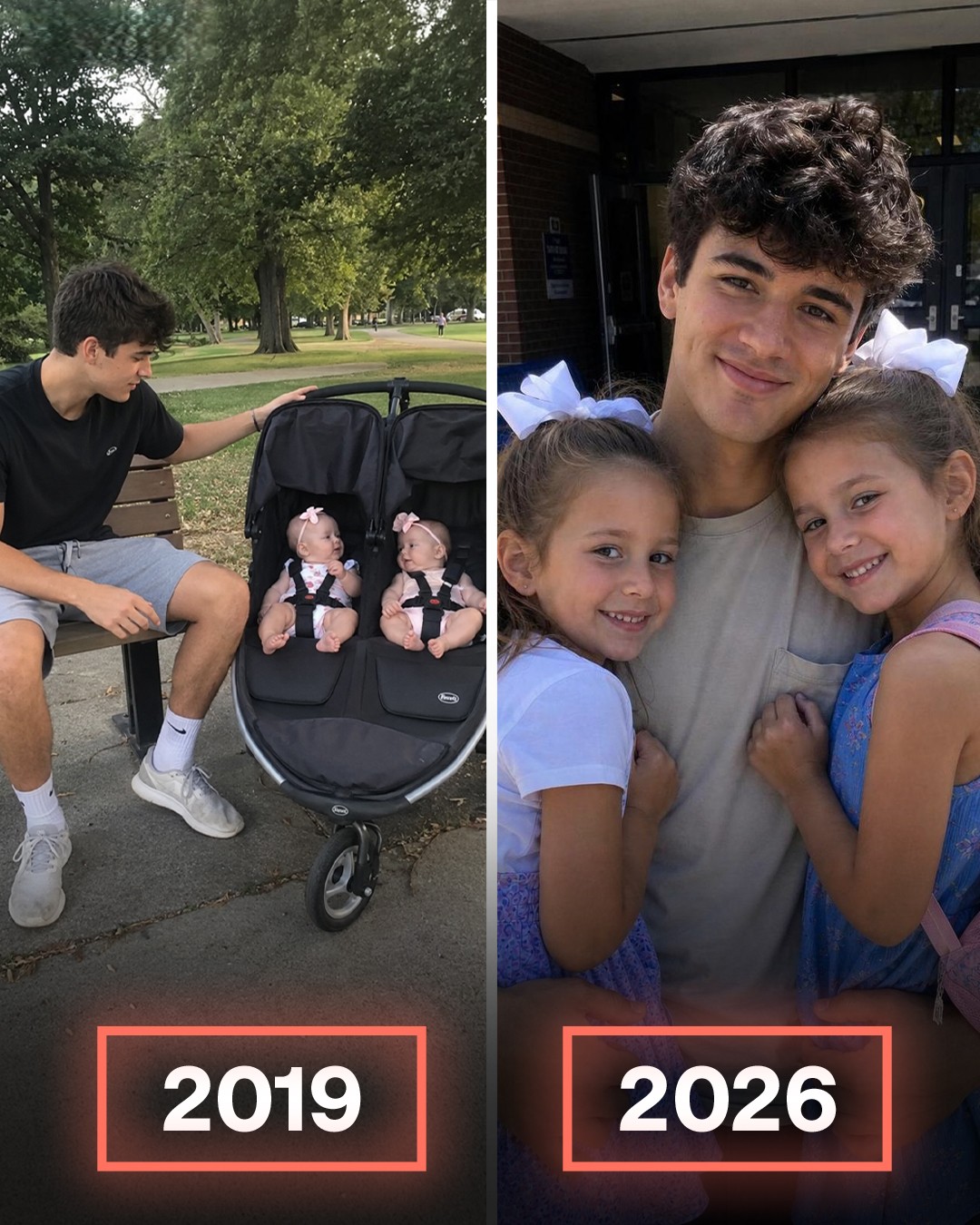
At eighteen years old, most young men are preoccupied with high school graduations, college applications, and the newfound freedom of adulthood. For Nathan, however, the threshold of manhood was marked not by a diploma, but by the desperate, rhythmic cries of two newborn infants in a darkened kitchen. Nathan never asked to be a father in his teens, yet he found himself thrust into the role of a primary caregiver when his mother, Lorraine, performed the ultimate act of betrayal. Seven years later, just as the dust had finally settled on their hard-won stability, Lorraine stepped back into their lives, not with an apology, but with a cold and calculated demand that threatened to dismantle everything Nathan had built.
Nathan’s life had always been governed by the unpredictable weather of his mother’s temperament. Lorraine was a woman who moved through the world like a storm, leaving chaos in her wake and expecting others to clear the debris. When she arrived home pregnant during Nathan’s senior year of high school, he harbored a fleeting, desperate hope that the impending responsibility might finally ground her. That hope was shattered the moment twins Ava and Ellen were born. For two agonizing weeks, Lorraine played a superficial role of motherhood, alternating between performative care and deep, resentful neglect. Then, at three o’clock on a Tuesday morning, the silence of the apartment became absolute. Lorraine was gone, taking her coat and her future with her, leaving behind two screaming infants and a son whose life had just been irrevocably redirected.
In that moment of abandonment, Nathan faced a choice that was no choice at all. He looked at his sisters and realized that if he did not become their anchor, they would be swept away by a system that rarely prizes the bond of siblings. He folded up his brochures for pre-med programs, tucked away his dreams of becoming a surgeon, and traded his textbooks for double shifts at a local warehouse. For years, Nathan lived in a state of perpetual exhaustion, learning the delicate art of rationing groceries and warming bottles with hands that shook from fatigue. He became “Bubba,” a title that superseded “brother” and came to mean “protector.” While his peers were attending parties and exploring the world, Nathan was applying for social assistance and finding secondhand clothes that looked new enough to spare his sisters the sting of poverty.
By the time the twins turned seven, the small family had found a beautiful, fragile rhythm. They were the lucky ones, or so it felt during their Friday movie nights when the girls would curl up against Nathan’s chest. But that peace was shattered by a knock on the door on a mundane Thursday afternoon. Standing on the threshold was a woman who looked like a polished, high-end version of the mother who had vanished. Lorraine had returned, but she was no longer the haggard, desperate figure of Nathan’s youth. She wore designer wool and expensive jewelry, carrying luxury shopping bags as if they were peace offerings. She attempted to buy the affection of the daughters she hadn’t seen in nearly a decade with tablets and jewelry, flashing a sickly sweet smile that didn’t reach her eyes.
The true nature of Lorraine’s return was revealed a week later in the form of a thick, gold-trimmed envelope. It was a petition for full legal guardianship. When Nathan confronted her, the mask of the doting mother slipped, revealing the cold opportunist underneath. Lorraine didn’t want the girls because she loved them; she wanted them because they were the missing pieces in her new “redemption arc.” She had built a successful new life and realized that a heartwarming story of a mother beating the odds to reunite with her children would be the ultimate social currency. To Lorraine, Ava and Ellen were not human beings with memories and trauma; they were props for her public image. She looked Nathan in the eye and told him he had “done enough,” as if he had merely been a long-term babysitter rather than the man who had sacrificed his youth to keep them alive.
The confrontation reached its boiling point when the girls, arriving home early from school, overheard the cold exchange. In a heartbreaking display of clarity, seven year old Ellen stood her ground, looking the woman in the designer coat in the eye and telling her the one truth she couldn’t spin: “You left us. Bubba stayed.” The girls didn’t see a mother in the doorway; they saw a stranger who brought toys but missed every school play, every illness, and every milestone. They clung to Nathan’s waist with a desperation that shattered his heart, naming him as their only true parent. Angered by the “scene” that ruined her carefully planned reunion, Lorraine stormed out, leaving behind a threat that Nathan would regret his defiance.
But Nathan was no longer the frightened eighteen year old boy who had watched her walk away the first time. He realized that the only way to protect his sisters was to use the very tools Lorraine thought would give her power. He hired his own legal counsel and turned the tables. If Lorraine wanted to be a mother on paper, she would be held to the standard of a mother in the eyes of the law. He presented a mountain of evidence—years of medical records, emergency room receipts, and testimonials from teachers and neighbors who had witnessed his unwavering devotion. He didn’t just fight for custody; he fought for accountability.
In the sanctity of a private judicial chamber, the judge listened to the twins. Their choice was unanimous and unwavering. The court ruled in Nathan’s favor, granting him full legal guardianship and, in a stunning turn of justice, ordering Lorraine to pay substantial retroactive child support. The woman who wanted to use her daughters as a public relations tool was suddenly forced to provide for them financially from her shiny, new life. The checks began to arrive monthly, signed by a mother who never called and never visited, but whose money now allowed Nathan to finally catch his breath.
Today, Nathan is twenty five. He is still a father, still a protector, and still the center of the twins’ universe. But with the financial burden eased and the legal threat neutralized, the dream he buried seven years ago has begun to resurface. Supported by the sisters who promised to help him the way he helped them, Nathan has enrolled in night classes, slowly clawing his way back toward the medical career he once thought was lost forever. He no longer carries the anger that once defined his relationship with his mother. Instead, he carries the pride of a man who realized that he was always enough. He didn’t just survive his mother’s abandonment; he built a fortress of love that no amount of designer clothes or legal threats could ever hope to penetrate. Nathan isn’t just a brother or a “Bubba”—he is the living proof that the strongest families aren’t always the ones we are born into, but the ones we choose to save.