Chapter 1: The Ghost in the Gilded Frame
The family portrait hung in the entrance hall of my father’s country estate, positioned with the strategic intent of a fortress gate—every visitor had to breach it before entering. It was a deliberate staging of dynasty and legacy, commissioned fifteen years ago when the paint was still fresh on my father’s ambitions.
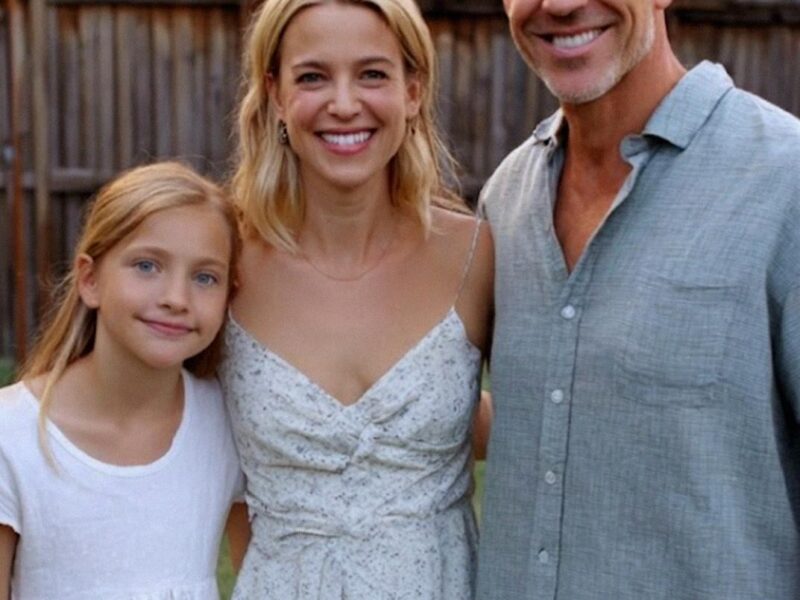
In the center stood my father, Richard Crane, resplendent in his hunting tweeds, a hand resting proprietarily on the shoulder of my brother, Julian. Julian wore the same self-satisfied smirk he had been born with, the look of a man who believes gravity is a suggestion rather than a law. My sister, Britney, perched on a velvet settee to the right, all elegant angles and careful, practiced poise.
And there, relegated to the far-left corner, painted slightly out of focus as if the artist had run out of interest or canvas, was me. Charlene. Younger, quieter, already learning the art of becoming invisible.
What the portrait didn’t show—what no one in my family knew—was that three years after those brushstrokes dried, I would earn my commission in the United States Navy. What they couldn’t see behind the shy smile of the girl in the corner was the steel spine of a woman who would eventually command a billion-dollar warship.
And what they definitely didn’t know was the secret that currently sat in a fireproof safe in Delaware.
One year ago, when my father’s financial troubles metastasized from “concerning” to “terminal,” threatening the estate he had spent forty years curating, I bought it.
I bought the whole thing. Seventeen acres of rolling Virginia hills, the Georgian manor house, the guest cottage, the stables, every stick of antique furniture, and every oil painting in their gilded frames. He never knew. I ensured the transaction went through a blind trust—The Valiant Trust—anonymous and untraceable.
He signed the papers with a trembling hand, accepted the influx of cash that saved him from the humiliation of bankruptcy, and continued living in what he believed was his ancestral home. He paid rent to a legal entity he never bothered to investigate, too relieved to ask questions.
I let him believe it. I let him play the lord of the manor while I, the landlord he disregarded, watched from the shadows. Watching people who underestimate you is its own particular art form, a spectator sport I had been practicing for decades.
The call came on a Tuesday morning. I was aboard the USS Valiant, a guided-missile destroyer, sitting in the Captain’s quarters reviewing deployment schedules for the South China Sea. The phone on my desk chirped—a satellite line.
“Charlene? It’s Victoria.”
My stepmother. She had married my father eight years ago, shortly after my mother died, and had spent the subsequent years trying to reorganize the family hierarchy with herself at its apex. Her voice was tight, clipped, the sound of a woman managing a crisis that inconvenienced her.
“Victoria,” I said, my voice steady, the command tone I used with junior officers automatically engaging. “What can I do for you?”
“Your father passed away last night,” she said. No preamble. “Heart attack. It was very sudden.”
I sat down slowly, the movement controlled. The deployment schedules blurred into white noise. The hum of the ship’s ventilation system seemed to grow louder.
“I see,” I said. The grief was there, a dull ache behind my sternum, but it was complicated. It was grief for a stranger I had shared a last name with. “I’m sorry, Victoria.”
“The funeral is Saturday,” she continued, barreling over my sentiment. “I assume you can get… leave? Is that what you call it?”
“I’ll make arrangements,” I said.
“Good. We’ll need to discuss the estate immediately after. There is quite a lot to sort through.” Her tone suggested that she would be doing the sorting, and I would be doing the nodding.
“The will reading is Monday,” she added. “Don’t be late.”
After we hung up, I sat in the stillness of my quarters. I thought about my father. Not the man from the portrait—confident, established, certain of his place in the world. I thought of the man I had known in fragments: distant, preoccupied with status, always slightly disappointed that his youngest daughter had chosen military service over a career that could be bragged about at country club dinners.
“What exactly do you do in the Navy?” he had asked me once, years ago, when I made Lieutenant Commander. We were standing in the very library I had just purchased.
“I’m a Surface Warfare Officer, Dad. I’m in line for a destroyer command.”
“Yes, but… what do you do? What does that mean in practical terms? Do you steer the boat?”
“I lead sailors,” I had said, trying to bridge the gap. “I make strategic decisions. I manage complex operations involving weapons systems and international maritime law.”
He had nodded, his expression politely blank, a glaze settling over his eyes. “Right. Well, did I tell you Julian just closed on a triplex in Manhattan? Real estate is booming.”
That conversation had taught me something valuable. My father’s inability to understand my work wasn’t a failing on my part. It was a limitation on his. And limitations, I had learned in the service, could be exploited.
The Cliffhanger:
I packed my dress blues, then stopped. I put them back in the locker. If I showed up in uniform, with the four stripes of a Captain on my shoulder boards, the game would change too quickly. They needed to see what they expected to see. I packed a simple, off-the-rack black dress instead. I would walk into the lion’s den not as a warrior, but as the sheep they believed me to be. And when the trap sprung, they wouldn’t even see the teeth until it was too late.
Chapter 2: The Architecture of Condescension
The funeral was exactly what I expected: tasteful, expensive, and deeply performative. It was a production designed to cement the Crane legacy, even as the body of the patriarch lay cooling in the earth.
My brother, Julian, arrived in a gleaming black Mercedes S-Class, looking every inch the grieving scion. My sister, Britney, stepped out of a Bentley she had borrowed from her husband’s collection, weeping into a handkerchief that probably cost more than my first car. Victoria orchestrated the arrivals with the efficiency of a logistics general, though her rank was entirely self-appointed.
I arrived in my twelve-year-old Subaru Outback, the bumper sporting a faded Navy sticker. I wore the simple black dress I’d bought at Nordstrom Rack.
“Oh, Charlene,” Victoria said when she saw me approaching the receiving line. Her tone carried that particular blend of pity and condescension she had perfected over a decade. “You’re here.”
She pulled me into an air-kiss that missed my cheek by three inches. “I wasn’t sure if you could afford the plane ticket on such short notice.”
“Military transport,” I lied smoothly. Technically, I had flown commercial, first-class, paid for with the dividends from my tech portfolio, but I let her paint the picture she wanted.
“Of course,” she sighed. “Well, while you’re here, that’s what matters. We’re all staying at the estate, naturally. I assume you’ve made… arrangements elsewhere?”
I paused. “Actually, I was hoping to stay in my old room.”
Victoria’s face did a complicated spasm of regret. “The problem is space, darling. Julian and his family are in the East Wing. Britney and Charles are in the Guest Cottage. And I simply must keep the master suite for my grieving process. You understand.”
She touched my arm sympathetically, her nails digging in slightly. “There’s a lovely Holiday Inn about twenty minutes away. Very clean. I’m sure it fits your… budget.”
I didn’t blink. “I understand. The Holiday Inn will be fine.”
Julian appeared at her elbow, a glass of scotch in hand. He surveyed me with the same expression he used on the waitstaff—mild amusement mixed with dismissal.
“Charlene. Good of you to come. How’s the Navy treating you?”
“Well enough,” I said. “Still floating.”
“Still doing that communications thing?” he asked, taking a sip.
“Destroyer command, actually.”
He blinked, looking past me as if checking for someone more important. “Really? That sounds… loud. Well, good for you. Government work doesn’t pay much, but it’s steady, right?”
He patted my shoulder, a heavy, patronizing thud. “Dad always worried about you, you know. Whether you’d be okay financially. But steady is good. We can’t all be risk-takers.”
I smiled. It was a razor-thin expression. “Yes, Julian. Steady is good.”
Let him think destroyer commands were equivalent to middle management at the DMV. Let him think the O-6 rank I held—equivalent to a Colonel in the Army—was some bureaucratic participation trophy. The disconnect between his perception and my reality was a canyon I could hide an entire fleet in.
The service was lovely. The minister spoke about my father’s contributions to the community, his business acumen, his devotion to family. People nodded and dabbed their eyes. I sat in the third row—Victoria, Julian, and Britney had taken the front—and thought about the estate. I thought about the trust documents locked in my attorney’s briefcase. I thought about the careful architecture of secrets I had constructed to save a man who couldn’t be bothered to ask my rank.
At the reception afterward, held at the estate naturally, I wandered through the rooms I secretly owned. The library where I’d spent summers reading. The conservatory where my mother had kept her piano. The dining room where family dinners had reinforced, year after year, that success meant visible wealth, prestigious corporate titles, and the right kind of marriage.
Never mind that I commanded three hundred sailors. Never mind that Admirals knew my name. Never mind that my tactical decisions in the Persian Gulf were studied at the Naval War College. None of that mattered here, in this world of polished silver and inherited furniture, because it couldn’t be quantified in terms they understood.
And strangely, I found that amusing rather than painful.
I was sipping a glass of tepid water near the window when I overheard Victoria talking to a cluster of my father’s friends.
“Of course, the estate will need to be managed carefully,” she was saying, her voice lowered to a conspiratorial whisper. “My stepchildren… well, Julian is brilliant, of course, but busy. And Charlene…” She sighed, a tragic sound. “She’s in the military, poor thing. They don’t exactly prepare you for property management in the Navy. She lives in barracks, I believe.”
I set my glass down on a coaster.
Monday morning arrived with gray skies and a heavy, oppressive humidity. The will reading was held in the estate’s library.
My father’s attorney, a silver-haired man named Hutchkins, sat behind the massive mahogany desk—my desk. He read through the preliminary items with practiced solemnity. Small bequests to staff. Donations to the historical society. Personal items distributed to friends.
Then came the main event.
“To my son, Julian,” Hutchkins read, “I leave my collection of rare first-edition books, and my controlling stake in Noonan Properties LLC.”
Julian nodded, satisfied, leaning back in his chair.
“To my daughter Britney, I leave my impressionist art collection and my investment portfolio with Burke Financial.”
Britney smiled, squeezing her husband’s hand.
“To my daughter, Charlene…”
Everyone turned to look at me. The air in the room shifted, becoming thinner.
“…I leave my military medals from my service in Vietnam, and my collection of antique navigation instruments.”
The medals I had never seen him wear. The instruments that had sat gathering dust in a display case for thirty years. It was a bequest that screamed afterthought.
“As for the estate itself,” Hutchkins paused, his expression shifting. He looked uncomfortable, shuffling the papers. “The house and grounds have been placed in trust for Mrs. Victoria Crane, with provisions for her lifetime residence.”
Victoria let out a soft, victorious breath.
“Actually,” I interrupted. My voice was quiet, but it cut through the room like a sonar ping. “That’s not possible.”
The room went silent. Hutchkins looked up over his spectacles.
“I’m sorry?” Victoria snapped.
“The estate can’t be left to Victoria,” I said, meeting her gaze, “because my father didn’t own it.”
Victoria’s face flushed a deep, ugly red. “That’s absurd. Of course he owned it. He lived here for forty years! This is his home!”
“He lived here, yes,” I said calmly, reaching into my tote bag. “But he didn’t own it. Not for the last thirteen months.”
Julian was frowning now, sitting forward. “Charlene, what are you talking about? Have you lost your mind?”
I pulled a blue folder from my bag and slid it across the mahogany desk to Hutchkins. The sound of the paper sliding against the wood was the only noise in the room.
“Transfer of deed,” I said. “Dated thirteen months ago. The estate was sold to The Valiant Trust, a private entity. My father retained lifetime residence as part of the agreement, but ownership transferred completely upon the sale.”
Chapter 3: The Ghost in the Ledger
Hutchkins opened the folder. His eyes scanned the documents, darting back and forth. His eyebrows rose steadily toward his hairline.
“This is…” He cleared his throat. “These are legitimate deed transfers. Notarized. Recorded with the county clerk. The chain of title is clear.”
“I don’t understand,” Britney said, her voice shrill. “Dad sold the estate? To whom?”
“The trust doesn’t disclose that information,” Hutchkins said carefully, looking at the header of the document. “It’s a private entity structured for anonymity.”
“This is fraud,” Victoria hissed, standing up. Her hands gripped the back of her chair until her knuckles turned white. “It must be. Your father would never sell this estate. It’s been in the family for forty years!”
“I said forty years, Victoria,” I corrected gently. “Not generations. He bought it in 1985 with money from his first big development deal. It was never a family seat. Just a very expensive house he couldn’t actually afford to maintain.”
“How do you even know this?” Julian demanded, turning his glare on me. “How do you know about his finances?”
“I pay attention,” I said. “Unlike some people.”
“But who bought it?” Julian pressed. “And why would Dad agree?”
“Because he was broke,” I said simply.
The word hung in the air, heavy and crude.
“The 2008 crisis hurt him badly,” I continued. “Then the bad investments in 2019. By last year, he was facing foreclosure. The trust offered him a solution: Sell the estate, remain as a tenant for the rest of his life, and use the capital to restructure his debts so he could keep up appearances.”
Victoria was shaking her head, denial etched into every line of her face. “No. No, he would have told me. We would have discussed this.”
“Would you have?” I asked. “Or would he have been too proud to admit to his new wife that he had failed?”
The question landed. Victoria looked away.
Hutchkins was still reading. “Mrs. Crane, these appear to be binding. If the estate was sold prior to your father’s death, it is not part of his estate to distribute. The will’s provisions regarding the property are null and void.”
“But I live here!” Victoria’s voice rose to a shriek. “My home is here! You can’t just…”
“The trust’s terms included lifetime residence for Richard Crane,” I said, reciting the clause from memory. “Not for his spouse. You’ll need to negotiate with the trust for any continued tenancy.”
“Negotiate?” She looked ready to slap me. “Who do I even negotiate with?”
“The trust’s legal representative can provide contact information,” Hutchkins said, looking at me with a sudden, sharp curiosity.
Julian was staring at me with new calculation in his eyes. “You know a lot about this trust, Charlene. Almost like you’ve been researching it.”
“I’m thorough,” I said. “Military training.”
“Where are you living these days?” Britney asked suddenly, trying to find a weak spot. “You said you couldn’t stay at the estate because there wasn’t room. But where did you stay last night?”
“The Holiday Inn Victoria recommended,” I said. “Very clean, as advertised.”
Over the next two weeks, the house descended into chaos. Victoria made increasingly frantic attempts to contact The Valiant Trust. The representatives were polite, professional, and entirely unwilling to negotiate a lifetime tenancy. She was given notice: Vacate within sixty days.
Julian called me three times, trying to get me to use my “research skills” to find the owner.
“Someone must know who owns it,” he insisted. “You’re good at digging. Can’t you find out?”
“These trusts are structured for privacy, Julian. Wealthy individuals use them all the time.”
“But who would buy Dad’s estate?”
“Someone with money and an interest in the property.”
“That’s not helpful. Sorry, Charlene, I know you’re just a Navy communications person, but—”
“I told you, I command a destroyer.”
“Right, right. Same thing. Look, just see what you can find.”
He hung up without waiting for an answer.
Then came the email.
It arrived while I was back in Norfolk, conducting training exercises.
From: Victoria Crane
Subject: Estate Contents Auction
Dear Family,
Given the unfortunate situation with the estate, I’ve arranged for an auction of the contents. Your father’s furniture, art, and personal items will be sold to help cover my transition costs and legal fees. The sale is scheduled for the 15th at 2:00 PM. Family members are welcome to attend and bid.
I read it twice. My blood ran cold, then hot. She was going to sell everything. The history. The memories. My things.
I forwarded it to my attorney with a single line: Is this legal?
His response came within an hour: Technically, she is a resident removing personal property before vacating, unless the true owner objects officially. Do you want to object?
I typed back: No. Let it play out.
Then I requested three days of leave and booked a flight to Virginia.
I arrived at the estate on the day of the auction. The lawn was covered in cars. An auction company had set up a tent in the main hall. Numbered paddles were being handed out. I parked my Subaru in the service entrance again, invisible. I walked in just as the auctioneer was stepping up to the podium. Victoria was standing front and center, directing movers to carry my father’s mahogany desk—the one he wrote his letters on—onto the block.
“Charlene!” she called out when she saw me, her voice dripping with toxic sweetness. “You can have whatever’s left after the sale. The damaged stuff nobody bids on.”
I smiled. “We’ll see about that.”
Chapter 4: The Admiral of the Auction
The auctioneer was a professional—crisp suit, practiced patter, the kind of man who made bidding feel like a blood sport. A crowd had gathered: estate sale regulars, antique dealers from DC, and curious neighbors wanting to see the Crane dynasty crumble.
Victoria, Julian, and Britney stood near the front like royalty surveying their domain.
“Ladies and gentlemen, thank you for coming,” the auctioneer began, his voice booming. “Before we begin the general bidding, I want to offer family members the opportunity for first selection of items, as is customary. Would any family designate pieces for direct purchase?”
Victoria nodded graciously. “How thoughtful.”
Julian raised his hand. “I’d like the antique desk. The mahogany one.”
“Noted,” the auctioneer said.
Britney spoke up. “The oil paintings. All three landscapes. And the grand piano.”
“Also noted.”
Victoria looked at me expectantly, performing for the crowd. “Charlene? Anything you can afford? Perhaps some of the kitchenware?”
Murmurs rippled through the crowd—sympathetic, embarrassed murmurs for the poor relation.
I stood there, feeling the weight of the moment. This was it. The culmination of years of quiet observation.
“Ma’am,” the auctioneer looked at me. “Going once?”
“Actually,” I said. My voice wasn’t loud, but it projected. It was the voice I used to give orders over the roar of a 5-inch gun. “There is a problem with this entire sale.”
Victoria’s expression tightened. “What kind of problem?”
“A legal one,” I said, stepping into the center of the room. “None of these items can be sold.”
“That’s absurd,” Victoria snapped. “These are personal effects. I am the widow. I have every right.”
“You have the right to remove your personal property,” I agreed. “But you do not have the right to sell property that belongs to the estate owner.”
“The estate was your father’s!”
“No,” I said quietly. “It wasn’t.”
The auctioneer paused, his gavel hovering. “Can someone explain what is happening?”
“The estate was sold last year,” I addressed the auctioneer directly. “To The Valiant Trust. Everything in this house—the furniture, the art, the fixtures, the books—transferred with the property. It belongs to the trust now, not to my father’s estate.”
Victoria turned pale. “That’s not… we went over this. The trust owns the land!”
“The deed transfer was explicit,” I countered. “All contents, fixtures, and chattels. Mr. Hutchkins can verify this.”
Hutchkins, who had been standing near the back, stepped forward reluctantly. “Ms. Crane is correct. The transfer included all contents. I reviewed the documents again this week.”
The auctioneer lowered his gavel. “Then this entire sale is… we can’t proceed. Not without authorization from the trust owner.”
“Who is the trust owner?” Victoria screamed, losing her composure entirely. “Someone tell me who bought this house!”
Julian stood up, staring at me. “Charlene… you keep showing up with information. Detailed information.”
“I did my research.”
“No one does this much research unless they have a personal stake.”
The room held its breath.
“Tell us,” Victoria demanded, her voice cracking. “Tell us who bought it.”
I looked at them. My family. The people who saw a Subaru and assumed poverty. The people who saw a uniform and assumed servitude.
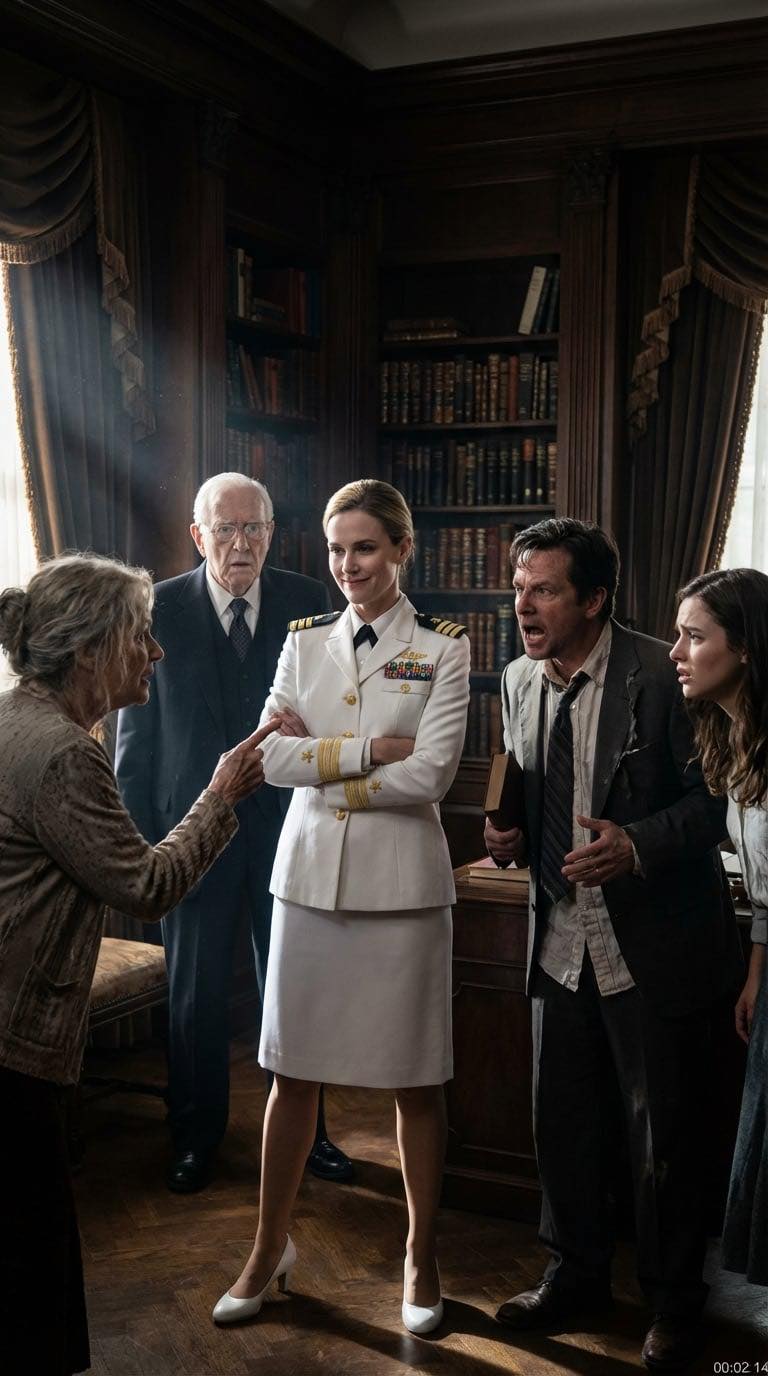
“The Valiant Trust,” I said clearly, “is a legal entity registered in Delaware. Its sole trustee and beneficiary… is Captain Charlene Crane, United States Navy.”
The silence was absolute. It was a physical vacuum.
“The estate was purchased thirteen months ago for 4.2 million dollars,” I continued. “Paid in full. With funds accumulated through twenty-four years of naval service, combat pay, hazardous duty pay, and aggressive investment strategies.”
Victoria’s champagne glass slipped from her fingers. It shattered on the marble floor. Smash.
“You?” Julian’s voice was strangled. “You own the estate?”
“Yes.”
“That’s impossible. You don’t have that kind of money.”
“I am a Navy Captain,” I said, letting the rank hang there. “I command a guided-missile destroyer. My base pay, plus allowances, puts me in the top bracket. I invested in tech in the 90s. I bought property in San Diego in 2008. I live below my means. And yes, Julian. I have that kind of money.”
“But you drive a Subaru,” Britney whispered. “You shop at Nordstrom Rack.”
“Because I choose to,” I said. “Because operational security means not flashing wealth. Because I learned a long time ago that people reveal their true selves when they think you are beneath them.”
The auctioneer looked at me with new respect. “Captain Crane… do you authorize this sale?”
I looked at the mahogany desk Julian wanted. I looked at the piano Britney claimed.
“I do not.”
Victoria gripped the back of a chair. “You bought our home. You let us live here… while you owned it.”
“Yes.”
“Why?” She was crying now. “Why would you do that?”
“Because Dad was going bankrupt,” I said. “Because he was too proud to ask for help. Because I could afford to save him, and I chose to do it in a way that preserved his dignity. He died believing he still owned this place. Would you rather he died knowing he had lost everything?”
The question hung there, unanswerable.
“So,” I turned to the auctioneer. “Cancel the sale. Everything stays where it is.”
“And the family?” the auctioneer asked.
“Mrs. Victoria Crane has been given sixty days to vacate. She can have ninety. That should be sufficient.”
“You’re evicting me?” Victoria sobbed.
“You were going to sell my property without permission,” I said coldly. “You were a tenant, Victoria. A temporary one.”
I walked over to the auctioneer’s table to sign the cancellation papers. Behind me, I heard Julian whisper to Britney, “I can’t believe she let us go on like that. All those years.”
And Britney’s response, barely audible: “I can’t believe we never bothered to ask what she actually did.”
I signed my name—Captain C. Crane—with a flourish. I turned to leave, but Victoria blocked my path. Her eyes were wild, desperate. “You can’t do this. I’ll sue. I’ll fight this trust.”
I leaned in close. “Victoria, I command a warship armed with Tomahawk missiles. Do you really think I’m afraid of your lawyer?”
Chapter 5: The View from the Bridge
I drove back to Norfolk that night. The drive was quiet, just the hum of the tires on the asphalt.
My Subaru was unremarkable, but the woman driving it felt different. lighter.
Three days later, Victoria’s attorney contacted mine. She wasn’t suing. She was asking for an extension. Six months instead of ninety days. I agreed. There was no satisfaction in making her homeless; the point had been made.
Julian sent an email.
I don’t know how to process this. You’re a stranger to me. I thought I knew you, but you’ve been someone else this whole time.
I didn’t respond. He was right. He didn’t know me. But that was his fault, not mine. I had been standing in the corner of the portrait for fifteen years, waiting to be seen.
Britney called. I let it go to voicemail. I listened to it later, in my stateroom aboard the Valiant.
“I’m sorry for everything,” she said, her voice thick with tears. “For not asking. For assuming. For treating you like you were less than. You deserved better from us.”
Maybe I did. But I had stopped needing their validation years ago.
The estate sits now in legal limbo while I decide its fate. I visit occasionally, walking through rooms that belong to me but feel like they belong to ghosts. My father’s ghost. My mother’s ghost. The ghost of the daughter I used to be before I learned that invisibility could be a superpower.
Sometimes, when I’m there, I stand in front of that massive family portrait in the entrance hall. I look at the man in the center, so sure of his legacy. I look at the brother and sister, so confident in their inheritance.
And then I look at the girl in the corner. Slightly out of focus. Relegated to the edge of the canvas.
She’s smiling in the painting. I never noticed that before.
She’s smiling because she knew something the others didn’t. She knew that the “damaged stuff nobody bids on” sometimes turns out to be the most valuable piece in the collection. You just have to know what you’re looking at.
And as I stand on the bridge of my ship, watching the sunrise over the Atlantic, knowing that 17 acres of Virginia soil and a legacy of secrets belong to me… I know I’ve always been very good at seeing.