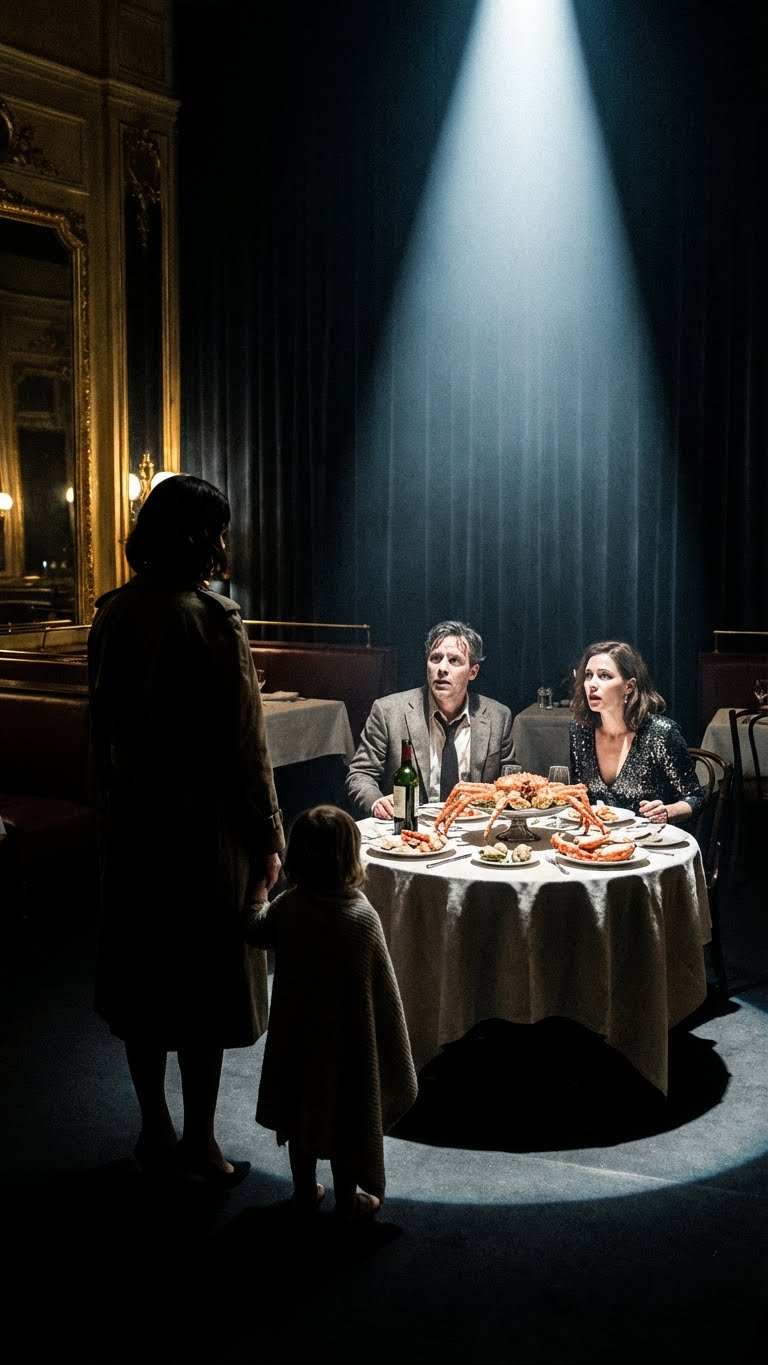
“This is a VIP zone, not a soup kitchen for peasants.” He forgot that while he rented the table, I owned the building, the ground beneath it, and the very air he was breathing.
It was a Tuesday night, the kind of wet, bone-chilling Tuesday that seeps into the walls of the city and makes the radiators hiss in protest. I was sitting on the edge of my daughter’s bed, balancing a digital thermometer in her mouth while scrolling through the quarterly acquisition reports of Vantage Holdings on my phone.
My husband, Greg, saw me as a woman who enjoyed gardening and organizing the pantry. He saw a wife who was content to let him be the “face” of our family while I stayed in the background, presumably knitting or whatever he imagined I did all day. He didn’t know that the “gardening” was me pruning underperforming assets from a real estate portfolio worth nine figures. He didn’t know that Vantage Holdings wasn’t just a company I consulted for; it was the empire I had built from the ground up before I even met him.
“Mommy,” Sophie whispered, the sound scraping against the silence of the room. Her face was flushed, her blonde hair matted with sweat. “Daddy promised to bring me soup. The kind with the little stars.”
I looked at the thermometer. 102°F. My heart clenched, a familiar vice of maternal panic mixed with cold, calculated rage.
“I know, baby,” I soothed, brushing a damp strand of hair from her forehead. “Daddy is… working very hard.”
I checked my text messages. An hour ago, Greg had sent a photo. It was a close-up of a stack of manila folders on a mahogany desk, captioned: Grinding at the office. Don’t wait up. The client is a nightmare.
I had sighed and sent a heart emoji. It was part of the dance. He lied, and I pretended not to notice because it was easier than tearing down the house. But tonight was different. Tonight, Sophie was sick.
I opened my email to check a contract from my legal team. Then, a notification popped up on the top of my iPad screen. It wasn’t from a friend or a tracker. It was an automated alert from the concierge system of Le Petit Palais, the city’s most exclusive French bistro.
VIP Reservation Confirmation: Mr. Greg Vance + 1. Table 4 (The Owner’s Box). Time: 8:00 PM.
I froze. The glow of the iPad screen illuminated the anger rising in my throat.
Le Petit Palais wasn’t just a restaurant. It was the jewel in the crown of a commercial block I had acquired three years ago. And Table 4… Table 4 wasn’t just a VIP table. It was my table. It was the “Owner’s Box,” a secluded alcove with the best view of the floor, reserved exclusively for high-stakes negotiations for my firm or my personal use.
He wasn’t just cheating on me. He was doing it in my boardroom. He was using the status I had secretly bestowed upon him to impress someone else.
Sophie clutched her stomach and let out a sharp whimper, curling into a ball under the duvet. “Mommy… I’m hungry but my tummy hurts… Dad said he’d bring food.”
That was the snap. It wasn’t a loud noise. It was the quiet click of a padlock snapping shut. The “silent architect” was done building. It was time for a demolition.
I stood up, the movement sharp and decisive. I grabbed my trench coat and the car keys.
“We’re going to get that soup, Sophie,” I said, wrapping her in a thick wool blanket and lifting her into my arms. “And we’re going to see Daddy.”
The drive into the city was a blur of neon lights smearing against the rain-slicked windshield. I didn’t drive with the frantic energy of a scorned woman; I drove with the cold precision of a predator closing the distance. My hands were steady on the leather steering wheel. The only sound in the car was the rhythmic thwack-hiss of the wipers and Sophie’s shallow breathing from the back seat.
I pulled the car right up to the curb in front of Le Petit Palais. The valet, a young man named Marcus whom I had hired personally, rushed forward with an umbrella. He saw the look on my face and the flash of recognition widened his eyes.
“Mrs. Vance,” he started, reaching for the door. “I didn’t know you were—”
“Leave it, Marcus,” I said, my voice cutting through the rain. “Keep the engine running.”
I carried Sophie, still wrapped in her blanket, her pajamas peeking out from underneath my coat. We looked like refugees from a storm—hair frizzy from the humidity, faces pale, clothes disheveled.
The restaurant was a golden cavern of warmth and gluttony. The smell of truffle oil, roasted garlic, and expensive wine hit us the moment the heavy oak doors swung open. The ambient jazz was soft, designed to lull the wealthy into spending more.
The maître d’, Henri, froze when he saw me. He looked from my wet coat to the reservation book, panic flaring in his eyes. He started to bow, to announce me, to do damage control.
I held up a single finger. Silence.
Henri clamped his mouth shut and stepped aside.
I navigated through the sea of candlelight, weaving between tables of laughing socialites and business tycoons. I knew this floor plan better than the lines on my own palm. I knew which floorboards creaked. I knew the sightlines.
And there he was.
Table 4 was elevated slightly, sitting behind a velvet rope. Greg was there, looking more alive than he had in months. He was wearing his custom navy suit—the one I paid for. He was laughing, his head thrown back, a glass of Dom Pérignon in one hand.
Across from him sat a woman. She was young, perhaps twenty-four, with hair the color of polished mahogany and a dress that cost more than my first car. Chloe. I didn’t know her name then, but she looked like a Chloe.
Greg was holding a massive, butter-drenched leg of Alaskan King Crab. He wasn’t looking at a spreadsheet or a “nightmare client.” He was looking down the front of her dress with a predatory hunger.
“Open wide,” Greg laughed, oblivious to the world, dangling the meat like a prize. “Best in the city, babe. Only the best for us.”
Beside me, Sophie gripped my hand tighter, her knuckles white.
“Mommy…” she whispered. Her voice was small, raspy, but in the sudden lull of conversation near our table, it carried like a gunshot. “That looks like the crab Daddy said was too expensive for my birthday.”
The air left the room.
Greg froze. The crab leg hovered in mid-air, dripping melted butter onto the tablecloth. He turned his head slowly, his eyes finding us standing in the shadows of the entrance.
He looked at Sophie, pale and shivering. He looked at me, wet and stone-faced.
And in that moment, I didn’t see shame. I didn’t see regret. I saw annoyance. I saw a man whose fantasy had been interrupted by the messy reality of his obligations.
He dropped the crab leg onto the plate with a wet thud. He didn’t apologize. He wiped his mouth with a linen napkin, stood up, and looked at his wife and sick child with a look of pure disgust.
“What the hell are you doing here?” he hissed, his voice vibrating with suppressed rage.
The restaurant had gone quiet. The diners at the surrounding tables were pretending to look at their food, but their ears were pricked, feeding on the drama like sharks sensing blood in the water.
Greg stepped over the velvet rope, blocking our path to the table, creating a physical barrier between his “perfect evening” and his family.
“My stomach hurts…” Sophie whimpered again, leaning her head against my hip. “Dad… I’m hungry. I only had a sip of water…”
Greg slammed his hand down on the railing of the booth. “Get her out of here, Eleanor! Look at you. You’re dripping water on the floor. You look like a drowned rat.”
Chloe giggled. It was a cruel, high-pitched sound. She took a sip of her champagne, looking at me over the rim of the glass with a mixture of pity and disdain. She thought she had won. She thought she was the upgrade.
“Greg,” I said, my voice calm, dangerously level. “Your daughter is sick. You said you were working.”
“I am working!” Greg lied, his face flushing red. “This is networking! And you’re ruining it!”
He gestured wildly around the room, his cufflinks catching the light. “Do you have any idea how hard it was to get this table? Do you have any idea who I am in this town?”
He stepped closer to me, using his height to intimidate, a tactic that had worked on me for years when I was playing the role of the submissive wife.
“This is a VIP zone, Eleanor,” he spat, the words dripping with venom. “Not a soup kitchen for peasants. You’re embarrassing me in front of my investors.”
He pointed a thumb back at Chloe, who was clearly not an investor unless she was investing in bad decisions.
“Take the brat home,” he commanded, turning his back on me. “I’ll deal with your hysteria later.”
I stood there, the water from my coat pooling around my boots. I looked at the terrified waiter who was hovering nearby with a pitcher of water. I looked at the security camera blinking in the corner of the ceiling.
Then, I looked back at Greg.
Something shifted in my chest. The last thread of affection, the last lingering hope that he was a good man deep down, severed. It didn’t break; it dissolved.
“Peasants,” I repeated softly, testing the weight of the word. “Is that what you think we are?”
Greg laughed, a short, barking sound. “Look at you, Eleanor. You’re pathetic. Go home.”
I reached into my pocket and pulled out my phone.
“Calling your mommy?” Greg sneered, picking up his wine glass again. “Go ahead. Cry to her.”
I shook my head, staring dead into his eyes. I unlocked the screen and opened an app he had never seen before. It was a black icon with a simple gold tower logo. Vantage Control Systems.
“No,” I said, my thumb hovering over the screen. “I’m calling the Building Management System.”
I tapped a single button labeled Total Override.
Chapter 4: The Landlord’s Eviction
“One minute,” I whispered.
Greg frowned, confusion clouding his arrogance. “What are you talking ab—”
Click.
The ambient jazz cut out instantly, leaving a silence so sudden it felt heavy.
Then, the lights died.
The crystal chandeliers overhead went black. The sconces on the walls flickered and died. The entire restaurant plunged into pitch blackness.
Screams of surprise rippled through the room. The darkness was total, disorienting. I heard the crash of a glass breaking somewhere to my left.
“What is this?” Greg’s voice rang out in the dark, higher-pitched now, tinged with panic. “Service! We’re paying customers! Turn the lights back on!”
“Payment implies a transaction, Greg,” I said into the darkness. “This is an eviction.”
A single, mechanical hum vibrated through the floorboards.
Snap.
A blinding white spotlight, usually reserved for the stage area during live performances, snapped on from the ceiling rig directly above Table 4.
It pinned Greg and Chloe in a harsh, unforgiving circle of light. They looked like insects trapped under a microscope. Greg threw his hands up to shield his eyes, squinting into the glare. Chloe shrieked, covering her face.
Every other table remained in darkness. The entire restaurant was now a theater, and Greg was the only act on stage.
Then, a deep, synthesized voice boomed over the PA system, echoing off the vaulted ceilings.
“SECURITY ALERT. TRESPASSER DETECTED AT TABLE FOUR. AUTHORIZATION CODE: LANDLORD-ALPHA-ONE. REMOVE IMMEDIATELY.”
The crowd gasped. Murmurs of “Trespasser?” and “Who is that?” circulated in the dark.
Greg spun around, blinded by the light, trying to see who was speaking. “Landlord? What the hell is going on? I rented this table!”
I stepped forward. I didn’t step into the light; I stood just at the edge of it, a silhouette in the darkness.
“You forgot something, Greg,” I said. My voice wasn’t amplified, but in the stunned silence of the room, it was clear as a bell.
He looked toward my voice, blinking rapidly.
“You forgot that the ground beneath your feet belongs to my real estate portfolio,” I continued. “You forgot that Le Petit Palais leases this space from Vantage Holdings. And you forgot that I am Vantage Holdings.”
Greg’s jaw dropped. The color drained from his face so fast he looked like a wax figure. “You… you own the building?”
“I own the building,” I confirmed. “I own the block. I own the lease on that apartment you use for your ‘late nights.’ And right now, I own the very air you are breathing in this room.”
I gestured to the shadows behind him.
Four large men in dark suits materialized from the darkness. They weren’t the regular restaurant bouncers. These were my private security detail, men who were usually stationed at the corporate headquarters down the street.
They didn’t ask Greg to leave. They didn’t say “please.”
Two of them grabbed Greg by the arms, hoisting him out of the booth. The other two stood over Chloe, pointing toward the exit.
“Hey! Get your hands off me!” Greg screamed, kicking his legs like a petulant child. “Eleanor! Tell them to stop! This is insane! I’m your husband!”
“Not anymore,” I said coldly.
As they dragged him away, kicking and screaming past the stunned diners, he looked back at me, eyes wide with terror, expecting me to break. Expecting the “soft” Eleanor to step in and save him from humiliation.
Instead, I walked into the spotlight. I sat down in his chair—the Owner’s Chair. I picked up the menu he had discarded.
The heavy oak doors slammed shut, cutting off Greg’s screams. The silence that followed was thick, filled with the collective shock of fifty wealthy patrons.
I tapped my phone screen again. Lighting: Ambient/Restore.
The chandeliers flickered back to life, casting a warm, soft glow over the room once more. The jazz music resumed, albeit a little shakily.
I looked at Henri, the maître d’, who was shaking like a leaf.
“French Onion soup, extra cheese, and a warm baguette for the lady,” I ordered calmly, gesturing to Sophie, who was climbing onto the bench seat next to me, her eyes wide with awe. “And a hot chocolate. Extra whipped cream.”
“Yes, Madame Vance. Immediately,” Henri stammered, practically running to the kitchen.
Sophie looked at me, then at the empty seat across from us where her father had been sitting moments ago.
“Is Daddy in timeout?” she asked innocently.
“Yes, baby,” I said, pulling her close and kissing her fever-hot forehead. “A very long timeout.”
Through the large bay window that faced the street, we could see the scene unfolding outside in the rain.
Greg was standing on the sidewalk, drenched. The security guards had released him, but he wasn’t leaving. He was pounding on the glass, shouting words we couldn’t hear. Chloe was nowhere to be seen—she had likely hailed the first cab and fled the blast zone.
Greg fumbled for his phone. I watched as he tapped the screen furiously. He was trying to call an Uber.
I picked up my own phone and opened the family plan settings. Device: Greg’s iPhone 14 Pro. Action: Remote Wipe/Factory Reset.
Confirm.
Outside, the light from Greg’s phone screen suddenly went black. He stared at it, shaking it, pressing buttons. Nothing. It was a brick.
He looked around frantically. He ran to the ATM built into the bank facade next door—another tenant of mine. He pulled out his wallet and shoved his Platinum Amex into the machine.
I didn’t control the bank, but I did control the joint accounts. I had flagged all cards as “Stolen” the moment I walked out of the house.
We watched the red light on the ATM flash: DECLINED.
He tried the Visa. DECLINED.
He tried the Master Card. DECLINED.
He slumped against the glass, sliding down until he was sitting on the wet pavement, a ruined man in a three-thousand-dollar suit that was rapidly losing its value.
The soup arrived, steaming and fragrant. Sophie’s eyes lit up. She tore off a piece of the baguette and dipped it into the broth, finally eating.
“Is Daddy coming back in?” Sophie asked between mouthfuls.
I wiped a smudge of dirt from her cheek, feeling the fever beginning to break.
“No, sweetie,” I said softly. “Daddy has lost his table privileges. Permanently.”
My phone buzzed on the table. It was a text from my personal lawyer, who worked as fast as I did.
Update: Access revoked to the penthouse smart locks. Hamptons estate security codes changed. Separation papers are being served to him on the sidewalk by a courier now. Should we call him a cab?
I looked out the window. The courier had just arrived, handing a bewildered Greg a thick envelope. Greg looked at the window, locking eyes with me. He looked cold. He looked small.
I typed back:
No. Let him walk.
One Year Later
The skyline of the city glittered like a necklace of diamonds against the velvet throat of the night. I stood on the balcony of the penthouse suite—not the one I had shared with Greg, but the one atop the Vantage Tower, my new headquarters.
The air up here was crisp and clean. It smelled of ozone and victory.
Inside, through the open glass doors, I could see Sophie sitting at the dining table. She was eight now, taller, her hair braided intricately. She was doing her math homework, biting the end of her pencil in concentration. Her cheeks were pink with health, no trace of the feverish ghost she had been that night at the bistro.
I took a sip of sparkling water, leaning against the railing.
Greg was a distant memory, a cautionary tale I kept filed away in the archives of my mind.
The divorce had been brutal but swift. When you hold all the cards, the game ends quickly. I had heard rumors—because people love to bring rumors to powerful women—that Greg was working as a junior sales rep for a mid-tier logistics company in Jersey. He was living in a studio apartment. He drove a used sedan.
He had called once, about six months ago, to a burner number I had set up for emergencies. He had begged. He had cried. He talked about “family” and “second chances” and how much he missed the “VIP life.”
I hadn’t said a word. I just hung up and blocked the number.
I turned my back on the view of the city—a city I largely controlled—and walked back inside.
“Mom, look!” Sophie beamed, holding up her worksheet. “I got an A on the fractions test! Mr. Henderson put a gold star on it.”
I walked over and hugged her, burying my face in her hair. It smelled of strawberry shampoo and sunshine.
“That’s amazing, Soph,” I said, tracing the gold star with my finger. “I’m so proud of you.”
“Is a gold star like being a VIP?” she asked, tilting her head.
I smiled, remembering the arrogance of a man who thought a rented table made him a king.
“No, baby,” I said. “It’s better. A VIP is something you buy. A gold star is something you earn. That’s the only status that matters.”
The intercom buzzer on the wall chirped.
I walked over to the video monitor.
“Ms. Vance,” the concierge’s voice crackled through. “There is a… gentleman in the lobby. A Mr. Greg? He says he has a delivery for you.”
I looked at the black-and-white screen.
There he was. He looked older. His hairline was receding, and his suit fit poorly. He was holding a cheap, plastic-wrapped bouquet of grocery store carnations. He was looking up at the camera with a pathetic, hopeful smile, trying to summon the charm that had once worked on me.
He thought he could just walk back in. He thought time had softened the concrete of my resolve.
I pressed the talk button.
“Security,” I said, my voice steady, amused, and utterly final.
“Eleanor?” Greg’s voice came through, tinny and desperate. “El, it’s me. I just wanted to say—”
“Tell the delivery boy we’re not buying what he’s selling,” I interrupted. “And if he doesn’t leave the premises in thirty seconds, initiate protocol Landlord-Alpha-One.”
I didn’t wait for his response. I cut the feed, leaving the screen black.
I walked back to the table and sat next to my daughter.
“Who was that, Mom?” Sophie asked, not looking up from her book.
“Just someone who had the wrong address,” I said, picking up a pencil to help her with the next problem. “Now, let’s look at this equation. The foundation has to be strong, or the whole thing collapses.”