The day my wife left me without a word, I believed the worst thing I would ever endure was raising our disabled son alone. I was wrong. Years later, a routine hospital visit uncovered a truth that shattered everything I thought I knew.
I still remember the first time I saw Ivy.
She was dancing barefoot at a bonfire party just outside our college town, her hair wild, her laughter louder than the music. People gravitated toward her like she had gravity in her bones.
And somehow, by some miracle, she chose me.
“Hey,” she said, brushing ash from her cheek as she sat beside me. “You always look like you’re overthinking something.”
I fell in love right then.
We married the following summer. I was twenty-one. She was twenty. Everyone said it was too soon, that Ivy wasn’t the “settling down” type. But when she smiled at me with eyes full of fire and rebellion, I believed we could defy the odds. Love makes you stupid like that.
We were passionate, spontaneous, always broke, and we never cared.
Life felt like a movie. And when Ivy found out she was pregnant, we were terrified—but in that laughing-while-we-cry kind of way. Kyle was born on a rainy Tuesday. The sky outside the hospital window looked like it was leaking ink, and when the doctor placed him in my arms, I swear the whole world paused.
I looked over at Ivy, expecting to see that fire again—just reshaped into motherhood. Instead, she stared at Kyle like she was watching the end of a movie she didn’t like.
“You okay?” I asked gently.
She nodded too fast. “Yeah. Just tired.”
But there was something hollow in her voice. Something missing.
At first, I chalked it up to postpartum exhaustion. Newborns are hard, and we were barely holding it together. But over time, that emptiness in her eyes didn’t fade. If anything, it deepened.
Then came the diagnosis.
Kyle was eighteen months old and wasn’t meeting his milestones. He couldn’t sit up properly. He wouldn’t crawl. After a flurry of appointments, scans, and specialists, we finally had a name for the storm: cerebral palsy.
I remember sitting in the hospital parking lot, holding Ivy’s hand. She was shaking.
“We’ll get through this,” I said.
She didn’t respond.
Over the following weeks, I watched my wife dissolve in slow motion—not into grief for our son, but into something darker. Regret. Resentment. She stopped helping with therapies. Stopped looking at Kyle altogether.
“I didn’t sign up for this,” she whispered once, when she thought I was asleep.
That cut deep. But I stayed. I had to. Kyle needed me.
Then, one morning when Kyle was three, I woke up and immediately felt that something was wrong. It was too quiet. Her perfume was gone from the air. I opened the closet and found it empty.
No note. No warning.
Just… gone.
That was the day I became a single father. Warehouse job by day. Caregiver by night. I stopped sleeping. Stopped dreaming. But I never stopped loving Kyle.
Until one day, years later, when a nurse casually mentioned his blood type.
“Interesting combination,” she said. “Type AB? That usually comes from A or AB parents.”
I blinked. “Wait… are you sure?”
“Positive.”
I smiled politely, but inside, something broke loose. Ivy and I were both Type O.
I tried to forget it. I couldn’t.
That single, offhand comment lodged in my brain like a splinter. When the DNA kit arrived, I stared at the box like it was a ticking bomb.
It sat on the kitchen counter for three days. I kept walking past it, pretending I wasn’t terrified. But late one night, after Kyle had finally fallen asleep, I tore it open, swabbed my mouth, and sealed the envelope like I was burying something sacred.
Part of me hoped it would prove I was just paranoid. That the nurse was wrong. That Google was wrong. That I was wrong.
But deep down, I already knew.
Two weeks later, the results hit my inbox.
Probability of paternity: 0.00%.
I blinked. Read it again. And again.
“No,” I whispered, clicking through the breakdown. “No. No. No.”
The words blurred. My hands went numb. It felt like the oxygen had been sucked out of the room. I stared at the screen, heart pounding, trying to make sense of it. I even emailed the lab, hoping they’d say there had been a mix-up.
There wasn’t.
Kyle wasn’t mine.
I sat there in the dark, the soft hum of the refrigerator the only sound. My son—my boy—wasn’t biologically mine. Yet even in that moment of heartbreak, I didn’t cry for myself. I cried for him. For a truth he never asked for. For the betrayal Ivy buried and walked away from.
“How could you do this to him?” I whispered into the silence, talking to a ghost.
And then something shifted.
A memory. A face.
Greg.
My old supervisor. Mid-forties. Always had a toothpick in his mouth like he thought he was in a movie. Ivy hated coming to the warehouse—except when he was around.
I remembered the way his hand lingered on her back just a second too long. The jokes that made her laugh a little too hard. The time she said, “Greg’s actually really smart, you know,” after I mentioned how much of a jerk he was.
At the time, I thought nothing of it. I was young. Trusting. Stupid.
Now, I saw everything.
And Kyle—God help me—Kyle had his eyes. That sharp, steely blue. That pointed chin.
“No,” I muttered again. “Please, no.”
But the pieces were already falling into place. Ivy hadn’t just lied. She had burned everything down and left me holding the ashes.
Greg went back to his life like nothing happened. Married. Comfortable. Probably still wearing that smug grin—either completely unaware, or worse, fully aware of the secret he helped bury.
I opened my contacts and found his name.
My thumb hovered over the call button.
“Come on,” I whispered. “Be a man. Ask.”
I pressed call.
The phone rang once. Twice.
“Hello?” Same cocky, gruff voice.
“Greg,” I said, my voice shaking with years of betrayal. “We need to talk.”
Pause.
“…Who is this?”
“It’s me. And it’s about Kyle.”
Silence.
And just like that, I knew he knew.
Greg arrived at the café like it was a business meeting—crisp shirt, sunglasses indoors, that familiar tilt to his jaw like he owned the world. He spotted me and nodded like we were old friends.
“Didn’t think I’d hear from you again,” he said, sitting across from me.
I didn’t answer. I pulled the DNA report from my bag, unfolded it slowly, and slid it across the table.
He glanced at it, smirked—and then I saw it. The twitch. The flicker. Panic.
“You knew,” I said quietly.
He leaned back. “Yeah. I knew.”
The silence between us was heavy.
“You’re not even going to deny it?”
He shrugged. “Why bother?”
“Why didn’t you come forward?” I demanded. “Why didn’t you—”
“I told Ivy I’d take care of them if she left you,” he cut in flatly. “But when the kid got sick… I wasn’t signing up for that.”
He said it like he was talking about a broken appliance.
I stood so fast my chair scraped the floor. For one burning second, I imagined flipping the table, breaking his nose.
Then I thought of Kyle.
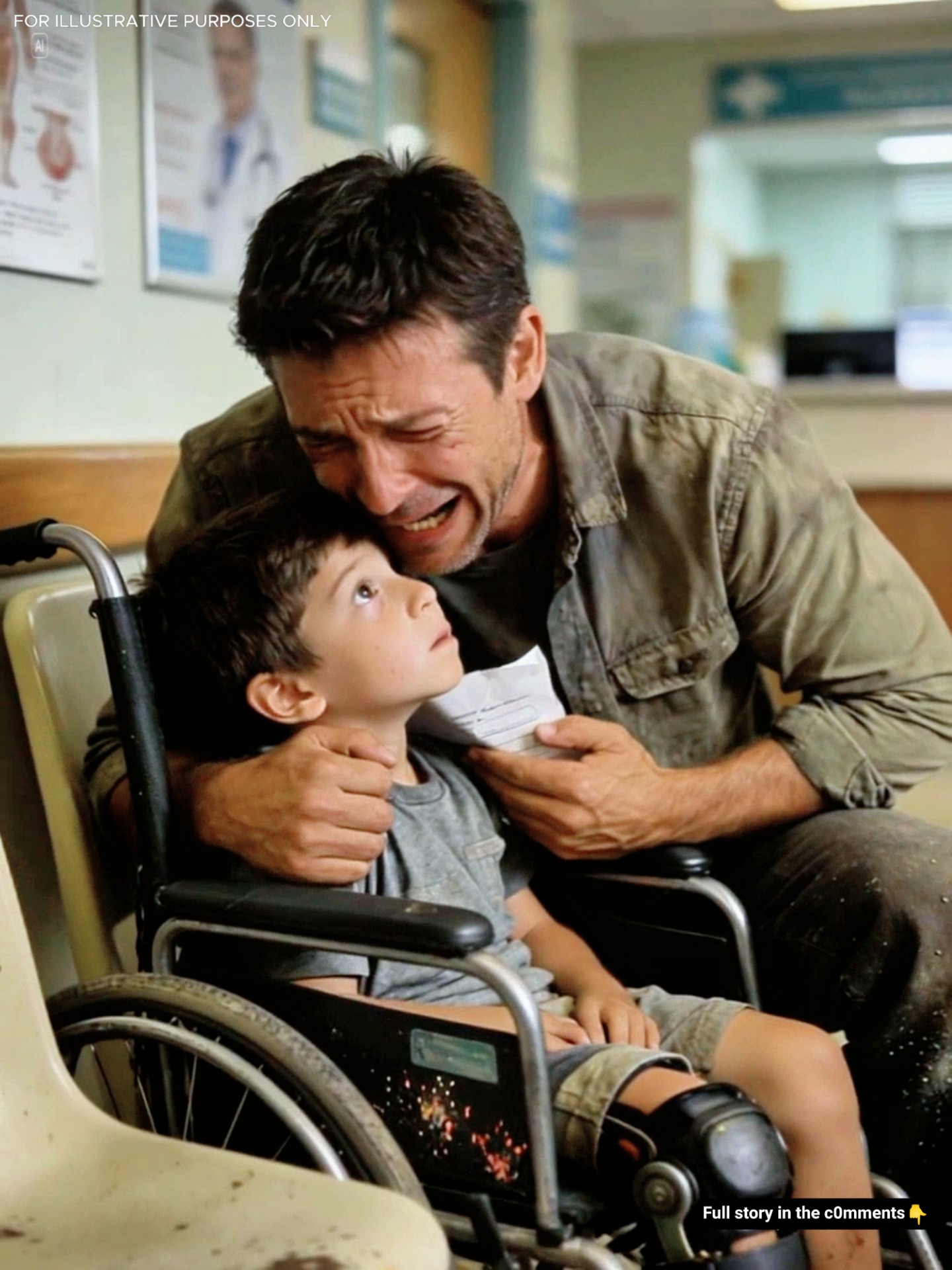
His laugh. His wheelchair. The way he said “Dad” with absolute trust.
I sat back down.
“You’re a coward,” I whispered. “A disgrace.”
Greg scoffed. “You raised him. Be grateful.”
Then I heard it—a sharp intake of breath.
Greg’s wife stood behind him, pale, eyes glassy but unyielding.
“How long?” she asked softly. “How long have you been lying to me?”
“Sandra, I can explain—”
“No,” she said. “Don’t you dare.”
She turned to me. “You’re his father. The only one he’s ever had.”
“I am,” I said.
She looked at Greg. “Get your things out of my house.”
She didn’t scream. She didn’t cry. She just walked away.
A week later, she called me. Offered help. Covered Kyle’s therapy bills for nearly a year—quietly.
“I can’t undo what he did,” she said. “But I can try to do some good.”
Ivy came back years later. Said she missed her son. Said she was struggling.
I opened the door, looked her in the eye, and closed it without a word.
Kyle knows everything now. I told him when he was old enough. We both cried.
Then he hugged me and said, “I’m glad you’re my dad.”
That’s all I ever needed.