The Silent Harvest: A Chronicle of My Own Coup d’État
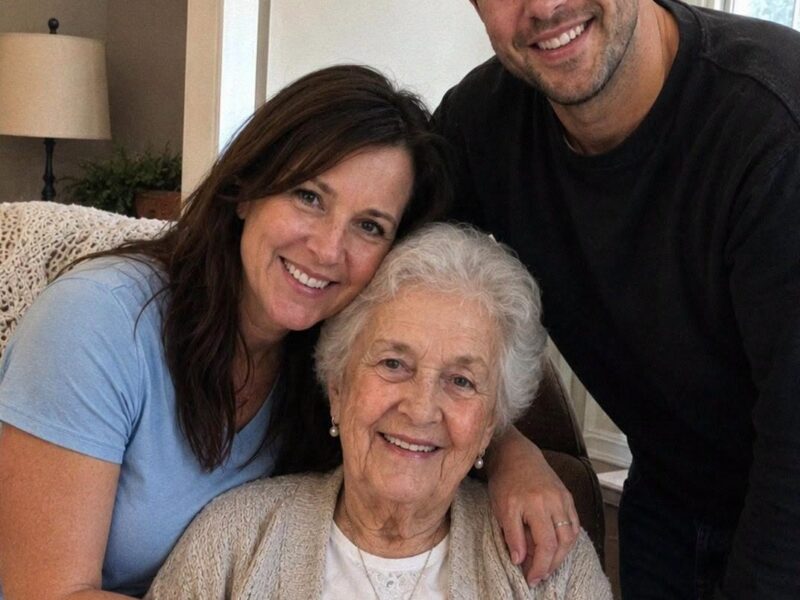
I was sixty-four years old when I realized that being a widow made people treat me like I was crafted from spun glass—transparent, fragile, and liable to shatter at the slightest vibration. They didn’t see the woman who had spent nearly four decades tilling the unforgiving Vermont soil alongside a man who was my North Star. They didn’t see the iron in my spine. They saw a target.
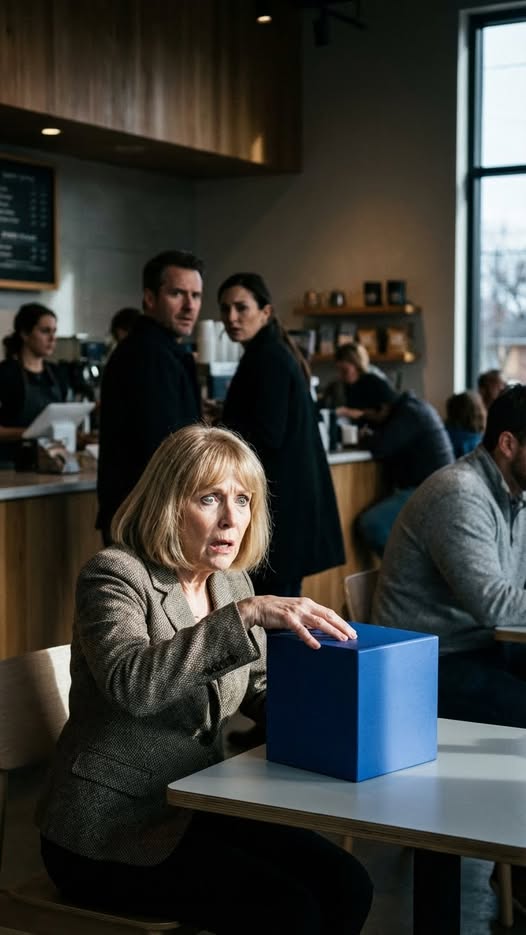
It began on a Tuesday in late October, in a small, weathered establishment called The Copper Kettle Cafe. The air inside was a cloying mixture of cinnamon and burnt coffee beans, a scent that had become a comfort in the year since my husband, Mark Whitmore, vanished into the obsidian silence of Eagle Lake.
My son, Timothy, and his wife, Diane, sat across from me. At forty-two, Timothy had inherited his father’s broad, reliable shoulders, but none of the moral marrow that had made Mark the man he was. Diane, meanwhile, was all sharp edges and expensive manicure. Her nails clicked against her ceramic latte cup like a countdown.
“Mom, you really should consider selling the farmhouse,” Diane said, her voice smooth as polished marble. “It’s far too much space for one person. It’s… inefficient.”
“I’m managing just fine, dear,” I replied, wearing the polite, vacuous smile I’d perfected to keep them at arm’s length.
Timothy shifted, refusing to meet my eyes. “What Diane means is that we’re worried. You’re out there alone with forty acres to maintain. Winter is coming, Mom. The pipes, the roof, the isolation… it’s not safe.”
“Your father and I maintained that land for thirty-seven years,” I said, my voice dropping an octave. “I think I can handle a few more months.”
The conversation died, as it always did when I mentioned Mark. Everyone believed he was dead. His car had been pulled from the lake last November, the driver’s side door swung open like a broken wing, the cabin empty. The police called it an accidental drowning—strong currents, they said. I had buried an empty coffin in Oak Hill Cemetery, a hollow ceremony for a hollow loss.
“We should get the check,” Diane announced, standing abruptly. “Timothy, come help me at the counter.”
I watched them walk away, their heads bent together in a whispered conference. They did that a lot lately—treating me like a problem to be solved rather than a mother to be loved.
I was reaching for my purse when she appeared.
The woman seemed to materialize from the steam of the espresso machine. She was perhaps fifty, with steel-gray hair pulled back in a severe, tight bun and eyes that seemed to look through the layers of my skin. She wore a dark wool coat despite the warmth of the cafe. Without a word, she placed a small blue box, the size of a hardcover book, on the table between us.
“Mrs. Whitmore,” she said. It wasn’t a question.
“Yes?” I whispered, my heart hammering against my ribs.
She leaned in, her breath smelling faintly of peppermint and anxiety. Her fingers, I noticed, were trembling. “You’ll need this tonight. 11:15. Answer it when it rings.”
“I don’t understand—who are you?”
“Trust no one,” she hissed.
Before I could breathe, she turned and vanished into the crowd of tourists outside. The blue box sat there, innocent and threatening. My hand moved with a mind of its own, snatching the box and shoving it deep into my leather bag just as Timothy and Diane returned.
“Ready to go, Mom?” Timothy asked, his smile not quite reaching his eyes.
“Yes,” I managed, my voice a brittle mask. “Let’s go home.”
As we drove back to the farmhouse, the blue box felt like a hot coal against my hip. I listened to their talk of property values and “independent living communities,” but my mind was miles away, submerged in the dark water of the lake. I didn’t know it then, but the life I knew was already over.
I sat in the passenger seat, watching the red maple leaves bleed across the landscape, wondering if the ticking I heard was the car engine or the start of a bomb.
The Ghost in the Machine
The drive up the gravel path to the Whitmore Farm was a blur of lengthening shadows. Timothy and Diane dropped me off with a half-hearted invitation for coffee that I declined. I watched their SUV’s taillights fade into the dusk, feeling the silence of the forty acres settle over me like a shroud.
Inside, I did something I hadn’t done in forty years: I locked the deadbolt.
I sat at the oak kitchen table and stared at the blue box. My hands shook as I pried off the lid. Inside, nestled in layers of white tissue paper, was a cell phone.
My breath hitched. It wasn’t just any phone. It was a rugged, black device with a faded Dartmouth sticker on the back and a spiderweb crack in the upper corner. I recognized it instantly. It was Mark’s phone. The police had told me it was lost to the depths of Eagle Lake, claimed by the silt and the cold.
I pressed the power button. The screen glowed to life, showing a full battery. The wallpaper was a photo from our 40th anniversary—Mark and I, laughing, his arm draped over my shoulder with the effortless strength I’d relied on for a lifetime.
I checked the call logs. Empty. The messages. Empty. It had been wiped clean, except for that single, haunting image.
The kitchen clock ticked. 7:00 PM. 8:30 PM. 10:00 PM.
I made a pot of chamomile tea but didn’t drink it. I paced the floorboards, checking the locks, the paranoia blooming in my chest like a dark flower. I tried to call Timothy, but it went straight to voicemail. Trust no one, the woman had said. Did that include my own flesh and blood?
At 11:14 PM, I sat at the table, the phone centered on the wood like an altar. My pulse was a frantic rhythm in my ears.
At 11:15 PM exactly, the phone erupted.
The ringtone was Springsteen’s “Born to Run”—Mark’s favorite. The screen flashed Unknown Caller. I picked it up, my thumb hovering over the green icon before sliding it across.
“Hello?” I whispered.
Silence. Then, the sound of rhythmic breathing. It was soft, measured, and agonizingly familiar.
“Christina,” a voice said.
It was distorted, passed through a digital filter that made it sound like it was coming from the bottom of a well, but the cadence was unmistakable. It was Mark.
“Mark? Oh God, Mark, where are you?”
“Don’t talk. Just listen,” the voice crackled. “You are in danger, Christina. Don’t trust Timothy. Don’t trust Diane. And whatever you do, do not trust the police. The truth is buried where the roses bloom. They’re coming for the land. Don’t let them take it.”
“Mark, wait! Tell me what happened!”
“11:15,” he whispered. “Every night. Until the harvest is done.”
The line went dead. I sat in the dark kitchen, the silence now screaming, realizing that my dead husband had just warned me that my son was my enemy.
I looked out the window into the darkness of the north field, and for the first time in my life, I was terrified of my own home.
The Vulture’s Shadow
I didn’t sleep. I sat with a kitchen knife on the table and Mark’s phone in my pocket. By 8:00 AM, the gravel crunched outside. I peered through the curtains to see Timothy’s SUV. He was alone, carrying two cups of coffee.
I opened the door, masking my exhaustion with a practiced layer of grandmotherly warmth.
“Morning, Mom,” he said, stepping inside. “I thought we could talk. Just us.”
“Just us” was a phrase that now sounded like a threat. We sat in the living room, surrounded by the ghosts of our family history. Timothy looked around the room, his eyes appraising the crown molding and the antique furniture not with nostalgia, but with the cold calculation of a liquidator.
“Mom, I’ve been talking to Diane’s firm. They’ve been approached by a group called Pinnacle Holdings. They’re looking to develop this area into a luxury resort. They’ve made an offer for the farm. A significant offer.”
“I told you, Timothy. This land isn’t for sale.”
“You’re being irrational!” he snapped, his facade slipping. “The taxes are eating your savings. The barn is rotting. You’re one fall away from dying in this house alone! If you sell, you’ll have millions. You can live in the city, near us. We can take care of you.”
“Is that what this is? Care?” I asked, my voice steady. “Or is it the developers’ commission?”
Timothy’s jaw tightened. “We’re doing what’s best for you, whether you like it or not. We’ve already spoken to an elder care attorney. If you won’t make the right decision, we may have to… intervene. For your own safety.”
A guardianship. They were going to strip me of my autonomy.
After he left, the air in the house felt thin. I went to Mark’s old office and began to dig. I found a file I’d never seen before, tucked behind a loose panel in the desk. It was a survey request from Boundary Line Surveyors, dated two months before Mark’s accident.
I opened our shared email account on the laptop and searched for Pinnacle. My heart stopped. There were emails between Mark and a man named Richard Pembroke. Mark hadn’t been selling the farm; he had been investigating the developers. He’d discovered that Pinnacle Holdings was a shell company.
Then came the knock. Not the familiar rap of a son, but the heavy, authoritative thud of the law.
Detective Brian Hardwick stood on my porch. He was the man who had led the search for Mark a year ago. He had kind eyes that I now realized were merely a professional mask.
“Mrs. Whitmore,” he said, stepping inside without being asked. “We’ve had a new witness come forward regarding your husband’s accident. They claim to have seen a second vehicle following Mark’s car into the lake.”
“A second vehicle?” I asked, my hand clutching the phone in my pocket.
“Yes. We’re reopening the case. But I have to ask… has anyone been contacting you? Anyone asking about Mark’s files? Or perhaps a blue box?”
The air in the room turned to ice. He knew. The police were part of it. Trust no one, the voice had said.
“No,” I lied, my voice a masterpiece of Southern Vermont stoicism. “Nothing like that.”
Hardwick leaned in, his shadow stretching across the floor. “If you’re hiding something, Christina, you’re putting yourself in a very precarious position. For your own sake, tell me what’s in the box.”
As Hardwick stared at me, I realized I wasn’t just a widow anymore; I was an informant in a war I didn’t yet understand.
The Truth in the Garden
I managed to usher Hardwick out, but I knew my time was evaporating. I called the only person I knew who had no stake in the land: Sarah Brennan, Mark’s sister in Boston.
“Sarah, I need you to come. Now. Don’t tell Timothy.”
“I’m already in the car, Christina. I’ll be there by morning.”
But morning felt a lifetime away. 11:15 PM arrived again. The phone rang.
“The truth is buried,” the distorted voice said. “The rose bush. Dig, Christina. Before they find you.”
I grabbed a flashlight and a trowel. I went out into the biting October night, heading for the memorial rose garden I’d planted for my mother. The wind howled through the maples, sounding like a choir of the damned. I knelt in the dirt, clawing at the frozen earth at the base of the Queen Elizabeth Rose.
My trowel hit something hard. A waterproof Pelican case.
I wrenched it from the ground just as a flashlight beam cut through the darkness from the direction of the barn.
“Mom? What are you doing out here?”
It was Timothy. But he wasn’t alone. Diane was beside him, her face illuminated by the harsh light of her phone. Behind them stood Hardwick.
“Give us the case, Christina,” Diane said, her voice devoid of its usual artificial sweetness. “You don’t know what you’re playing with. Mark was a fool, and he paid for it. Don’t make the same mistake.”
“You killed him,” I whispered, clutching the muddy box to my chest. “Your own father, Timothy. How could you?”
“It was an accident!” Timothy cried, though his voice lacked conviction. “We just needed him to sign the papers! He was going to ruin everything!”
“He was going to stop a drug smuggling operation,” a new voice boomed from the shadows.
A man stepped into the light. He was rugged, mid-fifties, with a badge hanging from his neck. Agent David Hall, FBI.
“Step away from her, Hardwick,” Hall commanded, his service weapon drawn. “We’ve been tracking this ‘development’ for two years. Mark was our inside man. He wasn’t just a farmer; he was a federal informant.”
The scene erupted. Hardwick went for his gun, but Hall was faster. A shot echoed across the valley, shattering the silence of the night.
“Run, Christina!” Hall shouted.
I didn’t look back. I ran into the woods, the muddy case gripped in my hands. I knew these woods. I knew every root and stone. I sprinted toward the old logging road, my lungs screaming for oxygen. A car was waiting there—a nondescript sedan. The woman from the cafe, Jennifer Ward, held the door open.
“Get in!” she urged.
As we sped away, I looked back to see the farmhouse swarmed by blue lights. The coup had begun.
We drove into the night, the muddy box on my lap containing the evidence that would send my son to prison and bring my husband back from the dead—if only in memory.
The Harvest of Justice
We holed up in a safehouse in Montpelier. Jennifer Ward and Agent Hall sat with me as we opened the Pelican case. Inside was a USB drive, a handwritten journal, and a sealed envelope addressed to me.
I opened the letter first.
My Dearest Christina,
If you are reading this, I am gone. I found out what Timothy and Diane were doing—using the farm’s cave system to store shipments coming across the border. I tried to talk him out of it, but Diane… she’s the one with the poison in her heart. I couldn’t go to the local cops; Hardwick was on their payroll. I went to the Bureau. I’m sorry for the lies. I did it to keep you clean. To keep you safe. The farm is yours, and it always will be. There is a trust fund in Grand Cayman. The details are on the drive. Use it to find the sun. I love you.
The USB drive contained everything—recordings of Timothy and Diane discussing the “removal” of the “obstruction” (Mark), ledger books of drug payments, and GPS coordinates of the stash houses.
The trial was a circus. I sat in the front row, wearing my best black suit, as I watched my son and daughter-in-law be led away in shackles. Timothy looked at me once, his eyes pleading for a forgiveness I didn’t have the strength to give. Diane looked at me with pure, unadulterated venom. She was sentenced to thirty years. Timothy, for his cooperation against the cartel, got fifteen.
Detective Hardwick was found two days after the shootout, having taken the coward’s way out in his cruiser.
Months later, the farm was quiet again. The caves were sealed with tons of concrete, courtesy of the federal government. Sarah moved in with me, and together we turned the Whitmore Farm into a sanctuary for at-risk youth—a place where the land could heal people instead of hiding secrets.
I sat on the porch one evening, a glass of iced tea in my hand, looking at the roses. They were blooming late this year, vibrant and defiant.
Mark’s phone sat on the table. It hadn’t rung at 11:15 in a long time. But as the sun dipped below the Green Mountains, the screen lit up with a single text message from a number I didn’t recognize.
The harvest is done. Sleep well, Christina.
I smiled, closed my eyes, and for the first time in a year, I breathed the air of a woman who was no longer made of glass. I was made of the mountain itself.
The legacy of the Whitmores was no longer a secret buried in the dirt, but a story written in the light of justice.