In the quiet aftermath of a crumbling life, the search for solace often leads to the most unexpected of places. For Rachel, a woman navigating the double trauma of a high-conflict divorce and a sudden career termination, the solution was a cedar cabin in the Vermont wilderness. Her twelve-year marriage had ended when her husband sought a “fresh start,” and her professional stability vanished shortly after during a corporate acquisition. Facing the daunting prospect of starting over, Rachel turned to the peace of the mountains, unaware that her healing would be facilitated by a series of culinary disasters delivered by her elderly neighbors, Evelyn and George.
The statistics surrounding late-life transitions and social isolation are stark. Research indicates that nearly 27% of adults over the age of 60 live alone in the United States, a factor that significantly increases the risk of mental health struggles. For Evelyn and George, who were in their mid-70s, the arrival of a “skinny” stranger like Rachel was an opportunity to exercise a dormant sense of purpose. Within twenty-four hours of her arrival, Evelyn appeared with a lasagna that had physically collapsed—a dish that was simultaneously mushy, rubbery, and seasoned with an unidentifiable, metallic tang.
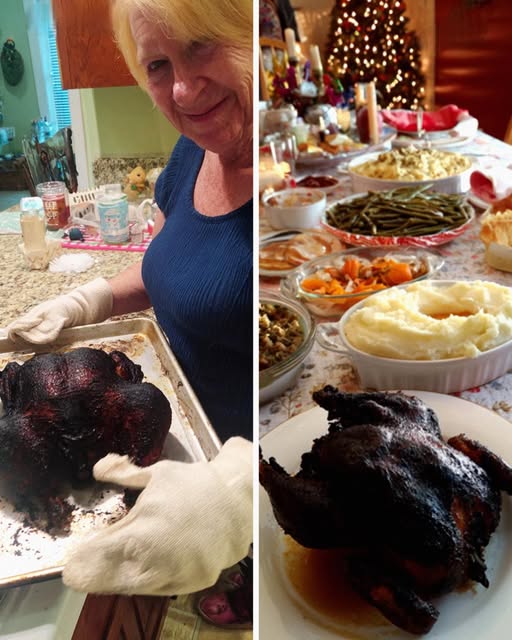
For three months, Rachel engaged in a masterclass of polite deception. She complimented beige soups with mysterious lumps and forced down pot roasts so dry they required a liter of water to swallow. This experience highlights a common social phenomenon: the prioritization of emotional connection over physical comfort. Rachel hated the food, but she cherished the company. However, the charade reached a breaking point one spring afternoon when Evelyn delivered a “chicken” dish seasoned with an abrasive mix of cinnamon and pepper. As Rachel attempted to discard the meal on her back porch, she was intercepted by George.
What followed was a revelation that reframed Rachel’s entire perspective on grief and recovery. George revealed that for eighteen years following the death of their daughter, Emily, Evelyn had been unable to even enter a kitchen. The act of cooking had become a psychological trigger, a reminder of the life they had lost. When Evelyn finally began cooking again, the meals were objectively terrible, but they represented a victory over a nearly two-decade-long paralysis. George’s plea was simple: keep pretending. For Evelyn, these meals weren’t about nutrition; they were about reclaiming pieces of her identity that had been buried in the wake of tragedy.
This dynamic underscores the importance of mental health support and community integration for those suffering from prolonged grief. By accepting the food, Rachel wasn’t just being polite; she was participating in Evelyn’s informal rehabilitation. The relationship deepened over the summer, as they shared stories of Emily and the complexities of long-term marriage. Rachel realized that while she had come to Vermont to disappear, she had instead been found by two people who understood the weight of a hollowed-out life.
The stability of their new “family” was tested when George suffered a mild stroke. The subsequent medical restrictions on sodium and fat caused Evelyn to stop cooking entirely, paralyzed by the fear that her imperfect recipes would further harm her husband. The house, once full of laughter and the smell of burnt cookies, fell into a hollow silence. This shift highlights the fragility of elder care and the necessity of robust health insurance and support systems for aging populations. Seeing her neighbors decline, Rachel decided to return the favor. She utilized every culinary skill she possessed to prepare a heart-healthy lemon-roasted chicken and garlic mashed potatoes, bringing the warmth back to their table.
In the world of wealth management and asset protection, we often focus on tangible goods, but Rachel’s experience suggests that the most valuable assets are the relationships we build during our lowest points. By the time Rachel realized she was broke and unemployed, she also realized she was richer than she had been in years. She had found a “something” that replaced the “nothing” her ex-husband had left behind.
The story of Rachel, Evelyn, and George is a testament to the fact that healing happens in the spaces between grief, often over a kitchen table. It reminds us that family is a construct of choice and consistency rather than just biology. For many women navigating middle-age transitions, the fear of isolation is a primary concern. Yet, as Rachel discovered, love can sneak up on you wearing a flour-stained apron and holding a casserole dish that should probably be classified as a health hazard.
Today, their “experimental Thursdays” have become a local tradition of sorts—a blend of terrible recipes and honest feedback that usually ends in laughter and a pizza delivery. Rachel still doesn’t have a definitive plan for her professional future, but she has a definitive purpose. She has learned that the best meals aren’t defined by their flavor profile, but by the people who share them. The “Evelyn flavor”—a mix of over-salting and pure, unadulterated love—has become her favorite seasoning.
As Rachel watches the sunset from her cabin porch, she no longer feels like she was hollowed out by a spoon. Instead, she feels filled by the stories of a daughter she never met and the wisdom of a couple who refused to let her grieve in isolation. She came to Vermont to read books and cry, but she stayed because she found a home. This journey from tragedy to community serves as a powerful reminder: even when your life falls apart in ways you never saw coming, there is always a seat at the table for you, provided you’re willing to take a bite of whatever is being served.

