Chapter 1: The Defendant’s Table
The mahogany door of the courtroom felt heavier than lead as I pushed it open. It was a physical weight, mirroring the suffocating pressure that had been sitting on my chest for the last three weeks.
I adjusted the collar of my suit—a charcoal poly-blend I’d bought off the rack at Macy’s three years ago for entry-level interviews. It was a little tight in the shoulders and frayed at the left cuff, a stark contrast to the tableau waiting for me in the front row.
My parents, Eleanor and Robert, sat with their backs rigid, posture perfect. Next to them was Caleb, my younger brother, the family’s crowned prince. They were draped in Italian wool and designer silk, a visual symphony of wealth that I knew, better than anyone, was built on a foundation of sand.
Mom saw me first. Her gaze didn’t hold warmth or concern; it held the annoyance one might reserve for a stain on a rug. She leaned over and whispered something to Dad. He sighed, a long, theatrical exhalation, and actually rolled his eyes. It was a gesture that said, Why is he making this so difficult? Why is he wasting our time?
Their lawyer, a man named Richard Sterling, was busy arranging his papers on the plaintiff’s table. He looked exactly like what a $500-an-hour retainer buys you: silver fox hair, a tan that suggested frequent trips to St. Bart’s, and a smile that didn’t reach his predatory eyes. He radiated the confidence of a man who was used to crushing ants.
Did they really think I would just hand it over? Did they honestly believe I would walk into this room, apologize for existing, and sign away the only thing Grandpa had left me?
I walked to the defendant’s table, the sound of my scuffed dress shoes echoing on the linoleum. I set my briefcase down. It was an old leather satchel Grandpa had given me when I started community college. Inside were three color-coded folders.
My family thought they were walking into a formality. They thought they were here to rubber-stamp a conservatorship for a wayward son. They had absolutely no idea what was in those folders.
The bailiff’s voice boomed, cutting through the thick tension. “All rise.”
Judge Meredith Stone entered the room, her black robes flowing. She was a woman known for her no-nonsense demeanor and sharp intellect. I straightened my tie, took a deep breath, and looked at my brother. Caleb was smirking, already spending the money in his head.
Enjoy it while it lasts, Caleb, I thought, a cold calm settling over me. Because by noon, your world is going to burn.
Chapter 2: The Invisible Son
To understand why I was standing in a courtroom prepared to destroy my own family, you have to understand the architecture of my childhood.
I was never the favorite. In the constellation of the Vance family, I was the dark matter—invisible, unacknowledged, yet expected to hold things together. Caleb, on the other hand, was the sun.
When Caleb turned sixteen, a brand-new BMW appeared in the driveway with a red bow the size of a beach ball. When I turned sixteen, I was handed a bus schedule and told that if I wanted a car, I’d better pick up more shifts at the grocery store.
Caleb’s college tuition was paid in full, including a luxury off-campus apartment and a monthly stipend for “networking.” I worked nights stocking shelves to pay for community college, then transferred to a state school on loans I signed for myself. I lived in a damp basement apartment with three roommates and a colony of mice in the walls.
I wasn’t bitter. Bitterness is a luxury for people who have time to dwell. I just learned early that I was a separate entity from them. I was on my own.
But Grandpa Arthur saw me.
My father’s father was a man of few words and calloused hands. He was the only one who showed up to my Associate’s Degree ceremony, sitting alone in the bleachers while my parents took Caleb to a resort in Cabo. He was the one who took me to lunch every other Sunday at a greasy spoon diner, asking about my classes, my grades, and my plans.
“You’re the one who will make something of yourself, Ethan,” he told me once, dipping toast into his yolk. “Your brother’s got charm. Charm is cheap. You’ve got grit. Grit lasts longer.”
He was also the one who taught me the habit that would eventually save my life.
“Keep records, kiddo,” he’d say, tapping his temple. “Every letter, every receipt, every email. Memories fade, and people lie. Paper never forgets.”
I thought he was just being a paranoid old man. I didn’t realize he was arming me for a war he knew was coming.
When Grandpa Arthur passed away last year, the grief hit me like a physical blow. I was the only one who cried at the funeral. My parents were too busy eyeing the estate.
When the will was read, the distribution seemed typical. Caleb got the lake house. Mom and Dad got the investment portfolio. And I got the “Education Fund.”
My parents smirked when they heard it. They thought it was a pittance, maybe a few thousand dollars.
Then the executor explained the details. Grandpa had seeded the fund twenty years ago with high-risk, high-reward tech stocks and let it compound, untouched.
My share was worth $1.2 million. More than the house and my parents’ investments combined.
I saw the blood drain from my mother’s face. I saw the greed flash in Caleb’s eyes like a shark sensing blood in the water.
Two weeks later, the phone rang.
“We need to talk as a family,” Mom said, her voice tight. “Come to the house on Saturday.”
I should have known then. I should have run. But I still had a tiny, foolish part of me that wanted their approval. So, I went.
Chapter 3: The Harmony Agreement
When I walked into the living room of my childhood home, the ambush was already set.
Mom and Dad were on the sofa. Caleb was in the armchair. And sitting at the head of the dining table was a man in a gray suit I had never seen before.
“This is Richard,” Mom said, gesturing vaguely. “Our family attorney.”
I sat down, the air in the room thick enough to choke on. It smelled of expensive potpourri and betrayal.
Richard didn’t waste time. He slid a thick document across the mahogany table toward me. It was bound in a blue cover, titled “The Vance Family Harmony Agreement.”
“We’ve drafted this for everyone’s benefit,” Richard said, his voice smooth as silk.
I opened it and scanned the first page. The legalese was dense, but the meaning was clear. The agreement stipulated that I would voluntarily transfer my entire inheritance into a “Family Management Trust.” My parents would act as trustees. They would oversee the investments, manage the assets, and grant me a monthly allowance.
$2,000 a month. From my own money.
“You’ve never been good with money, sweetheart,” Mom said, her voice dripping with a sickly-sweet concern that made my skin crawl. “We’re just trying to protect you.”
“Protect me?” I asked, looking up. “I’ve managed my own finances since I was sixteen. I have a credit score of 780. I have zero consumer debt.”
“You’re young, impulsive,” Dad chimed in, crossing his arms. “This kind of sum could ruin your life if you’re not careful. Look at what happens to lottery winners.”
Caleb leaned forward, resting his elbows on his knees. “Don’t be selfish, Ethan. This is about keeping Grandpa’s legacy intact. As a family.”
Legacy, I thought. You mean your lifestyle.
I looked at the paper again, then at Richard. “And if I say no?”
My father’s face hardened. The mask of concern slipped, revealing the disdain beneath. “Then we’ll do this the hard way.”
Richard cleared his throat, adjusting his cufflinks. “If you refuse to sign, we are prepared to file a petition with the probate court. We will seek a conservatorship.”
The word hung in the air like a guillotine blade. Conservatorship.
“It would be unfortunate,” Richard continued, his tone dropping to a conspiratorial whisper. “Expensive. And deeply embarrassing for you. Public records, mental health evaluations… it could affect your employment.”
He let the threat settle.
“You have 72 hours to decide,” Richard said, checking his Rolex.
I stood up. My legs felt shaky, but I forced my spine straight. I picked up the unsigned agreement.
“I’ve decided,” I said.
I turned and walked out the door, ignoring my mother’s calls to come back. I got into my ten-year-old sedan, drove three blocks, and pulled over to vomit on the side of the road.
I had 72 hours before they tried to end my life as a free adult. I didn’t waste a second.
Chapter 4: The Petition
Seventy-two hours later, almost to the minute, a process server knocked on my apartment door.
I signed for the large manila envelope. My hands were trembling so badly I could barely hold the pen. Inside was the petition. Fourteen pages of pure fiction.
They were asking the court to declare me financially incompetent. To appoint Eleanor Vance as the conservator of my assets.
The allegations were brutal. They claimed I had a history of “reckless spending” (I bought used cars and shopped at Goodwill). They claimed “poor judgment” and an “inability to manage complex financial matters.” They even alluded to unspecified “mental instability.”
All lies. But they were notarized lies. Filed. Official.
The court date was set for three weeks out.
That afternoon, my phone rang. It was my boss.
“Ethan, can you come in? We need to talk.”
I sat in her office as she slid a printout across the desk. It was a public record search. My name. The petition.
“Is there something going on we should know about?” she asked, looking uncomfortable.
“It’s a family dispute,” I said, my voice tight. “It’s not true.”
“We handle sensitive client data, Ethan,” she said, avoiding my eyes. “We’re going to need to put you on temporary administrative leave. Until this is resolved. It’s policy.”
I walked out of the office in a fog, a cardboard box of my belongings in my arms. They had struck the first blow, and it was devastating.
My best friend, Sarah, came over that night. She read the petition and sighed. “Just give them half,” she said gently. “It’s not worth the fight, Ethan. They have money, they have lawyers. You’ll still have $600,000. That’s more than most people ever see.”
I thought about it. I really did. It would be so easy to surrender. To let them win just to make the pain stop.
But then I opened the binder.
Grandpa’s Binder.
He had given it to me five years ago, filled with documents about the trust. “Keep this safe,” he had said.
I started reading, looking for anything that could help. I turned to page 12, and my heart stopped.
Section 7, Subsection D.
I read it three times to make sure I wasn’t hallucinating.
“Any beneficiary who initiates or participates in legal action to deprive another beneficiary of their designated share shall immediately forfeit their entire interest in this Trust to the remaining beneficiaries.”
A Forfeiture Clause. A nuclear option.
And in the margin, in Grandpa’s distinct, shaky blue ink: Trust but verify, kiddo.
He knew. Somehow, the old man knew exactly what his son and grandson were capable of.
I called an old study buddy, Jake, who had just passed the bar. He came over, read the clause, and whistled low.
“This is enforceable,” Jake said, looking up with wide eyes. “If they are suing you to take your share, and this clause is valid, they forfeit everything. The lake house, the investments, all of it. Are you sure you want to do this? This is war.”
“I didn’t start the war,” I said, staring at the page. “But I’m going to end it.”
I drafted a letter that night. Certified mail to my parents and Richard. It included a copy of Section 7, Subsection D, highlighted in neon yellow.
You have 48 hours to withdraw your petition. If you proceed, the Forfeiture Clause will be enforced. You will lose everything.
I sent it at 6:00 a.m. I waited.
The deadline passed. They didn’t withdraw. They doubled down.
Chapter 5: The Forgery
Two days later, Richard filed an amended petition. This one was worse.
Now they were claiming Undue Influence. They argued that Grandpa wasn’t mentally sound when he set up the trust structure twenty years ago, and that I—a child at the time—had somehow manipulated him.
They attached an affidavit from a doctor who had seen Grandpa once, four years before he died, for a routine checkup. The affidavit claimed Grandpa showed signs of confusion. It was a lie, but it was a dangerous one.
Simultaneously, Caleb launched the PR campaign. He posted a photo on Instagram of him and Grandpa smiling at Christmas ten years ago. The caption read: “Fighting to protect his true wishes from those who would twist them for greed. Family is forever. #GrandpasLegacy”
The comments made me nauseous.
“Stay strong, Caleb.”
“Money changes people, so sad.”
“Praying for you against your toxic brother.”
I couldn’t sleep. I couldn’t eat. I sat at my kitchen table at 2:00 a.m., staring at the amended petition.
I opened Grandpa’s binder again, comparing the documents they submitted to the originals I had.
Something was off.
I looked at the “Trust Amendment” my parents had submitted—the document claiming Grandpa wanted “unified family management.” It was dated March 2019.
My original copy of the trust had no such amendment.
I pulled out a magnifying glass. I looked at the notary seal on their document.
“Commission Expires: June 2023.”
I looked at the notary seal on my genuine documents from the same era. Different name. Different expiry.
I found the name of the notary on their document: Thomas Miller. I looked him up. Retired, living in Arizona.
I called him the next morning.
“I keep copies of everything I ever notarized, son,” Mr. Miller told me over the phone. “Send me the document number.”
I did. He called back an hour later.
“I never notarized that,” he said, his voice angry. “That’s not my seal. The font is wrong. Someone photoshopped my stamp onto that paper.”
He sent me an affidavit that afternoon confirming the forgery.
But I didn’t stop there. I paid $300 to a forensic document examiner to look at the paper stock. The report came back in four days.
The paper stock used for the “2019” amendment contained a specific fiber blend that wasn’t manufactured until 2022.
It was a forgery. A clumsy, desperate forgery.
My family hadn’t just tried to bully me. They had committed a felony.
I sat in my apartment, holding the report. The fear evaporated, replaced by a cold, sharp clarity. Why would they go this far? Why risk prison?
I started digging into public records. It’s amazing what you can find if you know where to look.
I searched for Caleb’s startup—the “tech incubator” my parents were so proud of.
Status: Dissolved.
Lawsuits: 3.
Default Judgment: $340,000.
I searched my parents’ address.
Notice of Default.
Foreclosure Pending.
Amount Owed: $485,000.
I pulled my father’s investment history.
Margin Call: Liquidated.
The math was simple. They weren’t just greedy. They were broke.
Caleb’s failure: $340k.
The house debt: $485k.
Their combined trust shares: Roughly $670k.
It wasn’t enough. They needed my $1.2 million to plug the holes in the sinking ship. They thought drowning me would keep them afloat.
I closed my laptop. I knew exactly what I had to do.
I drafted a Counter-Petition.
Breach of Fiduciary Duty.
Fraud.
Enforcement of the Forfeiture Clause.
I worked through the night, checking every citation, every exhibit. At 11:43 p.m., I submitted it electronically.
The confirmation email arrived.
Attorney of Record: Ethan Vance, Esq.
That was the secret I had kept for four years. I hadn’t just been working nights. I had been attending law school part-time. I passed the bar six months ago. I hadn’t told them because I didn’t want their judgment or their questions.
But now? Now it was my sword.
Chapter 6: The Esquire
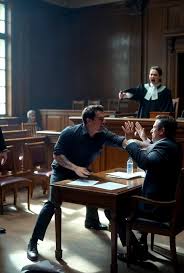
“Miss, are you represented by counsel, or are you appearing on your own behalf?” Judge Stone asked, peering over her glasses at me.
The courtroom was silent. My mother was inspecting her manicure. Richard was checking his phone.
I stood up, buttoning my cheap suit jacket.
“Your Honor,” I said, my voice projecting clearly to the back of the room. “I am Counsel of Record. I was admitted to the State Bar in January of this year.”
The reaction was immediate and visceral.
Richard’s head snapped up so fast I thought he gave himself whiplash. The color drained from his face as he realized he had been treating a fellow attorney like a helpless child.
My mother’s mouth fell open. She looked at Dad, then at me, then back at Dad. “What?” she whispered. “He’s… what?”
Caleb stopped smirking. He looked like he’d swallowed a lemon.
The Judge raised an eyebrow, a flicker of respect in her eyes. “Proceed, Mr. Vance.”
I walked to the podium. I didn’t look at my family. I focused on the law.
“Your Honor, I would like to present three exhibits to support my motion to dismiss and my counter-petition for forfeiture.”
I opened the first folder.
“Exhibit A: Section 7, Subsection D of the original Trust. The Forfeiture Clause.”
I handed the copy to the clerk. “This clause explicitly states that any beneficiary who initiates legal action to deprive another forfeits their share. By filing this frivolous petition, the petitioners have triggered this clause.”
Judge Stone read it. She looked at Richard. “Counselor, were you aware of this provision?”
Richard stammered, sweat beading on his forehead. “Your Honor, we… we interpreted that clause differently. We were acting in the interest of family harmony—”
“Save it,” the Judge said. “Mr. Vance, continue.”
I opened the second folder.
“Exhibit B: The ‘Trust Amendment’ submitted by the petitioners, dated March 2019.” I placed it on the overhead projector. “Exhibit C: An affidavit from the notary public, Thomas Miller, stating he never signed this document. And a forensic analysis report confirming the paper stock was not manufactured until 2022.”
A collective gasp went through the courtroom.
I turned to look at my parents. “This is not a dispute, Your Honor. This is fraud. They forged a document to steal my inheritance because they are insolvent.”
I handed the financial records to the bailiff.
Judge Stone took the file. She read the forensic report. She read the notary’s affidavit. She looked at the foreclosure notice.
Her face went hard. She took off her glasses and looked at Richard Sterling.
“Do your clients have an explanation for this forgery, Counselor?”
Silence. Absolute, crushing silence. Richard looked at my parents. My father was staring at the floor. My mother was trembling. Caleb was looking at the exit.
“Your Honor,” Richard squeaked, “I… I request a recess to confer with my clients. I was not aware of the provenance of these documents.”
“Denied,” Judge Stone barked.
She slammed the file shut.
“I have seen enough. I am dismissing the petition for conservatorship with prejudice. Furthermore, I am enforcing the Forfeiture Clause effective immediately. The shares of the Trust previously designated for Robert, Eleanor, and Caleb Vance are hereby forfeited.”
She looked directly at my parents.
“I am also referring this matter to the District Attorney’s office for investigation into fraud and perjury. And I am sanctioning the petitioners in the amount of $15,000 for filing a fraudulent instrument.”
The gavel came down. Bang.
It sounded like the end of the world.
Chapter 7: The Burden of Victory
The Forfeiture Clause was enforced thirty days later.
The fallout was total. Without the trust money to bail them out, the house of cards collapsed.
My parents lost their home. The bank foreclosed before the month was out. They moved into a cramped two-bedroom apartment on the edge of town.
Caleb filed for bankruptcy two months later. His condo, his car, his “image”—gone. He’s working retail now, managing a cell phone kiosk in the mall in the next town over.
The District Attorney reviewed the case. Because of their ages and lack of prior criminal history, he declined to file felony charges, provided they paid restitution and court costs. They escaped prison, but they didn’t escape the shame. Richard’s firm dropped them as clients and quietly fired Richard for failing due diligence.
The assets that were forfeited—their shares of the trust—didn’t come to me. Grandpa was smarter than that.
The Secondary Beneficiary Clause kicked in. All forfeited assets were to be redirected to establish a scholarship fund for first-generation college students in our county.
Even in their greed, they couldn’t stop Grandpa from doing good.
I took $400,000 from my own share to bolster the scholarship. The rest I used to pay off my student loans, buy a modest condo with a view of the city, and start my own solo practice. I specialize in estate planning and family disputes. I help people protect themselves from the people who are supposed to love them.
I established strict boundaries. Low contact. No holidays. No spontaneous visits.
Mom sent me an email six months later.
“I’m sorry things got so complicated. We just wanted what was best for the family. I hope you’re doing well.”
“Complicated.” That was the word she used for fraud. No accountability. No admission of guilt.
I wrote back two sentences: “Thank you. I wish you the best.”
Dad hasn’t spoken to me. I don’t think he ever will. His pride was the only thing he had left, and I took it.
My brother reached out once, asking if we could get coffee. He needed a “loan” to get back on his feet.
I said, “No. Not now. Maybe one day, when you understand why Grandpa did what he did.”
Every morning, I sit at my desk in my own office. I have a framed picture of Grandpa Arthur there—the same one Caleb tried to use against me.
But when I look at it, I don’t see a victim. I see a man who knew the value of hard work. I see a man who knew that love without respect is just control wearing a mask.
He told me grit lasts longer. He was right.
I kept the receipts. I trusted, but I verified. And I won. Not because I wanted revenge, but because I wanted my life back.
So, here’s my question for you: What would you have done? Would you have forgiven them and let it go, or would you have burned it all down to protect yourself like I did?
Drop your answer in the comments. I read them all. And if this story made you think, hit subscribe. There are more stories like this coming.
And remember: Always. Keep. Receipts.