Fatty liver disease can develop quietly for years without causing obvious symptoms.
Today, the condition is increasingly called metabolic dysfunction-associated steatotic liver disease (MASLD), formerly known as nonalcoholic fatty liver disease (NAFLD). It occurs when excess fat builds up in the liver and is strongly associated with metabolic conditions such as obesity, insulin resistance, type 2 diabetes, high cholesterol and high triglycerides.
For many people, MASLD causes few or no symptoms, especially in its early stages. Sometimes it is discovered only after routine blood tests show abnormal liver enzymes or imaging reveals excess liver fat.
When symptoms do appear, however, certain changes deserve attention.
Persistent Fatigue
Feeling tired occasionally is normal.
But persistent fatigue that doesn’t improve despite adequate rest can sometimes occur with fatty liver disease.
Both NIDDK and Mayo Clinic identify fatigue as one of the symptoms that can occur with MASLD.
Fatigue alone does not mean you have fatty liver. Anemia, thyroid problems, sleep disorders, medications, stress and many other conditions can produce similar symptoms.
If your energy level has changed significantly without an obvious explanation, consider discussing it with your healthcare provider.
Discomfort in the Upper-Right Abdomen
Your liver is located mainly in the upper-right portion of your abdomen.
Some people with MASLD experience a dull ache, pressure or discomfort in this area.
NIDDK specifically identifies discomfort in the upper-right abdomen as one of the relatively few symptoms that may occur with fatty liver disease.
Persistent or worsening abdominal pain should be medically evaluated because many other digestive and abdominal conditions can cause similar symptoms.
Loss of Appetite
Changes in appetite can occur with many illnesses. Although reduced appetite isn’t one of the hallmark early symptoms of uncomplicated MASLD, appetite changes can occur as liver disease becomes more advanced.
Pay particular attention when loss of appetite occurs together with other unexplained symptoms such as weakness, abdominal swelling, nausea or weight loss.
Unexplained Weight Loss
MASLD is strongly associated with excess weight and metabolic disease, so unexplained weight loss is not a typical early sign of simple fatty liver.
However, unintended weight loss can occur with advanced liver disease and many other medical conditions.
Losing weight without can have many causes, including normal deconditioning, inadequate nutrition, neurological disorders and medication effects.
Significant muscle loss can also occur with advanced liver disease.
NIDDK notes that clinicians may look for muscle loss when evaluating signs of cirrhosis in people with fatty liver disease.
Increasing difficulty standing from a chair, climbing stairs or completing activities that were previously easy deserves investigation, especially when accompanied by other unexplained health changes.
Yellow Skin or Eyes
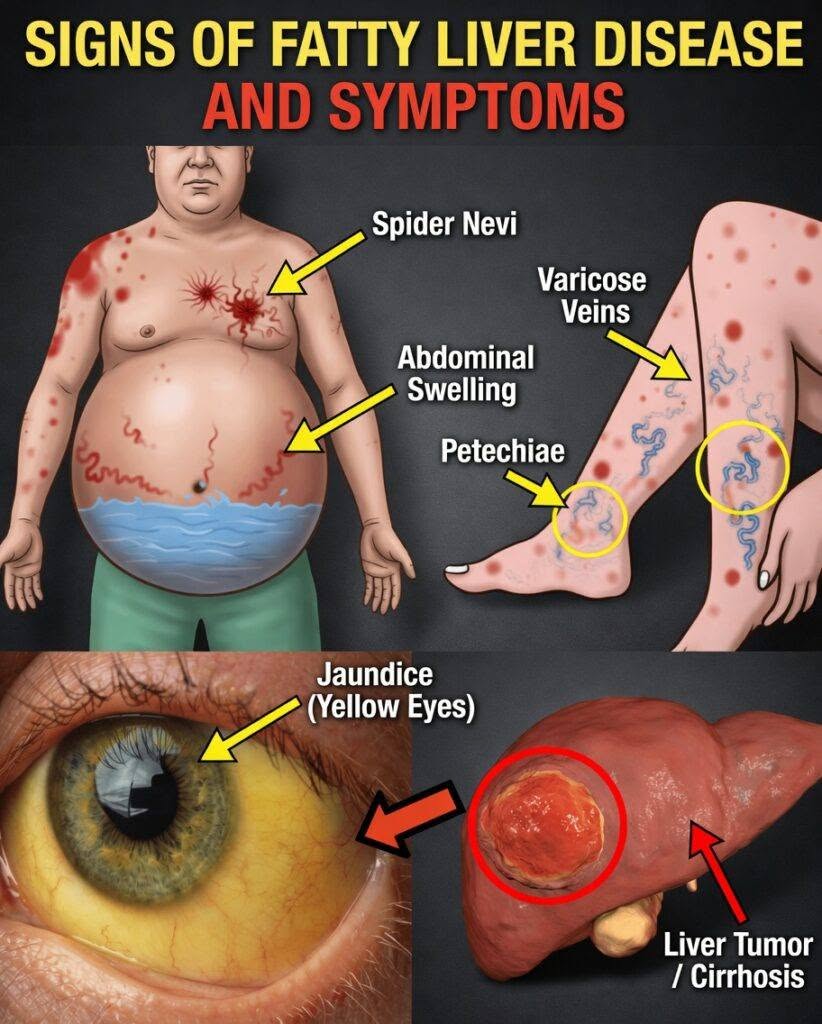
Jaundice causes the skin or whites of the eyes to turn yellow.
This happens when bilirubin builds up in the body.
Jaundice is not a typical early symptom of simple fatty liver. Mayo Clinic lists it among possible symptoms associated with MASH and cirrhosis, which represent more advanced liver disease.
New jaundice should be evaluated promptly.
Dark Urine
Very dark urine can have harmless explanations—particularly dehydration.
However, dark urine occurring together with yellow skin or eyes, pale stools or other signs of liver dysfunction can indicate a problem involving bilirubin or bile flow.
Don’t attempt to diagnose fatty liver based on urine color alone.
Persistent unexplained dark
urine, especially when accompanied by jaundice, should be medically assessed.
Swollen Legs or Ankles
Swelling in the feet, ankles and lower legs can occur for many reasons, including vein problems, medications, heart disease and kidney disease.
Advanced liver disease is another possible cause.
Mayo Clinic lists leg swelling among symptoms that may occur with MASH and cirrhosis.
New, significant or worsening swelling deserves medical evaluation.
A Swollen Abdomen
A noticeably enlarged abdomen isn’t always caused by weight gain or bloating.
Advanced liver scarring can cause fluid to accumulate inside the abdomen—a condition called ascites.
Mayo Clinic identifies ascites as a possible symptom of advanced MASLD-related liver disease and an important complication of cirrhosis.
A rapidly enlarging or persistently swollen abdomen, particularly when accompanied by leg swelling, jaundice or shortness of breath, should not be ignored.
Fatty Liver Can Be Silent
This is perhaps the most important point.
Waiting for symptoms is not a reliable way to detect fatty liver disease.
NIDDK describes MASLD as a typically silent disease with few or no symptoms. Even some people who have developed cirrhosis
may initially have few obvious symptoms.
That’s why understanding your risk factors can be just as important as recognizing symptoms.
Who Is More Likely to Develop Fatty Liver?
MASLD is particularly associated with metabolic health problems.
Risk is higher among people with obesity—particularly excess abdominal fat—type 2 diabetes, insulin resistance, metabolic syndrome, high triglycerides or high cholesterol. Sleep apnea and several other metabolic or hormonal conditions are also associated with increased risk.
Having one of these conditions does not mean you definitely have fatty liver, but it may give your
healthcare provider a reason to assess your liver health.
How Is Fatty Liver Diagnosed?
Symptoms alone cannot diagnose MASLD.
Doctors may use blood tests, including liver enzymes, as well as imaging such as abdominal ultrasound. Other techniques such as transient elastography can measure liver stiffness and help assess fibrosis.
In selected cases, additional imaging or a liver biopsy may be needed to determine the severity of liver damage.
This is another reason not to rely on symptoms—or online photographs—to determine whether your liver is healthy.
Can Fatty Liver Be Reversed?
The outlook can be good, particularly when the disease is identified before advanced scarring develops.
Lifestyle changes are a central part of MASLD management. Mayo Clinic notes that weight loss can improve MASLD; even losing around 3% to 5% of starting body weight may provide benefits, while greater weight loss may be recommended depending on the individual.
A healthy eating pattern, regular physical activity, appropriate weight management and management of conditions such as diabetes, cholesterol and high blood pressure can all form part of a treatment plan.
There is no
single “liver detox” drink or supplement that replaces these measures or medical treatment.
When Should You See a Doctor?
Make an appointment if you have persistent symptoms that concern you or if you have important metabolic risk factors and are worried about fatty liver disease.
Seek prompt medical attention for significant jaundice, rapidly increasing abdominal swelling, major leg swelling or other rapidly worsening symptoms, because these may indicate more advanced liver dysfunction or another serious condition.
The Bottom Line
Fatty liver disease can be difficult to recognize because many people
have no symptoms during the early stages.
When symptoms occur, fatigue and upper-right abdominal discomfort are among the better-recognized possibilities. Jaundice, swollen legs and fluid accumulation in the abdomen are more concerning and can be associated with advanced liver disease.
If you have diabetes, obesity, insulin resistance or abnormal cholesterol or triglyceride levels, don’t wait for obvious symptoms before discussing liver health with your healthcare provider.
Early detection gives you a better opportunity to protect your liver before significant scarring develops.
Medical disclaimer: This article is for educational purposes onlyand does not provide medical diagnosis or replace advice from a qualified healthcare professional.