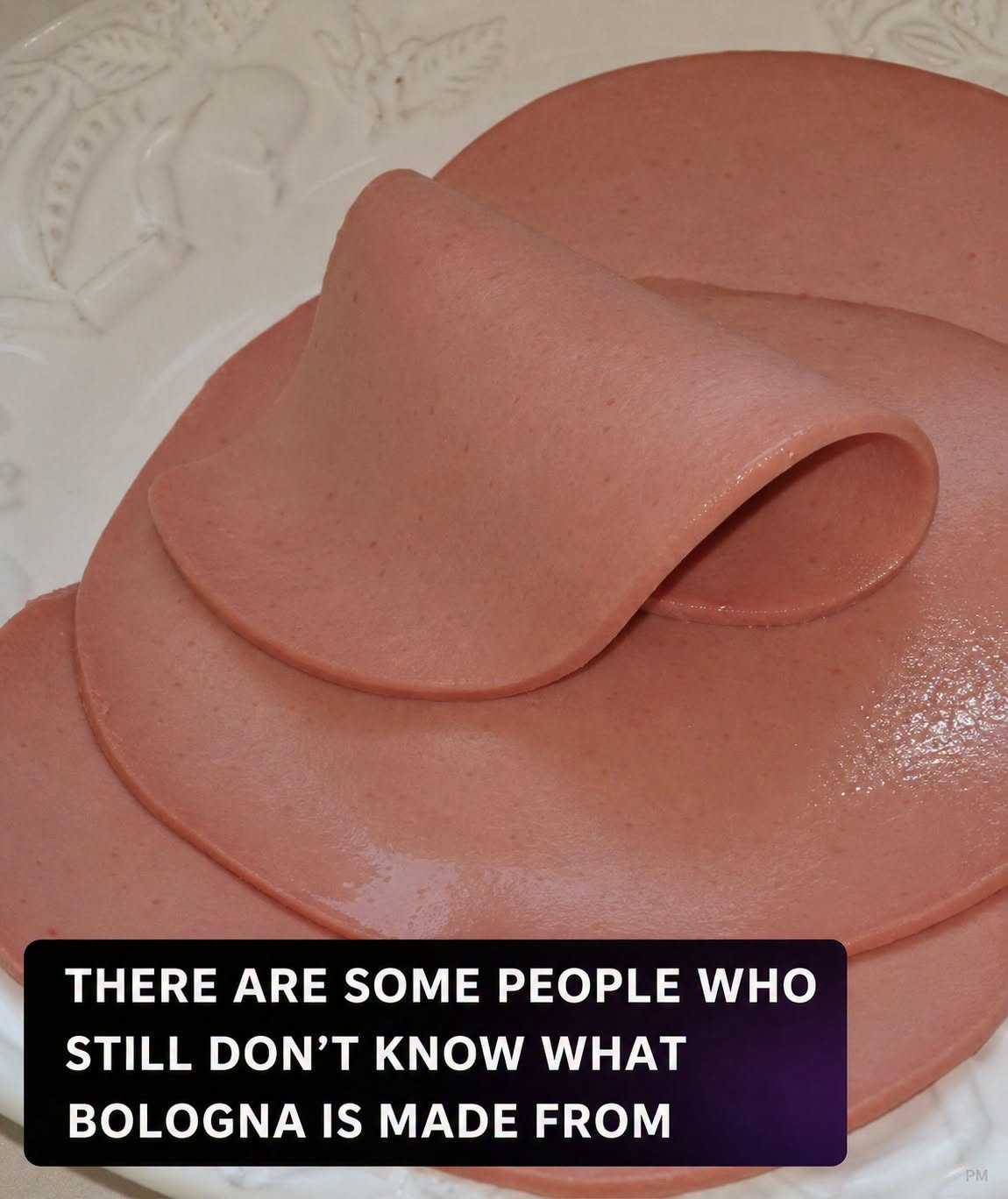
Bologna is often dismissed as “mystery meat,” but the familiar pink slices are produced through a deliberate and regulated process. The sausage developed from an older Italian tradition and was reshaped by industrial food production into an inexpensive, mild, and convenient lunch meat.
Its name points to Bologna, Italy, and to mortadella, the city’s famous sausage. Traditional mortadella has a coarser appearance than American bologna. Visible cubes of fat may be distributed through the meat, and recipes can include spices or pistachios. American manufacturers adapted that idea for large-scale production, creating the smooth texture and even color recognized in supermarkets.
The meat in bologna can be beef, pork, chicken, turkey, or a combination. The precise ingredients depend on the product and must be listed on the package. The selected meat and fat are ground extremely finely. Water, salt, seasonings, and curing ingredients are then blended in until the mixture forms an emulsion, a uniform paste in which the components remain evenly distributed.
That emulsifying step explains why a slice of bologna does not show separate pieces of muscle and fat. The ingredients have been reduced and mixed so thoroughly that the finished sausage looks consistent from edge to edge. The process is similar in principle to the one used for other smooth sausages, although recipes and seasonings vary.
After mixing, the emulsion is placed into a casing and cooked. Some versions are smoked, while others rely mainly on seasoning and heat for flavor. Cooking sets the texture, makes the product safe to eat, and produces the firm cylinder that can be cut into thin, flexible slices.
The mild flavor is intentional. Bologna became popular partly because it appealed to children, worked in simple sandwiches, and cost less than many whole cuts of meat. It could be stored in the refrigerator, packed in lunches, fried in a pan, or eaten cold with bread, mustard, cheese, and other inexpensive ingredients.
Stories about unidentified scraps have followed the product for decades. Regulations do not allow a manufacturer to hide the species used. A package labeled beef bologna must be made from beef, while a product using several meats must identify them. Organ meats or byproducts are subject to separate labeling requirements rather than being silently added under the word bologna.
That does not make bologna nutritionally identical to fresh meat. It is a processed food and can contain significant amounts of sodium and saturated fat. Some varieties use curing agents such as nitrite. Anyone monitoring salt, fat, or particular additives can compare nutrition panels and ingredient lists, because products differ considerably.
Modern shelves include all-beef, pork-and-beef, chicken, turkey, reduced-sodium, and uncured-style versions. There are also regional products with stronger seasoning or different textures. The name describes a broad family of cooked sausages rather than one secret universal formula.
Food safety still matters after the package is opened. Bologna should remain refrigerated, handled with clean utensils, and used within the storage period stated by the manufacturer. A change in smell, texture, or appearance is a reason to discard it rather than taste it.
Its reputation comes partly from appearance. A perfectly smooth pink slice reveals very little about the original cuts, which makes rumors easy to believe. Yet the smoothness is the result of fine grinding, emulsification, cooking, and standardized production, not proof that the ingredients are unknowable.
Bologna occupies an unusual place in food history. It began as an echo of a celebrated Italian sausage and became a symbol of the American lunchbox. The industrial version traded mortadella’s visible fat, spices, and artisanal character for uniformity, stability, and affordability.
For some people it remains a childhood comfort food. Others avoid it because they prefer less processed options. Either choice can be informed by the label. The answer to what bologna is made from is not a frightening secret. It is finely ground meat and fat, blended with water and seasonings, cooked into a smooth sausage, and shaped by a long history of convenience.