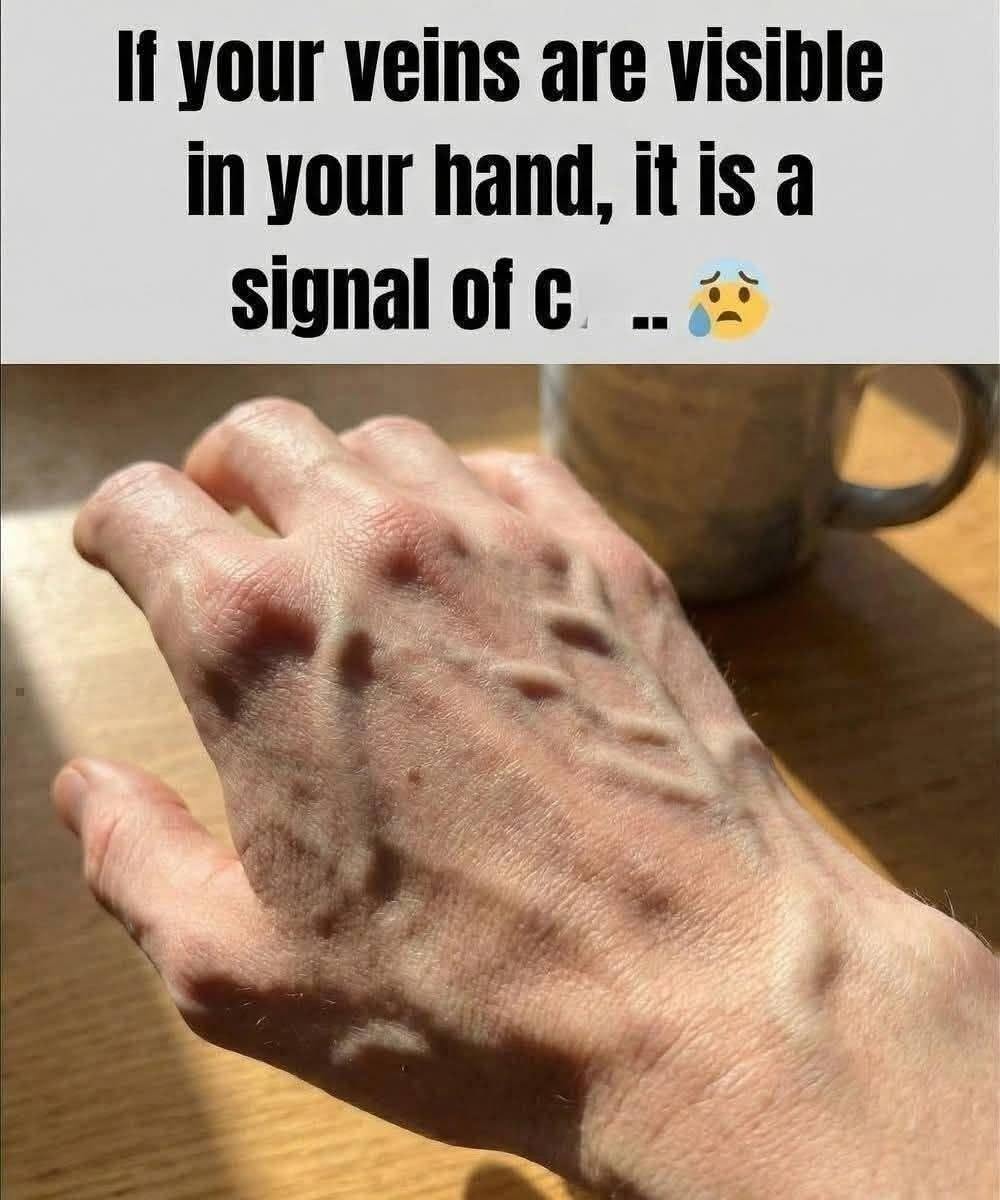
Look down at your hands right now. Those blue or green lines tracing just beneath the skin — your veins — are doing something extraordinary at this very moment. They are carrying blood from your extremities back to your heart, completing one of the most fundamental circulatory loops in your body, continuously, without pause, every second of your life.
Most people never think about their hand veins until they change. They become more prominent. They seem to pop out suddenly. They appear darker, or start to bulge in ways that feel unfamiliar. And then the questions begin: Is this normal? What does it mean? Should I be concerned?
The answers depend on what you’re seeing — and understanding the difference between harmless natural changes and genuine warning signs is knowledge worth having.
Why Hand Veins Become Visible in the First Place
Your hands are one of the areas of the body where veins lie closest to the skin surface. The skin on the back of the hand is naturally thin compared to other parts of the body, and the layer of fat beneath it is minimal. This means even slight changes in blood flow, skin thickness, or body composition can make the veins dramatically more or less visible.
Understanding what drives those changes helps you interpret what you’re seeing accurately.
The Most Common Reasons Your Hand Veins Are Prominent
1. Aging — The Most Universal Factor
As we age, skin loses its primary structural protein — collagen — at an accelerating rate. Collagen is what gives skin its thickness, firmness, and elasticity. As it diminishes, skin becomes thinner, less supportive, and more transparent. The same veins that were comfortably concealed beneath a cushion of healthy skin become increasingly visible as that cushion thins.
This process is completely natural, universal, and begins earlier than most people expect — often in the 30s and 40s, becoming more noticeable through the 50s and beyond. Visible hand veins in older adults are, in the vast majority of cases, simply the anatomical reality of aging skin becoming more transparent over time.
Sun damage accelerates this process significantly. The back of the hand is one of the most chronically sun-exposed areas of the body. Years of UV radiation break down collagen and elastin in the skin, thinning it faster than protected areas and making hand veins more prominent earlier than they would otherwise appear.
2. Low Body Fat
The fat layer beneath the skin acts as a natural cushion that conceals underlying structures. People with low overall body fat — athletes, endurance runners, bodybuilders, and anyone who is naturally lean — have less of this cushioning throughout the body, including in the hands. The result is veins that sit visibly close to the surface with little separating them from view.
This is sometimes called vascularity in fitness contexts, and it reflects healthy circulation and lean body composition — not a medical problem.
3. Exercise and Physical Activity
During exercise, the heart pumps significantly more blood per minute than at rest. This increased cardiac output requires the blood vessels to expand to accommodate the higher flow volume. Veins near the skin surface — including those on the back of the hands and forearms — dilate visibly during and immediately after physical exertion, creating the classic “popping” appearance that disappears once the body returns to its resting state.
People who exercise regularly and consistently — particularly those who do strength training and resistance exercise — may find that their veins appear more prominent even at rest over time, as sustained cardiovascular conditioning improves overall circulation and gradually increases vascular development.
4. Heat and Warm Temperatures
When the body is warm, blood vessels near the skin surface dilate as part of the thermoregulation process — drawing warm blood closer to the skin where it can release heat into the environment and cool down. This is why veins appear more prominent in summer, in warm rooms, after a hot shower, and during physical activity.
Conversely, in cold temperatures the body constricts peripheral blood vessels to conserve core temperature, which is why veins appear less prominent and more difficult to find when you are cold.
5. Dehydration
This one surprises many people. When the body is dehydrated, blood volume decreases — there is simply less fluid in the circulatory system. The veins, carrying less volume, can appear to sit closer to the skin surface and sometimes look more defined rather than less visible. Adequate hydration maintains healthy blood volume and supports the normal, smooth appearance of veins at rest.
6. Genetics
Vein visibility has a strong hereditary component. If your parents or siblings have prominent hand veins, there is a meaningful probability that you will too — regardless of your age, fitness level, or body composition. The anatomical arrangement of surface veins, the thickness of skin, and the baseline diameter of blood vessels are all influenced by genetics.
What the Color of Your Veins Actually Means
One of the most common questions people have about their hand veins is why they appear blue or green when blood is actually red.
The answer is one of the most interesting pieces of basic physiology most people were never taught.
Blood traveling through your arteries — carrying oxygen from the lungs to the body’s tissues — is bright, vivid red. Blood in your veins — returning to the heart after delivering its oxygen — is a darker, deeper red because it carries less oxygen and more carbon dioxide.
Neither of these is actually blue. So why do veins look blue?
The answer lies in how different wavelengths of light penetrate and reflect from tissue. Red light has a longer wavelength and penetrates more deeply into tissue, where it is absorbed by the darker, deoxygenated blood in the veins. Blue light has a shorter wavelength and is reflected back from the surface of the skin before reaching the veins. The result is that the veins appear blue to our eyes even though the blood within them is dark red.
Green veins follow the same optical principle — the precise color you perceive depends on your skin tone, the depth of the vein beneath the surface, and the lighting conditions. Neither blue nor green veins indicate anything medically different from each other. The color difference is purely optical.
When Prominent Hand Veins May Signal Something Worth Investigating
The conditions above account for the overwhelming majority of prominent hand veins. Most people who notice their hand veins more prominently have nothing medically significant causing it.
However, there are specific situations where visible veins can be a signal worth paying attention to:
Sudden, rapid change in vein prominence When veins that were not previously visible suddenly become dramatically more prominent without any obvious explanation — no recent weight loss, no new exercise program, no change in temperature — this warrants evaluation. Rapid increases in vascular visibility can reflect elevated blood pressure, circulatory stress, or vascular changes that deserve professional assessment.
Persistent swelling accompanied by visible veins When veins become prominent alongside visible swelling, puffiness, or a feeling of fullness in the hands — particularly if the swelling doesn’t resolve after elevating the hands or after a night’s sleep — this combination can indicate problems with circulation or fluid management that should be evaluated.
Redness, warmth, or tenderness over a specific vein A vein that feels warm to the touch, appears unusually red, or is tender when pressed is showing signs of inflammation — potentially phlebitis, which is an inflammatory condition of the vein wall that can be triggered by injury, infection, or certain autoimmune conditions. When accompanied by a hardened cord-like feeling along the vein, this needs prompt medical evaluation as it can be associated with clot formation.
Dark purple, blue-black, or unusually vivid discoloration Veins that have changed to very dark purple, blue-black, or an unusually deep color — particularly when this represents a change from their previous appearance — should be assessed by a healthcare professional.
Accompanying symptoms throughout the body Hand veins that become newly prominent alongside symptoms like fatigue, dizziness, numbness or tingling in the hands and fingers, unexplained swelling in other parts of the body, or shortness of breath are telling a more complex story. These combinations of symptoms, rather than vein appearance alone, are what most strongly indicate the need for medical evaluation.
Varicose vein formation in the hands True varicose veins — bulging, twisted, rope-like veins that remain permanently enlarged and do not reduce when the hand is elevated — can form in the hands, though they are far less common there than in the legs. When they appear alongside varicose veins in the legs, chronic aching, heaviness, or burning sensations, the underlying cause may be venous insufficiency — a condition in which the valves within the veins have become damaged, allowing blood to flow backward and pool.
What Healthy Veins Actually Look Like
It’s useful to have a baseline understanding of what healthy hand veins look and feel like, so that changes are easier to recognize.
Healthy veins on the back of the hand are typically:
Soft and compressible when pressed gently
Not painful or tender to touch
Consistent in appearance from day to day, varying only with temperature and activity
Blue or green in color without unusual darkening
Not accompanied by swelling, skin changes, or discomfort
Veins that are hard, cord-like, painful, warm, or surrounded by skin changes have moved beyond the range of normal variation.
What Your Hands Can Reveal More Broadly
The condition of the hands — including but not limited to vein appearance — can genuinely reflect aspects of overall health. Doctors have observed and documented various connections over centuries of clinical practice:
Nail bed color and capillary refill — pressing on a fingernail until it blanches and then releasing it to observe how quickly the normal color returns is a simple clinical test for peripheral circulation. In a well-hydrated person with good circulation, color returns within two seconds. Slow refill can indicate poor peripheral circulation.
Skin texture and temperature — hands that are consistently cold, even in warm environments, can indicate circulatory issues, thyroid problems, or Raynaud’s disease — a condition in which the small blood vessels overreact to cold or stress.
Clubbing of the fingertips — a rounding and widening of the fingertip and nail bed is a well-recognized clinical sign associated with chronic low oxygen levels in the blood, which can indicate heart or lung conditions.
Joint swelling and redness — the small joints of the hands are frequently among the first affected in rheumatoid arthritis and other inflammatory joint conditions, making the hands an early diagnostic indicator for these diseases.
Skin changes around the fingers — very dry, cracked skin, unusual nail changes, or discoloration patterns around the fingers can reflect nutritional deficiencies, autoimmune conditions, or circulation problems.
The hands carry a remarkable amount of information about what is happening throughout the body — which is one reason doctors routinely examine them during physical assessments.
Supporting Vein Health in Your Hands — Practical Steps
Whether your goal is to minimize the cosmetic appearance of prominent hand veins or to support your vascular health more broadly, these evidence-based habits make a genuine difference:
Stay well hydrated throughout the day. Adequate hydration maintains healthy blood volume and supports smooth, consistent circulation. Chronic mild dehydration contributes to visible vein changes and poor circulation over time.
Exercise regularly. Cardiovascular exercise — walking, swimming, cycling — strengthens the heart, improves circulation throughout the body, and supports healthy vein valve function. The vein valves that prevent blood from pooling depend on muscle activity and blood flow to function properly.
Protect your hands from sun exposure. This is one of the most impactful long-term interventions for maintaining the skin thickness that keeps veins less visible. Applying SPF to the back of the hands daily — particularly during outdoor activities — significantly slows the collagen breakdown that makes veins increasingly prominent over time.
Maintain a balanced diet rich in antioxidants. Vitamins C and E, found abundantly in fruits, vegetables, and nuts, support collagen production and protect blood vessel walls from oxidative damage. Flavonoids in berries, citrus, and dark chocolate have well-documented beneficial effects on vascular function.
Avoid prolonged static postures. Keeping the hands in one position for extended periods — particularly below the heart level — allows blood to pool in the veins. Regular movement and occasionally elevating the hands above heart level helps maintain healthy circulation.
Avoid smoking. Smoking damages blood vessel walls, reduces circulation throughout the body, and dramatically accelerates skin thinning — all of which increase visible vein prominence and vascular disease risk.
When to See a Doctor
Most visible hand veins require no medical intervention. But schedule an appointment with your doctor if you notice:
A sudden significant change in vein prominence without obvious cause
A specific vein that has become red, warm, hard, or tender
Persistent swelling in the hands that doesn’t resolve
Numbness, tingling, or pain in the fingers alongside vein changes
Any combination of vein changes with other systemic symptoms
A doctor can perform a simple examination and, if needed, refer you to a vascular specialist who can use ultrasound and other non-invasive tools to assess blood flow and vein valve function precisely.