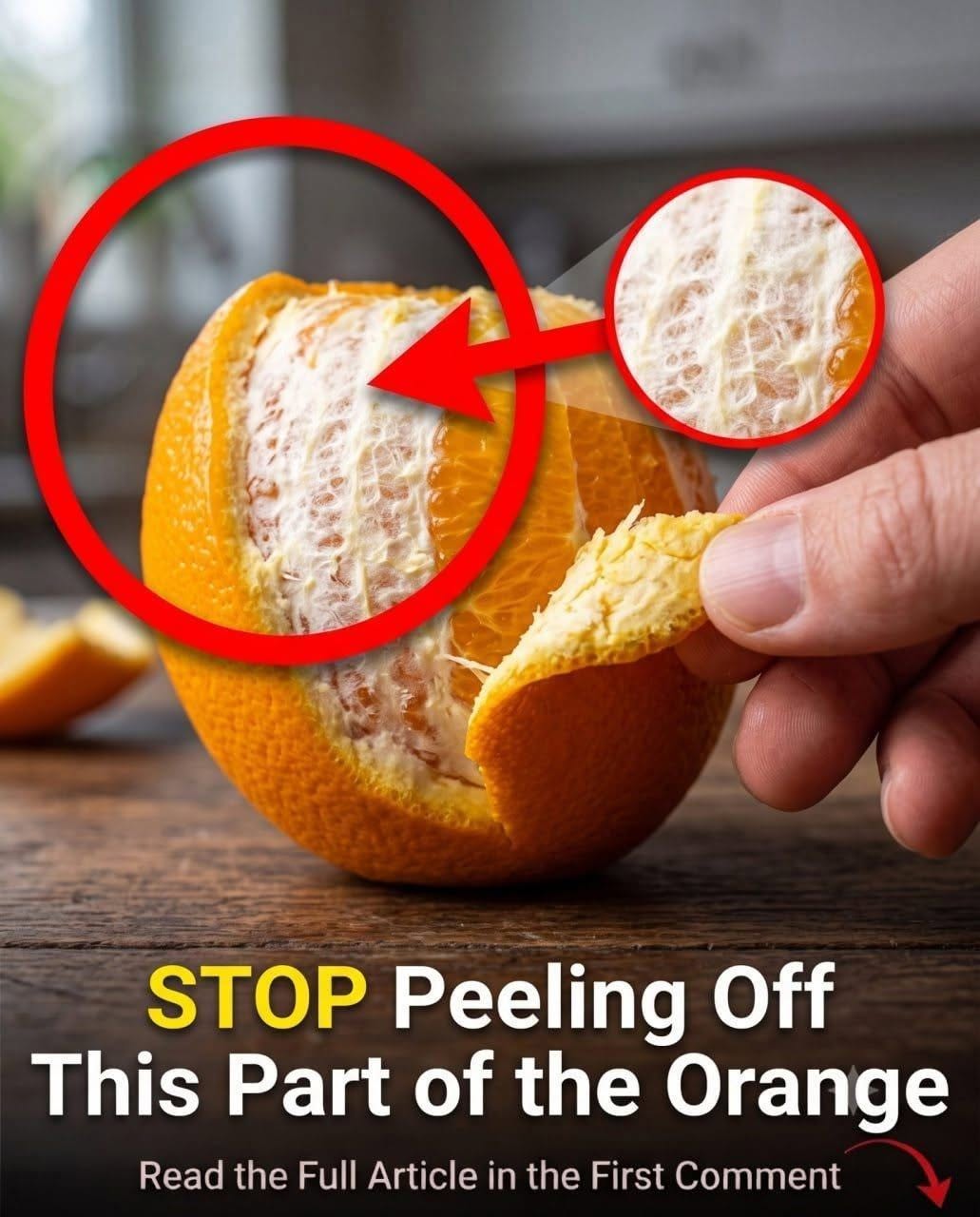
The Part of an Orange Most People Throw Away (And Why You Should Keep It)
Slicing or peeling a fresh, juicy orange is one of the simple joys of eating fresh fruit. It is packed with vibrant flavor, dripping with sweet juice, and renowned worldwide as a primary source of immune-supporting Vitamin C.
Yet, watch almost anyone peel an orange, and you will notice a universally painstaking habit.
After removing the tough, bright orange outer skin, people immediately go to work picking, scraping, and pulling away every last bit of the soft, white, stringy stuff clinging to the juicy fruit segments inside. People spend minutes carefully cleaning off these white threads so that only the clean, translucent orange pulp remains.
Most people treat this white layer as an annoying wrapper or useless waste product meant straight for the compost bin or garbage disposal. It looks stringy, feels spongy, and lacks the sugary sweetness of the inner fruit.
However, food scientists, botanists, and nutrition experts know a surprising fact: by meticulously throwing away that white layer, you are throwing away one of the most nutrient-dense portions of the entire fruit.
What Is That White Part of the Orange Called?
In botanical terms, a citrus fruit peel is divided into two distinct anatomical parts:
The Flavedo: This is the colorful, oil-rich outer skin (the zest) that contains essential aromatic oils and natural pigments.
The Albedo: This is the spongy, white inner layer sitting directly between the colorful outer peel and the juicy fruit segments inside. This is the “pith” that most people scrape off and throw into the trash.
The albedo serves a crucial protective role while the fruit grows on the tree. It acts as a natural shock absorber, cushioning the delicate, juice-filled fruit sacs inside from wind damage, heavy rains, insect bites, and physical drops.
While its texture is soft and spongy, its chemical composition is packed with dietary compounds that are exceptionally beneficial for human health.
See Next Page
Why Do People Throw It Away?
The primary reason people scrape away the pith comes down to taste and texture preferences:
Bitterness: The albedo contains natural plant compounds called flavonoids (such as naringin and hesperidin). While these compounds offer tremendous health benefits, they have a slightly bitter taste compared to the high sugar content of the juice sacs.
Texture: The pith is fibrous, dry, and chewy. Many people prefer the smooth, bursting texture of pure fruit juice sacs over a fibrous chew.
Visual Appeal: Clean, bright orange segments look more appealing in fruit salads and desserts than segments covered in fuzzy white strings.
Because of these culinary preferences, generations of home cooks have picked off the pith, completely unaware of what they were discarding.
The Health Powerhouse Hiding Inside the Pith
So, what exactly are you throwing away when you scrape off the white pith? When you toss the albedo into the trash, you lose out on three major dietary powerhouses:
1. High-Concentration Fiber (Pectin)
While the juicy segments of an orange contain some dietary fiber, the white pith is where the vast majority of the fruit’s soluble fiber is concentrated.
Specifically, the pith is rich in pectin, a type of soluble fiber that acts as a natural gel in your digestive tract. Pectin slows down the digestion of natural fruit sugars, preventing rapid spikes in blood sugar levels after eating. Pectin also acts as a prebiotic, feeding the beneficial probiotic bacteria in your gut microbiome and promoting healthy digestion.
2. Powerful Bioflavonoids (Hesperidin)
The subtle bitter taste in the pith comes from a dense concentration of plant antioxidants known as citrus bioflavonoids, most notably hesperidin.
Research indicates that hesperidin helps support cardiovascular health by improving blood vessel function, reducing systemic inflammation, and helping to maintain healthy blood pressure levels. The white pith actually contains significantly higher concentrations of hesperidin than the sweet juice inside the segments!
3. Extra Vitamin C
While people associate Vitamin C strictly with orange juice, the white albedo contains nearly as much Vitamin C as the fruit pulp itself. Leaving the pith intact gives you a higher total dose of Vitamin C per orange compared to eating fully stripped segments.
How to Eat More Orange Pith Without the Bitter Taste
If you do not enjoy the chewy texture or mild bitterness of eating thick pieces of raw orange pith on its own, you do not have to force yourself to chew through thick sheets of peel. Here are simple, practical ways to incorporate the albedo into your diet effortlessly:
Stop Over-Scraping: When peeling an orange by hand, simply remove the tough outer skin and leave the remaining thin white threads attached to the fruit segments. The sweetness of the fruit will easily overpower any faint bitterness from the thin threads.
Blend It into Smoothies: If you make morning fruit smoothies, cut the outer zest off your orange with a knife, but leave the spongy white pith attached before tossing the whole orange into a high-speed blender. The blender completely breaks down the fibrous texture, giving you a creamy smoothie packed with extra fiber and nutrients.
Use Citrus Zest and Pith in Cooking: When grating orange or lemon zest for baking, marinades, or dressings, do not be terrified if your grater catches a bit of the white layer underneath. A small amount adds depth of flavor, natural pectin for thickening, and extra nutrients to your dishes.
Candied Orange Peels: Boil orange peels (including the pith) in water several times to remove excess bitterness, then simmer them in a light sugar syrup. This classic confection preserves the pectin and bioflavonoids while transforming the bitter pith into a tender, delicious treat.
Common Citrus Mistakes to Avoid
Beyond discarding the white pith, avoid these other common citrus handling mistakes in your kitchen:
Juicing and Throwing Away the Pulp: Drinking filtered, pulp-free orange juice removes almost all the dietary fiber, turning a nutritious fruit into a concentrated glass of fast-absorbing fructose sugar. Whenever possible, eat whole fruit or choose pulp-rich juices.
Storing Citrus in Airtight Plastic Bags: Storing whole oranges in sealed plastic bags traps moisture and ethylene gas, causing mold to grow rapidly. Store citrus in an open basket at room temperature for short-term use, or in the refrigerator crisp drawer in a breathable mesh bag for long-term storage.
Rolling Citrus Cold: If you need to extract juice from a cold orange or lemon, do not squeeze it right out of the fridge. Warm it up on the counter or microwave it for 5 to 10 seconds, then roll it firmly under your palm against a hard countertop to break internal juice membranes before cutting.
A Simple Habit Shift for Better Nutrition
The next time you sit down to enjoy a fresh orange, resist the urge to spend five minutes picking off every last white thread. That spongy white layer isn’t waste—it is a nutrient-dense, fiber-rich component designed by nature to deliver maximum health benefits along with every sweet bite.
By leaving the pith right where it belongs, you save prep time, reduce food waste, and get the absolute most nutrition out of every piece of fruit!