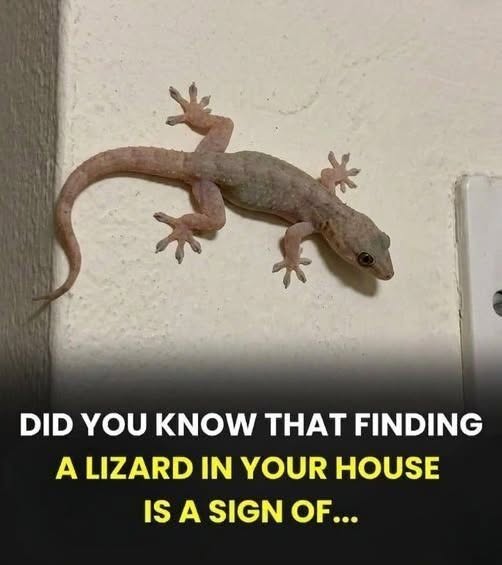
Spotting a small lizard quietly clinging to your wall can be surprising—sometimes even a little unsettling. But before you panic, it’s worth understanding that this tiny visitor often carries more practical meaning than mystery. The image shows what looks like a common house gecko, a frequent guest in homes around warm regions of the world.
So, what does it really mean when you find a lizard in your house?
1. A Natural Sign of a Healthy Environment
Lizards, especially house geckos, are highly sensitive to their surroundings. They tend to live in places that offer:
A stable temperature
Low pollution
Access to food (mainly insects)
In simple terms, their presence often means your home environment is safe and balanced enough to support small wildlife.
2. You Might Have Insects Around
Let’s be honest—the main reason lizards enter homes is food. And their favorite meals include:
Mosquitoes
Flies
Ants
Small spiders
So if you’re seeing a lizard, it’s usually a sign that there are insects nearby—even if you don’t notice them.
The twist? That’s actually a good thing.
Lizards act as natural pest control, helping reduce unwanted bugs without chemicals.
3. A Free and Silent Protector
Unlike many pests, lizards don’t damage furniture, food, or structures. In fact:
They don’t carry significant risks to humans
They avoid contact and prefer to stay hidden
They actively clean your space from insects
Think of them as quiet roommates doing night shifts.
4. Cultural and Symbolic Meanings
In many cultures, seeing a lizard indoors is believed to carry symbolic meanings:
Good luck and protection in some Asian traditions
A sign of adaptability and survival
Sometimes linked to renewal and transformation, since lizards can regrow their tails
However, these interpretations are cultural beliefs—not scientific facts.
5. Should You Be Concerned?
In most cases, no. But there are a few things to keep in mind:
Avoid touching them directly
Keep your space clean to reduce insect attraction
Seal cracks or openings if you don’t want them inside
If their presence becomes frequent, it’s more about managing insects than the lizards themselves.
6. How to Keep Them Away (If You Prefer)
If you’d rather not share your space, you can:
Reduce lighting near windows at night (this attracts insects)
Use natural repellents like garlic or onion near entry points
Keep doors and windows sealed
Remember: removing their food source is the most effective solution.
Final Thought
Finding a lizard in your house isn’t a bad omen—it’s usually a practical sign of nature at work. These small creatures are harmless, helpful, and quietly beneficial.
So the next time you see one on your wall, instead of worrying, you might just appreciate the tiny pest controller doing its job.