The Vitamin Your Body May Be Missing When Legs and Bones Ache: It’s More Common Than You Think
The Vitamin Your Body May Be Missing When Legs and Bones Ache: It’s More Common Than You Think
You wake up with a deep ache in your shins.
Your knees feel heavy by midday.
At night, your calves cramp so badly you can’t sleep.
And there’s no injury. No overexertion. No obvious cause.
What if your body isn’t just “getting older”—but sending a quiet SOS?
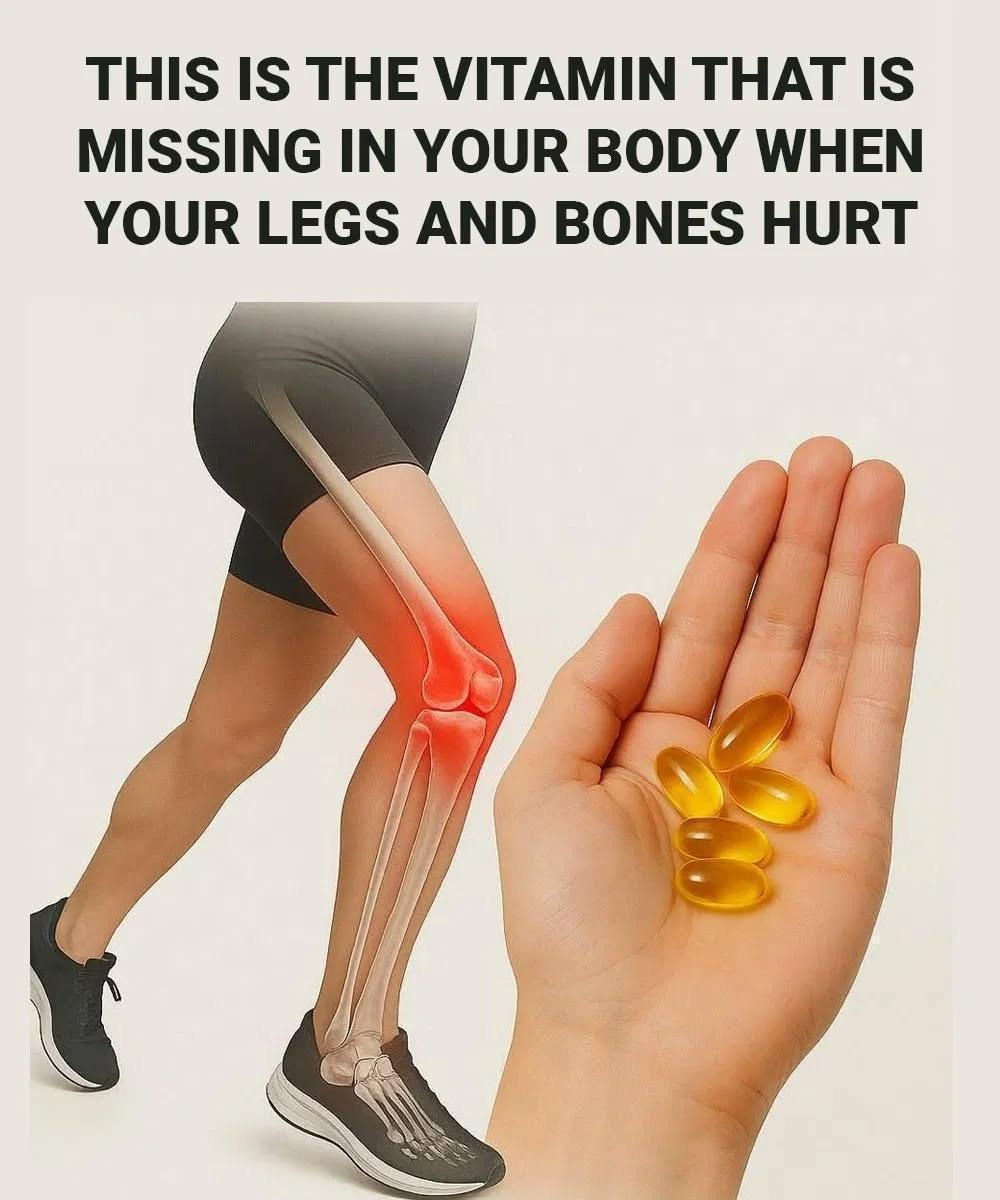
For millions, unexplained bone pain, muscle weakness, or nighttime leg cramps aren’t signs of aging—they’re clues pointing to a critical nutrient deficiency: Vitamin D.
Often called the “sunshine vitamin,” vitamin D is far more than a supplement—it’s a hormone essential for bone strength, muscle function, and immune balance. And when levels drop too low, your skeleton and muscles pay the price.
In this guide, you’ll discover:
✅ How vitamin D deficiency causes bone and leg pain
✅ 7 subtle signs you might be deficient
✅ Who’s most at risk (it’s not just “older adults”)
✅ How to test, treat, and prevent it safely
Because your bones shouldn’t hurt—and relief may be closer than you think.
🌞 Why Vitamin D Is Non-Negotiable for Bones & Muscles
Vitamin D does two vital jobs:
Helps your gut absorb calcium—the building block of bones
Supports muscle strength and nerve signaling—preventing cramps and weakness
Without enough vitamin D:
Bones become soft, brittle, or misshapen (a condition called osteomalacia in adults)
Muscles weaken, leading to fatigue, imbalance, and chronic pain
Calcium stays trapped in your bloodstream—never reaching your bones
💡 Key fact: Up to 42% of U.S. adults are vitamin D deficient—rising to 80% in elderly, darker-skinned, or northern-latitude populations (per NIH data).
🚩 7 Signs You Might Be Low in Vitamin D
Deep, aching bone pain—especially in legs, hips, or lower back
Muscle weakness—trouble climbing stairs or rising from a chair
Frequent nighttime leg cramps
Constant fatigue—even after good sleep
Mood changes—low vitamin D is linked to seasonal depression
Slow wound healing or frequent infections
Stress fractures or easily broken bones
⚠️ Note: Symptoms often develop slowly—you may dismiss them as “just stress” or “getting older.”
🧬 Who’s Most at Risk?
People with darker skin—melanin reduces vitamin D synthesis from sunlight
Those living above 37° latitude (e.g., Boston, Chicago, Seattle)—weak winter sun = minimal vitamin D production
Older adults—skin becomes less efficient at making vitamin D with age
People who avoid sun (due to sunscreen use, indoor jobs, or cultural clothing)
Those with digestive disorders (Crohn’s, celiac, IBS)—impaired nutrient absorption
Obese individuals—vitamin D gets “trapped” in fat tissue
🔬 How to Know for Sure: Get Tested
The only way to confirm deficiency is a blood test:
25-hydroxyvitamin D test (ask your doctor)
Optimal level: 30–50 ng/mL (some experts recommend 40–60 ng/mL)
Deficient: <20 ng/mL
Insufficient: 20–29 ng/mL
💊 Don’t guess—test! Taking high doses without need can cause toxicity (rare but serious).
💊 How to Safely Boost Vitamin D
1. Sunlight (When Possible)
10–30 minutes of midday sun (arms/legs exposed), 2–3x/week
Darker skin may need 3–6x longer exposure
2. Dietary Sources
Fatty fish (salmon, mackerel, sardines)
Fortified milk, orange juice, or cereals
Egg yolks and mushrooms exposed to UV light
3. Supplements (Most Reliable)
Vitamin D3 (cholecalciferol) is better absorbed than D2
Typical maintenance dose: 600–2,000 IU/day
Deficiency treatment: 1,000–5,000 IU/day (under doctor’s guidance)
Take with a fat-containing meal—vitamin D is fat-soluble!
🌿 Pro tip: Pair with vitamin K2—it helps direct calcium to bones (not arteries).
⚠️ When Leg Pain Isn’t Just Vitamin D
While deficiency is common, rule out other causes:
Magnesium deficiency (also causes cramps)
Peripheral artery disease (PAD)
Nerve compression (sciatica, neuropathy)
Arthritis or autoimmune conditions
🩺 See a doctor if pain is severe, one-sided, or accompanied by swelling, redness, or numbness.
💬 Final Thought: Listen to Your Bones
Your skeleton isn’t silent.
Aches, weakness, and cramps are its way of saying: “I need support.”
By honoring that signal—with testing, sunlight, and smart supplementation—you don’t just ease pain.
You build a foundation for stronger bones, steadier steps, and vibrant health for years to come.
🌞 Because your body was made to move—not to hurt.
Found this helpful?
👉 Save this guide for your wellness routine
👉 Share it with someone over 40, with limited sun exposure, or chronic pain
👉 Comment below: Have you ever been tested for vitamin D?