I never meant to hide my income from Daniel. It wasn’t a secret I guarded—it just never came up. He thought I lived on a tight budget, carefully saving every penny. I never corrected him. He liked thinking of me as simple and practical, and I let him. The truth, though, was very different. I owned three thriving online brands and earned nearly ninety thousand dollars every month. I didn’t look the part—I dressed simply, drove an old Honda because I liked it, and avoided showing off. Money gave me freedom, not an identity.
But lately, something about Daniel’s attitude had started to sting. He talked about “providing for me” and “protecting me from becoming a burden.” He said it out of love—or at least that’s what he claimed—but it always carried a tone that made me feel small. He thought he was the stable one and that I was lucky to have him. I started wondering what he’d think if he knew the truth.
When he invited me to dinner with his parents, I decided to say yes—not to play games, but to watch. I wanted to see how they treated me when they believed I had nothing.
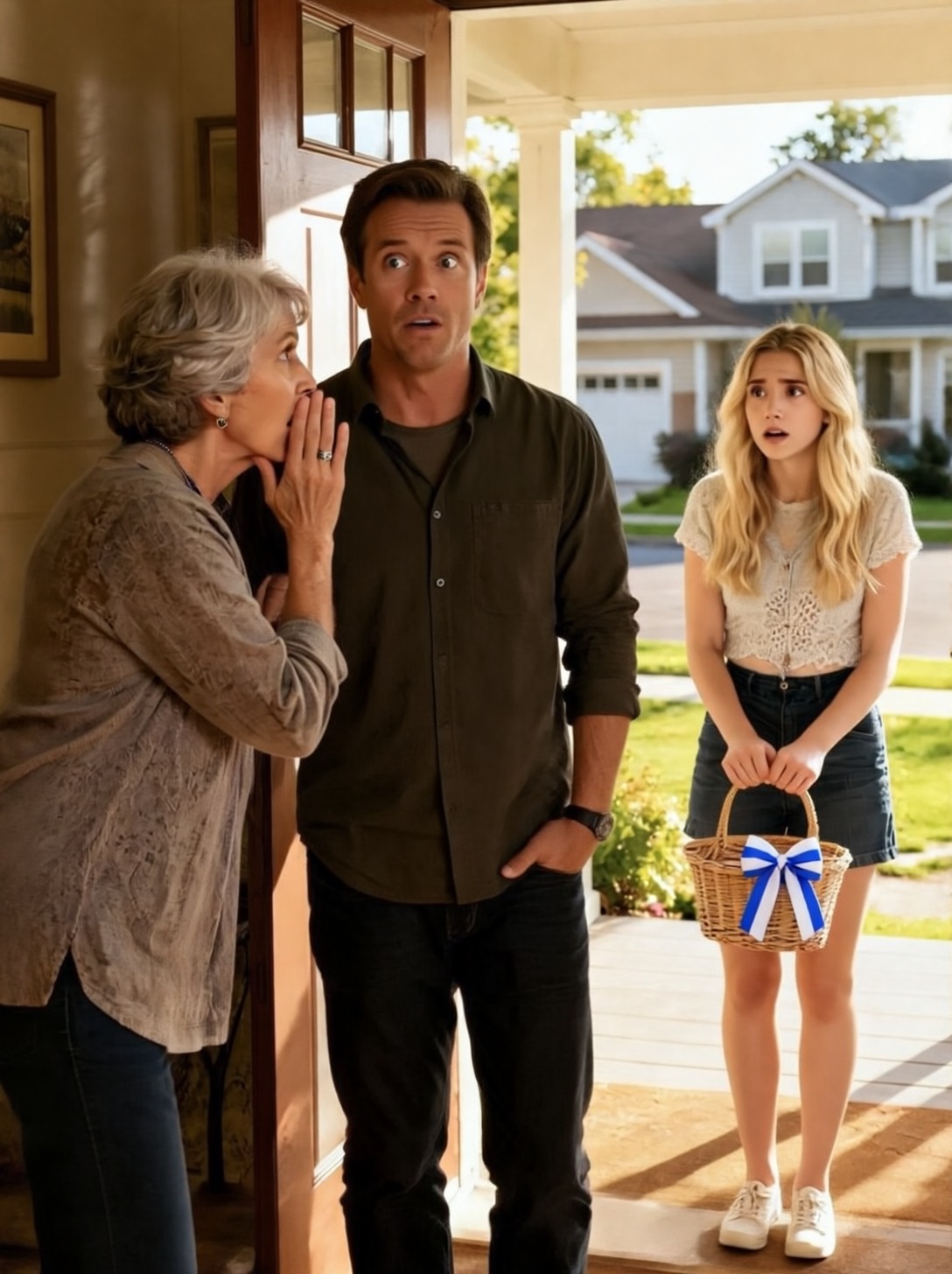
The moment I walked into their home, his mother, Lorraine, looked me over like she was scanning for flaws. Her lips curved into a polite smile, but her eyes had already judged me. She leaned toward her husband and whispered, not quietly enough, “Girls like her just want your money.”
I pretended not to hear. Daniel heard, though. He didn’t correct her.
Dinner was uncomfortable from the start. Lorraine questioned me about my apartment, my car, whether I had student loans, and what my parents did for work. Her voice was sugar on top of poison.
“Oh, a Honda,” she said, eyebrows raised. “At least you’re… modest.”
Daniel laughed awkwardly, like that would make it better.
Then his father, Mark, joined in. “Are you sure this is a wise choice, son? You need someone with stability. Someone with… prospects.”
I smiled, my fork still in hand, while inside I was burning. They had no idea who they were speaking to.
But what sealed it was when Lorraine leaned forward, ignoring me entirely, and said to Daniel, “She’s sweet, but you can do better. You need someone who won’t drag you down.”
Daniel said nothing. Not one word.
That was the moment something inside me clicked. If they thought I was beneath them, I was going to let them drown in that assumption.
I placed my napkin neatly on the table. “Since money seems so important tonight,” I said calmly, “can I ask a question?”
Lorraine perked up, probably thinking I was about to beg for approval. “Of course, dear.”
“What do you think a woman should contribute financially to a marriage?”
Mark spoke first, confidently. “Ideally nothing. A man provides. Daniel is stable. He’ll take care of things.”
I tilted my head. “And what if the woman earns more?”
Lorraine gave a small, mocking laugh. “A wife earning more than her husband only creates tension. Thankfully, that won’t be an issue for you.”
Daniel chuckled lightly. “Yeah, babe, don’t worry. I’ll take care of us.”
That last line was the knife twist. He didn’t say it to hurt me—but it showed what he truly believed. That I needed him. That I was someone to be taken care of.
I reached into my purse and pulled out a slim black folder. I laid it on the table.
Lorraine frowned. “What’s that?”
“Something I brought,” I said, my voice even. “Since finances matter so much here.”
Inside were copies of my business registrations, income statements, brand portfolios, and screenshots from my revenue dashboards. I slid them across the table like cards in a game I had just won.
Lorraine’s eyes widened as she turned the first page. By the second, her jaw dropped.
“This… this can’t be right,” she stammered.
Mark grabbed the papers. “Ninety thousand… a month?”
Daniel looked at me like he’d never seen me before. “Why didn’t you tell me?”
“Because,” I said gently, “I wanted to see how you’d treat someone you thought had nothing.”
Silence filled the room, heavy and suffocating.
Lorraine was the first to recover, her tone instantly sweet. “Oh, sweetheart, we didn’t mean anything earlier! We were just being protective.”
I met her gaze. “Good parents protect their children. They don’t insult their partners.”
Daniel reached for my hand. “Babe, I didn’t mean—”
“You didn’t defend me,” I said quietly. “Not once.”
I stood, steady but trembling inside. Lorraine looked panicked, Mark stunned, Daniel desperate.
“I didn’t hide my income to deceive you,” I said. “I did it because money reveals people. And tonight, I saw exactly who you are when you think someone has none.”
Daniel tried again, his voice breaking. “I don’t care about money!”
I smiled sadly. “That’s the problem. You only cared when you thought I didn’t have any.”
I left without raising my voice, without slamming a door. I just walked out, got into my Honda, and drove away. I wasn’t furious—just clear. Sometimes people show you exactly who they are when they think you’re powerless.
The next morning, my phone was full of missed calls and messages from Daniel. Some were apologies, others were defensive, a few even blamed me for “humiliating” him. I ignored them all.
I made coffee, sat at my desk, and opened my laptop. My work was my peace. But beneath the calm, a quiet ache pulsed. Not because of the dinner, not even because of his parents—but because the man who claimed to love me needed me to be smaller for him to feel secure.
Around noon, a knock came at my door.
Daniel stood there, eyes tired, holding lilies—my favorite flowers. “Can we talk?” he asked.
I let him in. He sat at my kitchen table like someone waiting for a verdict.
“I reread everything I sent,” he said softly. “You’re right. I didn’t defend you. I let my parents insult you because it made me feel like the strong one. I wanted to be the provider. I liked feeling needed. But that was wrong.”
There was no performance in his voice. Just truth.
“I don’t want to be above you,” he said. “Or behind you. I want to stand next to you.”
I looked at him for a long moment before answering. “I didn’t test you to embarrass you. I just needed to understand how you see partnership.”
He nodded slowly. “I get that now. I don’t want to compete with you. I want to understand your world. I want to learn how to be proud of you without feeling small.”
It was the first time I truly believed him.
So when he asked if he could take me to dinner—just the two of us—I said yes.
He chose a rooftop restaurant overlooking the city. The evening air was warm, filled with soft music and the hum of quiet conversations. Halfway through the meal, he said, “I talked to my parents.”
I raised an eyebrow. “Oh?”
“I told them they were wrong. And that if they want to be part of my life, they have to respect the person in it.”
That surprised me. “What did they say?”
“They accused you of manipulating me,” he admitted. “But I told them I’d already made my decision.”
Something shifted in that moment. I could see him growing—not just apologizing, but changing.
Over dessert, we talked about boundaries, goals, and what partnership really meant. For the first time, we weren’t pretending. We were equals.
When he walked me to my car, he hesitated. “Do you still see a future for us?”
I looked at him—hopeful, flawed, trying his best. “I see potential,” I said softly. “And that’s enough for now.”
For a while, it felt like a new beginning. But peace doesn’t always last.
Two days later, Lorraine called me directly. Her voice was sharp, her words slicing through the line.
“Woman to woman,” she began, “you’re ruining my son.”
I stayed silent.
“You’re taking his confidence, his stability, his direction,” she said. “No man can stand being out-earned by his wife. If you cared about him, you’d walk away.”
I kept my tone calm. “Lorraine, your son is finally becoming his own person. That’s not weakness—that’s growth.”
She hissed something I couldn’t even make out and hung up.
When Daniel came over that evening, I told him everything. He listened quietly, then took my hand. “I choose you,” he said simply. “And I choose the man I want to be—not the one they raised me to be.”
It wasn’t dramatic. It wasn’t romantic in a movie sense. It was steady, grounded. Real.
Trust takes time to rebuild, but that night, something fragile but genuine began to form between us.
We started setting rules—unspoken ones at first. No condescension. No pretending. No rescuing each other from things we didn’t need rescuing from.
For the first time, I felt like I could breathe around him.
I watched him struggle with his own pride in the following weeks. There were moments when he’d catch himself starting to say something patronizing, then stop mid-sentence and laugh at himself. We both laughed, actually. Growth is messy like that.
He began asking me questions about my businesses, not in awe, but with real curiosity. I showed him what I did, how the brands worked, how I built everything from the ground up. Instead of competing, he started learning.
And in return, I learned too—about humility, patience, and the courage it takes for someone to unlearn old beliefs.
One evening, months later, we took a walk near the coast. The sun was setting, waves crashing softly against the rocks. He turned to me and said, “I used to think being a man meant earning more. Now I think it means being strong enough to celebrate the woman who does.”
I smiled. “That’s a better definition.”
He took my hand. “I still want to provide—but now I know it doesn’t have to be about money.”
“Then what’s it about?” I asked.
“Safety,” he said. “Making sure you can always be yourself. No masks. No pretending.”
That answer stayed with me.
Love, I realized, isn’t about who brings in the bigger paycheck. It’s about standing beside each other when the world tries to pull you apart. It’s about growing instead of competing, and choosing each other every single day—even when it’s hard.
Our future wasn’t certain. We were still learning, still undoing years of silent expectations. But for the first time, it felt honest. Equal. Built on something that could actually last.
And as we walked back to the car, hand in hand, I thought about how far we’d come—from a dinner table filled with judgment to a relationship filled with understanding.
Money had exposed the truth. But love, real love, was what rebuilt it.