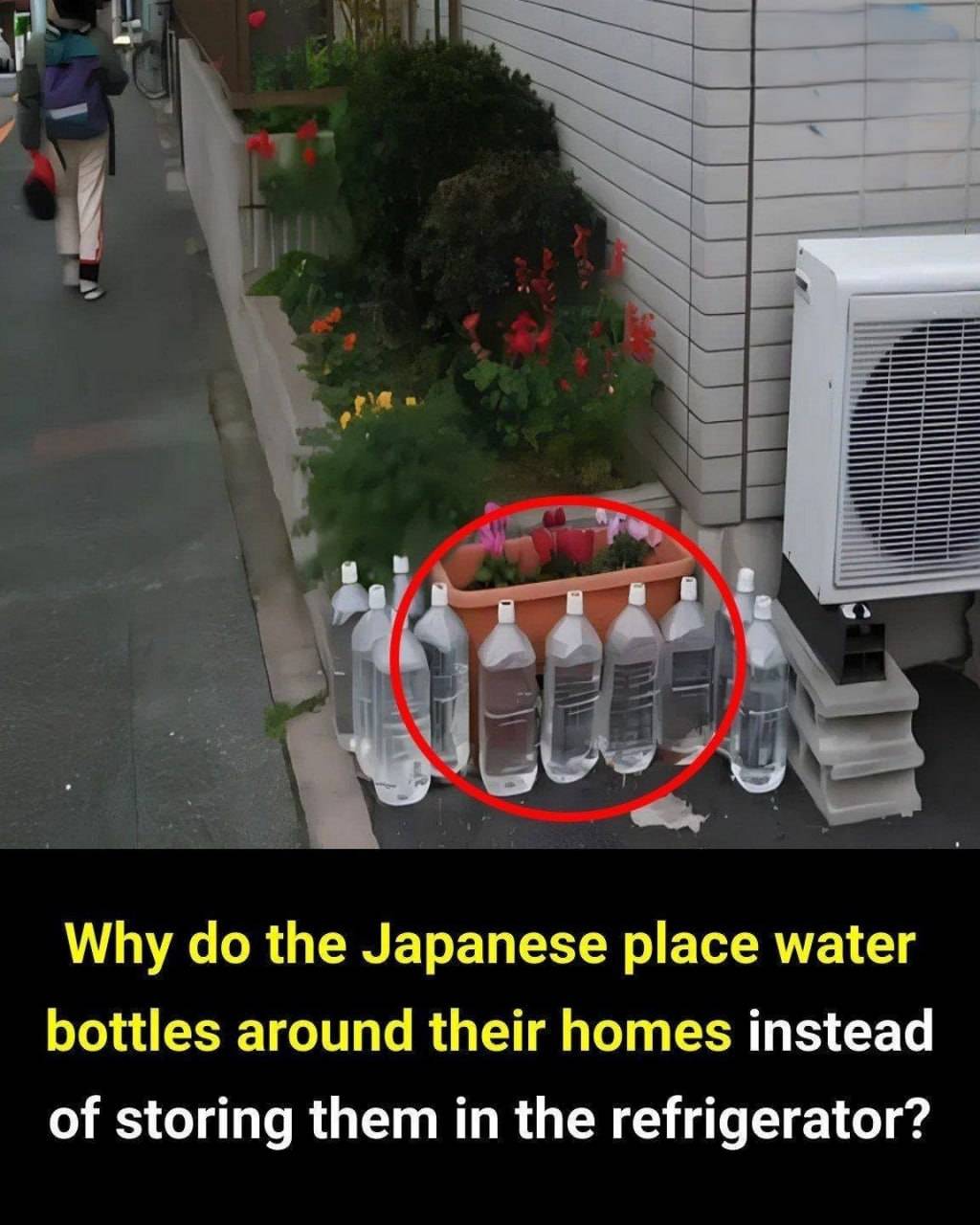
Why Do the Japanese Place Water Bottles Around Their Homes?
In many Japanese neighborhoods, you may notice large plastic bottles filled with water neatly placed outside homes and gardens. At first glance, this might seem unusual—why store water outside instead of in the refrigerator? The answer lies in a traditional method believed to protect homes and gardens from stray animals, particularly cats.
The practice is based on the idea that the reflective surface of sunlight passing through water bottles creates visual distortions that deter animals. Cats, for example, are thought to dislike the glimmers and light patterns reflected by the bottles, so they avoid the area. Homeowners often place them near gardens, flower beds, and entryways as a low-cost, non-invasive method of keeping animals away.
Although scientific studies suggest that this method is not consistently effective, it remains a common sight in Japan. Beyond functionality, the bottles have also become a cultural habit—an example of how traditional practices can persist even without strong scientific backing. For many residents, it is a simple, harmless way to try to protect their spaces without using chemicals or traps.
In essence, the bottles are not for drinking water but for creating a visual barrier. This unique practice illustrates how creative, low-tech solutions can emerge in daily life, blending culture, tradition, and community habits.