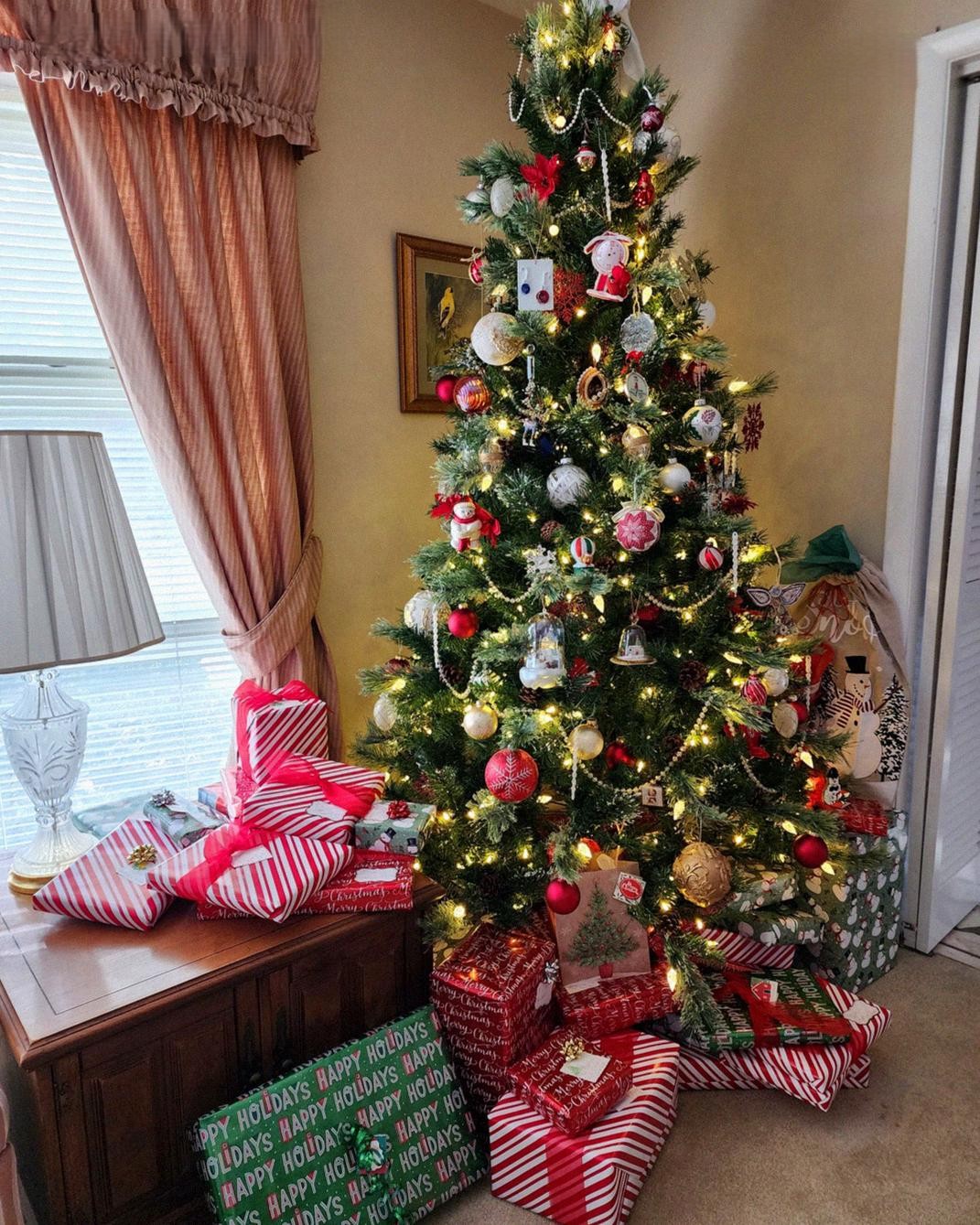
I should have trusted my instincts the moment that enormous box arrived on our doorstep in October. It was far too early for Christmas decorations, and far too large to be anything ordinary. The return address told me everything I needed to know before I even read the note tucked neatly on top. My mother-in-law, Veronica, had struck again.
Veronica had always been controlling, but she preferred subtle domination—the kind that masquerades as tradition, concern, or “just wanting what’s best for the family.” She rearranged furniture under the guise of feng shui, corrected recipes mid-cooking, and rewrote plans she hadn’t been invited to make. Still, this felt different. Sending us a full-sized artificial Christmas tree, unasked, for our first year hosting the family holiday gathering was a bold escalation.
The note was brief, written in her precise, tidy handwriting. It said the tree was to be placed in the corner of our living room near the front door. We could decorate it however we liked. That last sentence unsettled me more than the rest. Veronica never surrendered control. Ever.
My husband Brent tried to reassure me. He wanted to believe this was progress, that maybe his mother was finally loosening her grip after years of tension and quiet power struggles. I wanted to believe it too, but the unease settled in my stomach and stayed there. The tree remained in its box for weeks, sitting exactly where she’d instructed, like a dormant threat wrapped in cardboard and plastic.
As December crept closer, I threw myself into preparations. I wanted our first time hosting Christmas to be warm, welcoming, and drama-free. I baked cookies, polished inherited silverware, strung garlands, and curated a cozy atmosphere that felt like home rather than a performance. Friends told me I was overthinking it. My sister joked that maybe Veronica had finally learned to let go.
But I knew better.
The day of the gathering arrived with fresh snow dusting the streets, the kind of picture-perfect winter scene that feels borrowed from a catalog. The house smelled of cinnamon and mulled wine. Soft music hummed in the background. Everything looked right. Almost too right.
Family members arrived in waves, filling the house with chatter and laughter. Compliments flowed freely. For a moment, I let myself relax. Then Veronica arrived.
She swept in impeccably dressed, her smile tight and practiced. Her eyes went straight to the corner of the room.
“You’ve set up the tree,” she said, not a question.
“Yes,” I replied evenly. “We were just about to turn it on.”
Her posture stiffened. “Good. Everyone should be present. This is important.”
That should have been my final warning.
We gathered around as I reached for the plug. The instant it connected, the room erupted into chaos. A sharp hiss sliced through the air, followed by flickering lights and a smell so acrid it burned the back of my throat. Smoke curled up from inside the tree, and then flames—real flames—licked up the synthetic branches.
Panic took over.
Someone screamed. Kids rushed toward the door. Brent sprinted for the fire extinguisher while others tried uselessly to smother the flames. The living room filled with smoke, the holiday music still playing absurdly in the background as if mocking us. When the extinguisher finally drowned the fire in white foam, we were left standing in stunned silence, staring at the charred, ruined tree that had nearly burned down our house.
That’s when someone noticed it.
Buried inside the melted branches was a small, black device. At first glance it looked like debris, but then the shape registered. A microphone. A listening device.
The air changed instantly.
Brent’s face drained of color. He turned to his mother slowly, his voice dangerously calm as he asked if this was the same type of device she had questioned him about weeks earlier, claiming curiosity. Veronica tried to speak, but the excuses collapsed under the weight of reality.
She admitted it then, unraveling in front of all of us. She said she only wanted to make sure things were done properly. That traditions were being respected. That she was afraid of being pushed out, of losing control as her children built lives that no longer revolved around her.
The words sounded hollow against what she’d done.
She had planted a listening device in our home. She had endangered everyone inside it. And she had disguised it as a gift.
Years of carefully balanced family dynamics shattered in minutes. Brent stood between us, furious and protective in a way I had never seen before. His siblings were horrified. No one defended her. There was nothing to defend.
I found my voice then, steady and quiet, and told everyone to leave. We needed time. Space. Air.
That night, after the house finally fell silent and Brent dragged the ruined tree to the curb, I sat at my laptop with shaking hands and began to write. Not out of revenge, but out of release. I told the story plainly. What happened. How it felt. How easily control can disguise itself as care, and how dangerous it becomes when left unchecked.
By morning, the story had exploded online.
Messages poured in from strangers who recognized their own families in mine. People who had lived under the quiet tyranny of “tradition” and obligation. People who had learned too late that boundaries matter, especially with those who believe they’re entitled to cross them.
Veronica called. We didn’t answer.
The fire had destroyed more than a tree. It burned away illusions. It exposed truths we’d spent years tiptoeing around. And in the ashes, something healthier began to grow.
Next Christmas, we bought a real tree. We decorated it together. No instructions. No surveillance. No fear.
Sometimes it takes a disaster to finally see clearly. And sometimes, losing control is exactly what sets you free.