I thought pulling over that afternoon was nothing more than basic human decency. An elderly woman had been in an accident, alone on the side of the road, and I did what any responsible person would do. At least, that’s what I told myself at the time. I had no idea that stopping for a stranger would quietly reroute my entire life, reshaping grief, family, and hope in ways I never could have planned .
Three years earlier, cancer had taken my wife. Not gradually, not gently, but with a speed that left no room for preparation. One day we were arguing about paint colors for the kitchen, the next I was standing in a hospital hallway staring at a wall I couldn’t bring myself to touch. Losing her didn’t just break my heart; it dismantled the future we had built together piece by piece.
What kept me standing was our daughter, Nina. At fourteen, she was already navigating the cruelty of adolescence without her mother’s guidance. I knew one thing with absolute clarity: she needed at least one parent who didn’t fall apart. So I poured myself into being present. I stopped dating. Stopped imagining a different life. Not because I was bitter, but because I couldn’t afford to be distracted. Parenting through grief is survival-level commitment.
That Tuesday afternoon felt painfully ordinary. My commute home was quiet, the same route I’d driven hundreds of times, mentally reviewing dinner plans and homework questions. Then traffic slowed unexpectedly. Cars ahead were braking hard, drivers craning their necks toward the shoulder.
A silver sedan sat crushed against the guardrail, steam curling up from its mangled hood. And next to it, on the cold pavement, sat an elderly woman who looked frozen in time. She wasn’t waving for help or shouting. She was simply staring at the wreckage, hands shaking in her lap, eyes empty with shock.
I watched several cars slow down, hesitate, and then drive on.
Something in my chest burned. I pulled over without thinking, grabbed the emergency blanket from my trunk, and approached her slowly, palms open, voice calm. When she looked up at me, it was as if she had just realized she was still alive.
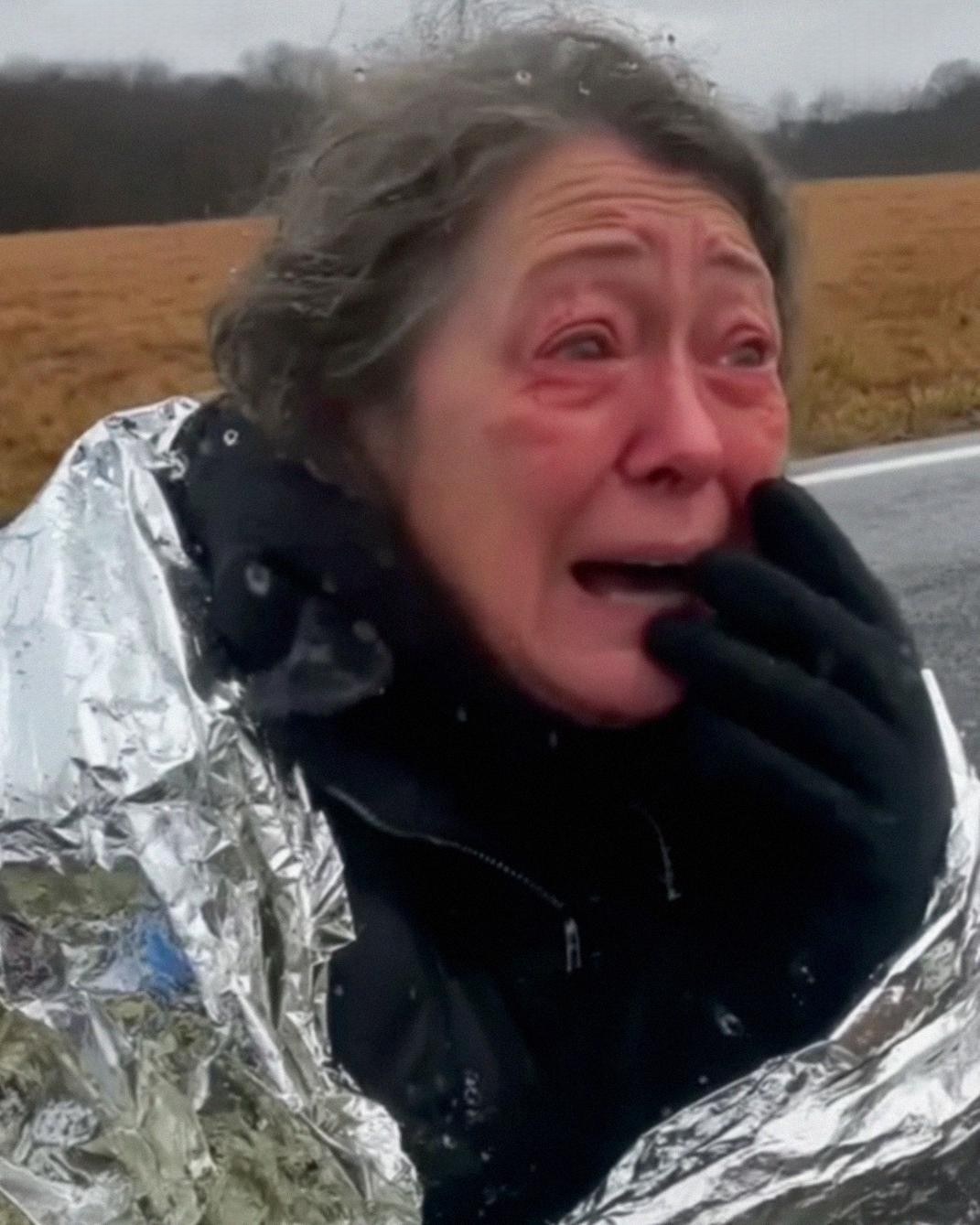
Her name was Ruth. Her brakes had failed. The words came out in broken fragments, followed by a sentence that cracked something open in me: “I really thought I was going to die right there.”
I wrapped the blanket around her shoulders and sat beside her, guiding her breathing, staying present while her composure collapsed. She cried the kind of sobs that come when fear finally releases its grip. I stayed until paramedics arrived, until her shaking eased, until she believed she wasn’t alone.
When the ambulance doors closed, she grabbed my arm and said, “I won’t forget this.”
I didn’t think much of it afterward. I went home, cooked dinner, helped Nina with math, and tried to shake the image of that roadside from my mind. Kindness, I told myself, doesn’t need a spotlight.
Two days later, my phone rang while I was washing dishes. It was my mother, screaming into the receiver, demanding I turn on the television immediately. My stomach dropped before I even reached the remote.
There she was. Ruth. Sitting under studio lights, telling her story to a news anchor. And then, unmistakably, grainy footage of me kneeling on the roadside appeared on the screen. The anchor called me “an unidentified Good Samaritan whose actions likely saved a life.”
I wanted to disappear.
Then Ruth looked directly into the camera and said my name. She invited me to her family café so she could thank me properly.
Nina found the clip online before I could change the channel. Her eyes were wide with awe. “Dad,” she said, “that was you.”
We went to the café that Saturday.
The moment we walked in, the room erupted in applause. Nina froze, stunned, and then smiled in a way I hadn’t seen in years. Ruth hugged me like family, insisted everything was on the house, and introduced us to her daughter, Virginia.
Virginia was warm, composed, and quietly observant. She thanked me with a sincerity that made my throat tighten. What started as polite conversation stretched into hours of laughter, stories, and shared understanding. Nina bonded with Ruth instantly, soaking up the attention of a grandmotherly presence she’d been missing.
We came back the next weekend. Then the one after that. It became a ritual. Coffee, pastries, conversation. Virginia started sitting with us even after her shifts ended. We talked about grief, about single parenting, about the strange guilt that comes with surviving loss.
Somewhere along the way, I realized I was laughing again. Not politely, not out of obligation, but genuinely.
Nina noticed before I did. She teased me mercilessly. When Virginia and I finally went on a real date, Nina gave me a pep talk like she was the adult. “You’re allowed to be happy,” she said. “Mom would want that.”
And she was right.
Helping Ruth didn’t erase my grief. It didn’t replace my wife or rewrite the past. What it did was remind me that moving forward isn’t betrayal. It’s continuation. Love doesn’t end when someone is gone; it changes shape.
That single decision to pull over on an ordinary afternoon led to a new rhythm in our lives. A wider family. A reopened heart. A future I’d stopped believing was meant for me.
Sometimes the most powerful moments aren’t planned. They arrive quietly, on the side of the road, asking only whether you’re willing to stop.