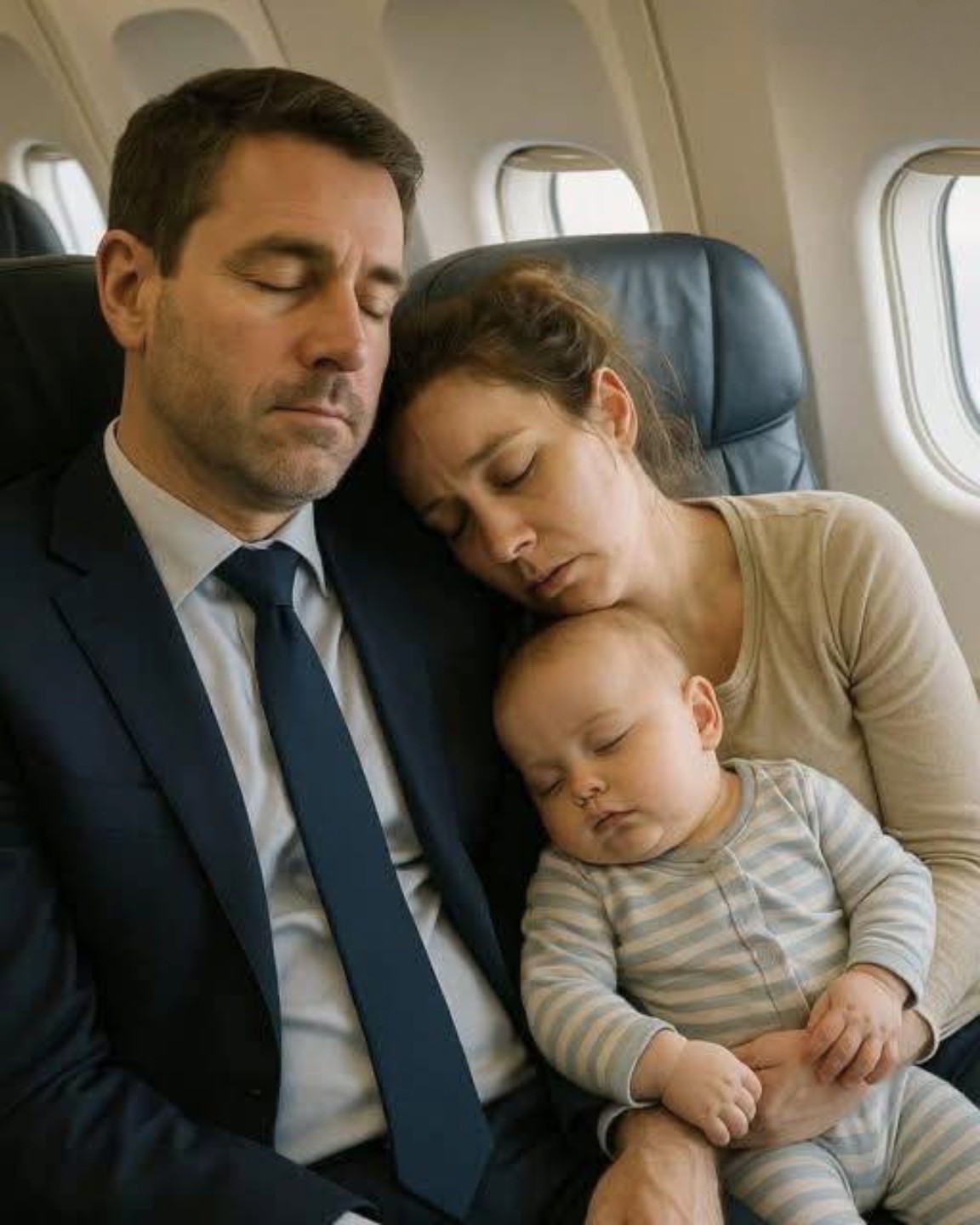
The red-eye flight was nearly silent, the kind of quiet that only exists when exhaustion wins. Overhead lights were dimmed, conversations reduced to whispers, and the steady hum of the engines felt like a lullaby for everyone on board. For Rachel Martinez, that hum was the last thing holding her upright.
She had not slept properly in weeks. Two double shifts back to back in a pediatric ward. A babysitter who quit without notice. A scramble to arrange last-minute childcare that fell apart anyway. A cross-country flight booked out of desperation, not planning. Her body ached in places she didn’t remember hurting before, and her mind felt like it was constantly bracing for impact.
Her daughter, Sophia, barely a year old, finally surrendered to sleep mid-flight. One moment she was fussing softly, tiny hands tugging at Rachel’s shirt, the next her breathing slowed, her weight went slack, and her head tipped gently to the side—landing against the shoulder of the stranger sitting beside them.
Rachel noticed too late. She jerked slightly, mortified, whispering apologies as she reached to pull Sophia back. But the man didn’t flinch. He didn’t sigh. He didn’t pull away.
“It’s okay,” he said quietly, his voice low and steady. “Let her sleep.”
Rachel hesitated. The seatbelt light was on. Sophia was warm, peaceful, finally still. Against her better judgment, Rachel allowed it. Her own head followed soon after, exhaustion overpowering pride, and she drifted off as well.
When she woke, it took her a moment to remember where she was. The cabin lights were brighter. The plane had landed. Sophia was still asleep, now cradled securely against Rachel’s chest, and the stranger was sitting exactly as he had been, careful not to move.
He smiled gently when he saw Rachel stir.
“She didn’t wake once,” he said.
Rachel blinked, then laughed softly, the kind of laugh that comes when you realize you’ve been holding yourself together with threads. “I don’t even know how that happened.”
“Looks like she decided to trust us,” he replied.
A flight attendant nearby leaned in, smiling warmly. “Ms. Martinez, your daughter slept the entire flight. Honestly… she’s a little miracle.”
Sophia chose that moment to wake, reaching for her mother and giggling as if nothing extraordinary had happened at all. Rachel breathed her in, grounding herself, the familiar scent of baby shampoo and warmth reminding her why she kept going when everything felt impossible.
As passengers filed past them, the stranger spoke again, careful, measured.
“My name is James,” he said. “I overheard enough to understand your situation. Two double shifts. Pediatric ward. No childcare coverage. A last-minute flight because your sitter quit.”
Rachel stiffened, embarrassment rising in her chest. “I didn’t mean to complain.”
“You didn’t,” James said gently. “You endured. That’s different.”
She didn’t know why that sentence hit so hard, but it did. Her throat tightened, words lodging somewhere between gratitude and disbelief.
James reached into his jacket pocket and handed her a small card. It wasn’t flashy. No embossing. Just a name, a phone number, and a logo she didn’t recognize.
“I run a healthcare staffing foundation,” he explained. “We place nurses in hospitals that actually respect them. Fair pay. Predictable schedules. On-site childcare. Housing stipends if needed.”
Rachel stared at the card, then at him. “This feels like a joke.”
“It isn’t,” he said calmly. “I don’t do favors. I do investments. And tired nurses who still show up with love are the best ones.”
Her hands trembled slightly. “Why me?”
James didn’t answer right away. The cabin around them had emptied, leaving only the soft rustle of discarded magazines and the distant echo of footsteps in the aisle.
“Ten years ago,” he said finally, “a nurse stayed late with my wife when everyone else had gone home. She held our son when my wife was too weak. She didn’t know who I was. She didn’t ask. She just cared.”
Rachel felt tears rise, uninvited and unstoppable.
“I couldn’t save my wife,” he continued quietly. “But I learned who really carries the world on their backs.”
He stood, careful not to rush her. “I’m not offering charity. I’m offering a door. You decide whether to walk through it.”
Then, softer, “And if you say no, that’s okay. I’ll still be grateful you trusted me with her.”
Rachel looked down at Sophia—safe, curious, unaware of how close her mother had come to breaking more times than she could count. Then she looked back up.
“I don’t even know where to start,” she whispered.
James smiled, steady and kind. “That’s alright. For once… you don’t have to.”
Six months later, Rachel worked three days a week at a children’s clinic with on-site daycare. No night shifts. No frantic phone calls. No panic when a shift ran late. She slept again. She laughed again. She found herself breathing without bracing.
Sometimes, when Sophia drifted off in her arms, Rachel remembered a red-eye flight and a stranger’s shoulder. And she remembered the lesson she’d almost forgotten in the blur of survival.
Help doesn’t always arrive loudly.
Sometimes it shows up quietly,
holds what matters most,
and reminds you
that rest, too,
is a form of mercy.