“We don’t have that kind of money lying around. Emily, you need to be realistic about this.”
The words didn’t sound like a refusal. They sounded like a verdict.
My father, Robert, stood in the doorway of my cramped apartment, his arms crossed over his chest in a posture of defensive authority. Behind him, my mother, Linda, nodded in silent agreement, her mouth pressed into a thin, pale line of disapproval. They looked out of place here—their cashmere coats and polished leather shoes clashing with the worn laminate flooring and the peeling beige paint of my living room.
I stood frozen, the kitchen table between us serving as a battlefield littered with invoices. The total amount, circled in red marker, seemed to pulse like a fresh wound: $85,000.
That was the price of a life. Specifically, the life of my seven-year-old son, Ethan.
In the next room, the rhythmic, mechanical hiss of the oxygen concentrator was the only sound in the world. It was a countdown clock. Ethan was asleep, his small chest hitching with every labored breath, blissfully unaware that his grandparents were currently negotiating his existence as if he were a bad investment.
“Realistic?” I repeated, the word tasting like ash. “Dad, the specialist said this experimental treatment is his last option. Without it, his heart fails. He has six months. Maybe less.”
My mother stepped forward, placing a manicured hand on my father’s forearm—a gesture I knew well. It was her way of softening the blow without changing the trajectory of the swing.
“Honey,” she purred, her voice dripping with that maddening, pitying sweetness. “We understand this is difficult. But we’ve already helped so much. We paid for his second surgery. We helped with the deductibles last year. We can’t just empty our retirement accounts on a gamble.”
“I’m not asking for a gift,” I pleaded, my dignity shredding with every syllable. “I’m asking for a loan. I’ll get a second job. I’ll work nights. I will pay back every single cent with interest.”
My father shook his head, a look of weary disappointment settling over his features. “Emily, look at you. You’re a middle school science teacher. You’re barely keeping your head above water as it is. Be sensible. There are payment plans. Financing options.”
I laughed then, a dry, brittle sound that frightened me. “I have a credit score of 500 because of his medical bills. No one will finance me. You are my last hope.”
For a fleeting second, I saw a crack in my mother’s armor. She looked toward the bedroom door where her grandson lay dying. But then my father spoke, his voice firm, closing the door on compassion.
“We can’t do it, Emily. We have to think about our own future, too. We aren’t getting any younger. We have to protect our assets.”
Protect their assets.
They left two minutes later. I stood at the window, watching their silver Lexus gleaming under the streetlights as it pulled away from the curb, driving back to their manicured suburban life twenty minutes away. The weight of their refusal didn’t crush me immediately; it settled over me like a suffocating blanket of ice.
I walked into Ethan’s room and sat on the floor beside his bed. The blue light of the monitor cast ghostly shadows on his face. He looked so small. So fragile.
I promised him I would find a way. I didn’t know then that my parents had just signed his death warrant.
The next two weeks were a blur of humiliation. I prostrated myself before every distant relative I could find. I called cousins I hadn’t spoken to in a decade. I emailed my mother’s siblings.
Most offered prayers. Prayers are free.
My Aunt Teresa, the black sheep of the family who lived in a trailer in Arizona, sent a check for $500 with a note: I wish I could do more, sweetie. Fight for him. I wept over that check. It was the only genuine act of love I received. But I was trying to fill an ocean with a teaspoon.
Then, the universe delivered its cruelest punchline.
I was grading papers at the kitchen table, calculating which utility bill I could skip this month, when my phone buzzed. It was my younger sister, Claire.
“Emily! Pick up! I have the most incredible news!”
Her voice was breathless, bubbling with champagne effervescence. I tried to muster energy, rubbing my temples where a tension headache had taken permanent residence. “What is it, Claire?”
“Jeffrey proposed! Last night! We’re getting married!”
“That’s… that’s wonderful, Claire. Congratulations.”
“I know! And listen—Mom and Dad are being absolute angels. They sat us down this morning and told us they want to pay for everything.”
The air left the room. My hand tightened around the phone until the plastic creaked. “Everything?”
“No budget limits!” Claire squealed. “Dad said, and I quote, ‘This is my little girl’s special day and nothing is too good.’ We’re looking at a destination wedding. Maybe Tuscany? Or the South of France? We’re meeting with a luxury planner next week.”
I sat there, the hum of Ethan’s oxygen machine in one ear and my sister’s fantasies of Italian villas in the other. No budget limits.
“That sounds… expensive,” I managed to choke out.
“Oh, it will be,” she laughed, oblivious. “But Dad said they’ve been saving for this for years. They want it to be perfect.”
I hung up. I couldn’t breathe.
They had the money. It wasn’t about retirement security. It wasn’t about “protecting assets.” It was about value. To Robert and Linda, a party for their golden child was an investment. Saving the life of their sick, “broken” grandson was a waste of resources.
The seed of hatred didn’t sprout instantly. It grew slowly, fed by the drip-feed of updates that followed.
While I sold my grandmother’s heirloom ring to a pawn shop for a fraction of its worth, my mother texted me photos of floral arrangements costing $15,000.
While I downgraded my car to a rusted sedan that stalled at red lights, my father put a deposit on a sprawling vineyard estate in Tuscany.
While I moved Ethan and myself into a studio apartment that smelled of damp drywall to save $400 a month, Claire debated between a live band or a string quartet.
Then came the call in July.
“Emily, honey,” my mother chirped. “We need to order the bridesmaid dresses. Since you’re in the bridal party, you need to send your measurements. The dress is $300.”
I stared at the pile of unpaid pharmacy receipts. “$300? Mom, that’s two weeks of Ethan’s heart medication. I can’t.”
The silence on the line was sharp. “Emily, this is your sister’s wedding. Don’t be selfish.”
“Selfish?” My voice trembled. “My son is dying. We missed the window for the experimental treatment because I couldn’t raise the money. Now we are just trying to keep him comfortable. I don’t have $300 for a dress I’ll wear once.”
“You’re always talking about Ethan’s expenses,” she snapped, her mask slipping. “I understand he’s sick, but life goes on for the rest of us. You need to learn to manage your money better.”
I declined to be a bridesmaid.
My mother told the extended family I was “too jealous of Claire’s happiness” to participate.
In September, Ethan took a turn for the worse. His lips turned a terrifying shade of blue that became permanent. He stopped asking to play with his Legos. He stopped talking about growing up to be an astronaut. He knew.
That same weekend, Claire had her bachelorette party in Napa Valley. My mother later told me it cost $10,000.
“It was magical,” she gushed. “Worth every penny to see Claire smile.”
I looked at my son, who hadn’t smiled in three days because breathing took all his energy.
“I’m glad she smiled,” I said, my voice dead.
I was no longer sad. I was calcifying. I was turning into stone, layer by layer.
Ethan died on a Tuesday morning in late October.
He slipped away quietly, holding my hand, three days before Claire’s wedding.
The silence that followed the stopping of the oxygen machine was the loudest noise I have ever heard. I didn’t scream. I just leaned my forehead against his cooling hand and whispered, “I’m sorry. I’m so sorry I couldn’t save you.”
I called my parents.
“Oh, no,” my mother gasped. “Oh, Emily. No.”
For a second, I thought I heard grief.
“What terrible timing,” she whispered.
I pulled the phone away from my ear and stared at it. “Timing?”
“The wedding is Sunday,” she said, panic rising in her voice. “We fly out to Italy tomorrow night. The guests are arriving. We can’t… Emily, we can’t cancel.”
“I’m not asking you to cancel,” I said, my voice sounding like it was coming from the bottom of a well. “I’m telling you my son is dead.”
“We’ll come see you before we fly out,” she promised.
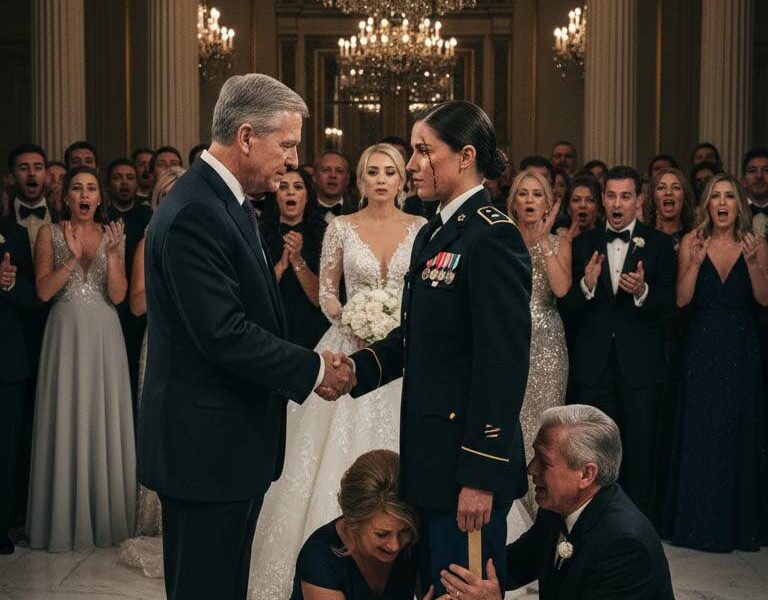
They stopped by for fifteen minutes. They were dressed in travel clothes, checking their watches. My father patted my shoulder awkwardly. My mother dabbed her eyes carefully so as not to smudge her mascara.
“We have to go,” my father said, looking at his Rolex. “The car service is waiting.”
“We’ll mourn him properly when we get back,” my mother added. “Maybe… maybe you could hold off on the funeral until next week? After the honeymoon?”
“I’m burying him on Friday,” I said.
“But we’ll be in Tuscany,” she protested. “We’ll miss it. It would be so much more convenient for everyone if—”
“Get out.”
“Emily, be reasonable—”
“Get. Out.”
I buried my son on a grey Friday morning. There were twenty people there. My Aunt Teresa flew in from Arizona. My principal came. Teachers. Neighbors.
The front row—reserved for grandparents—was empty.
While I watched the small white casket being lowered into the hard earth, my phone buzzed in my purse. I checked it later. It was a text from my mother.
Thinking of you. Rehearsal dinner is just starting. The sunset is beautiful. Wish you were here.
She included a photo. My parents, tanned and beaming, holding glasses of champagne against a backdrop of rolling Italian hills.
That night, alone in my silent studio apartment, I sat down at my laptop. I didn’t cry. I opened a spreadsheet.
I began to document.
I logged every date. Every interaction.
May 16: Request for $85,000 denied. Reason: “Financial hardship.”
August 12: Wedding Venue deposit paid. Amount: $80,000.
September 20: Bachelorette Party. Amount: $10,000.
October 24: Ethan passes away.
October 27: Funeral cost $6,000 (Loan from Aunt Teresa).
October 29: The Wedding. Total estimated cost: $230,000.
I scoured their social media. I saved every receipt they foolishly posted. I screenshotted the comments where my mother bragged about the “spare no expense” philosophy. I built a dossier of their hypocrisy.
I didn’t know what I would do with it. But I knew that one day, the wheel would turn.
Four years passed.
I declared bankruptcy. I rebuilt my credit score from the ashes. I went back to school at night, earning a Master’s degree in Education Administration. I became a principal.
I moved out of the studio. I started saving money with a pathological intensity. I lived like a monk, putting every spare dollar into a high-yield savings account. I wasn’t saving for a house. I wasn’t saving for a vacation. I was saving for war, though I didn’t know what form it would take.
My family was dead to me, though they didn’t seem to realize it. They sent Christmas cards (with photos of Claire’s new babies). My mother left voicemails acting as if nothing had happened. “Let bygones be bygones,” she’d say.
I never responded.
Then, the email came from Aunt Teresa.
Subject: Karma.
Emily, I thought you should know. Your father’s company has been raided by the SEC. Massive fraud scandal. His stock options—his entire retirement—are worth zero. They are being sued. They are losing everything.
I sat back in my office chair, the leather creaking. I pulled up the news. There it was. My father’s firm, bankrupt. Executives implicated. Assets frozen.
Two weeks later, the phone calls started. My mother, frantic. My father, humble.
I let it ring.
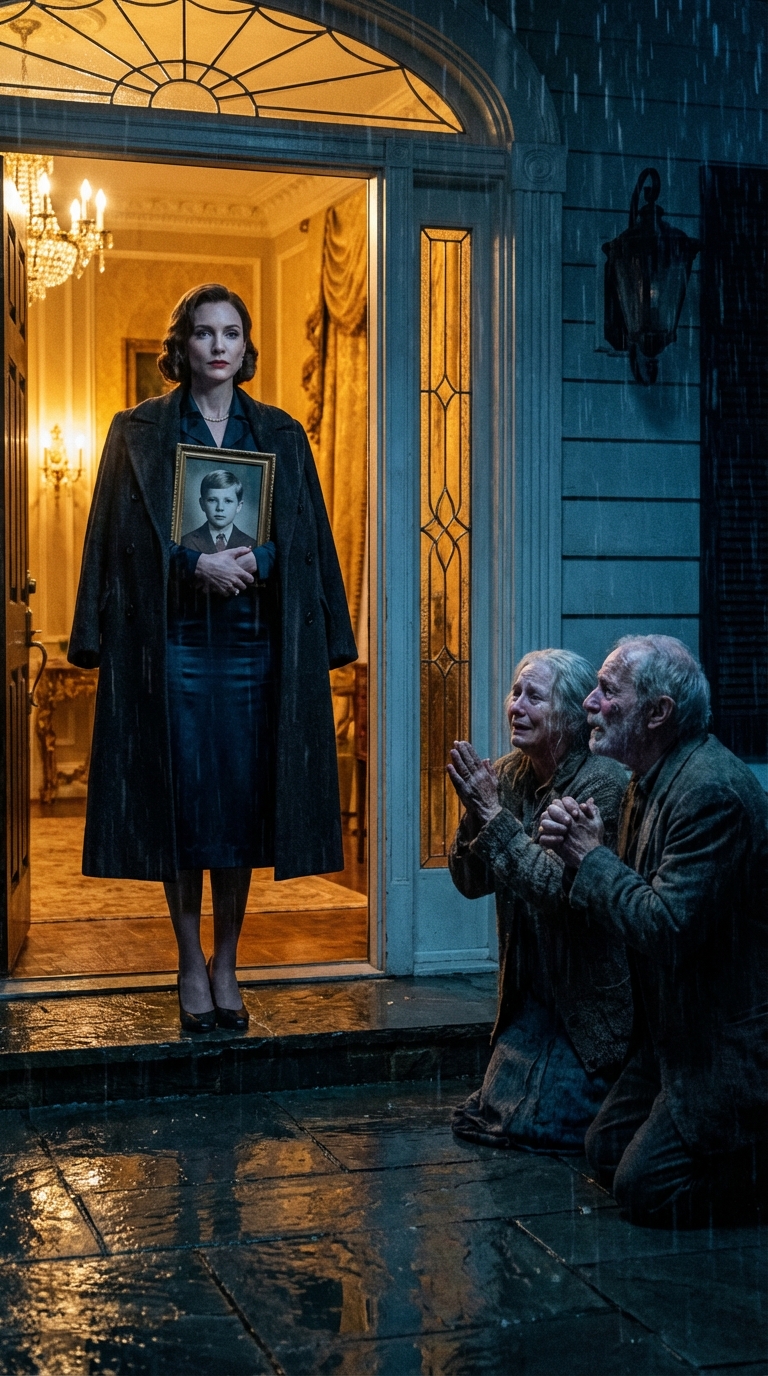
Finally, my father showed up at my door. He looked ten years older. The arrogance was gone, replaced by a grey, shaking desperation.
“Emily,” he rasped, standing in the hallway of my condo building. “Please.”
I opened the door but didn’t unhook the chain. “What do you want?”
“We’re losing the house,” he said, tears welling in his eyes. “Foreclosure. We have nowhere to go. Claire can’t help us—she’s leveraged to the hilt with her own mortgage. We need $90,000 to save the house and pay the arrears. Just a loan. Please.”
I looked at this man. This man who had checked his watch while my son lay dying.
“Come back on Saturday,” I said. “Bring Mom and Claire. I want a meeting.”
They arrived at 2:00 PM sharp.
My living room was arranged like a courtroom. A single chair facing the sofa. On the coffee table, I had placed a single manila folder and a checkbook.
They sat on the sofa—Robert, Linda, and Claire. They looked terrified. They looked small.
“Thank you for seeing us,” my mother sniffled, dabbing her eyes with a tissue that was no longer brand name. “We didn’t know where else to turn.”
“You asked for $90,000,” I said, standing over them.
“Yes,” my father said eagerly. “We will pay you back. I’m looking for consulting work. Once the dust settles…”
“I don’t want your money,” I interrupted. “I have the $90,000.”
I saw the relief wash over them like a physical wave. Claire let out a sob. My father slumped.
“Oh, thank God,” my mother cried. “Thank God. Emily, you are saving our lives.”
“I haven’t given it to you yet,” I said sharply. “There are conditions.”
My father sat up straighter. “Anything. Interest? Collateral?”
“No,” I said. I picked up the manila folder and tossed it onto the table. It slid across the surface and hit Claire’s hand. “Open it.”
Claire opened the folder. The first page was a photo of Ethan in the hospital, two days before he died, hooked up to machines. The second page was the invoice for her wedding flowers. The third was a spreadsheet comparing my request for $85,000 against their expenditure of $230,000.
“What is this?” Claire whispered.
“That is the ledger,” I said cold as the grave. “Condition one: You are going to admit it. Right now. Out loud.”
“Admit what?” my father stammered.
“That you chose a party over my son’s life,” I said. “That you had the money. You lied to me about being ‘realistic.’ You valued Claire’s centerpieces more than Ethan’s heartbeat. Say it.”
“Emily, that’s not fair,” my mother wailed. “We didn’t know—”
“YOU KNEW!” I screamed, the sound tearing from my throat, startling them into silence. “The doctors told you. I told you. You knew. You just didn’t care. Say it, or get out of my house and lose yours.”
The silence stretched. It was agonizing. I watched them weigh their pride against their poverty.
“We chose the wedding,” my father whispered, looking at the floor.
“Louder.”
“We chose the wedding,” he said, his voice cracking. “We had the money. We didn’t help Ethan. We let him die.”
My mother was sobbing into her hands. Claire was staring at the spreadsheet, pale as a sheet.
“And you, Claire?” I asked. “Did you enjoy the champagne?”
“I didn’t know,” she wept. “I didn’t know you asked them.”
“Ignorance is a luxury,” I said. “You never asked where the money came from. You just took it.”
I walked to the table and picked up my pen. I wrote out the check for $90,000. It drained my savings to almost nothing. Four years of sacrifice, gone in a stroke of ink.
“Here is the check,” I said, holding it up. They reached for it, greedy hands trembling. I pulled it back.
“Condition two,” I said.
I placed a legal document on the table next to the check.
“This is a legally binding No Contact agreement. If you take this money, you are dead to me. No phone calls. No letters. No holidays. No showing up at my school. You disappear. You go back to your house, you live in the shrine you built on my son’s bones, and you never speak my name again.”
My mother looked up, horrified. “Emily, you can’t mean that. We’re family.”
“We share DNA,” I corrected her. “Family shows up to the funeral. Family doesn’t negotiate a child’s life. Sign it.”
“And if we don’t?” my father asked.
“Then I rip up this check, and I watch the bank auction your house on Monday.”
They looked at each other. I saw the calculation in their eyes. They wanted the house more than they wanted me. They always had.
My father signed first. Then my mother, her hand shaking so hard the pen tore the paper. Claire signed last, angry strokes of ink.
I handed my father the check.
“Goodbye,” I said.
They stood up, clutching their salvation, and shuffled toward the door. They looked like ghosts.
“Emily,” my mother tried one last time at the threshold. “I love you.”
“No,” I said, closing the door. “You love yourself. And now, you can afford to keep doing it.”
I locked the deadbolt. Click.
I stood in my silent apartment. My bank account was empty, but my soul was full.
I wasn’t done.
I sat down at my computer and opened my email. I found the draft I had written weeks ago.
To: Aunt Teresa
Cc: The entire extended family mailing list (Cousins, Uncles, The Country Club Friends)
Subject: The Truth About Ethan.
Dear Family,
I know many of you have heard that my parents are struggling financially and that I have given them $90,000 to save their home. I want to clarify why I did this, and why I will no longer be in contact with them.
Attached is a timeline of events from four years ago. It details the $85,000 lifesaving treatment they refused to fund for Ethan, contrasted with the $230,000 they spent on Claire’s wedding six months later. It includes the receipts, the dates, and the fact that they skipped Ethan’s funeral reception to attend a rehearsal dinner.
I gave them the money today not because they deserve it, but because I am not them. I pay my debts. But now, everyone knows the cost.
Sincerely,
Emily.
I hit send.
The fallout was immediate and nuclear.
By the next morning, my phone was blowing up with messages from cousins I hadn’t seen in years, expressing horror. My Aunt Teresa replied with a single line: Justice is a dish best served cold, baby girl.
My parents kept their house, but they lost everything else. The country club revoked their membership—not because they were broke, but because the social stigma was too great. Their friends stopped calling. They became pariahs in their own manicured neighborhood. They sat in their saved home, surrounded by expensive furniture, completely alone.
Claire moved to another state within a year. She couldn’t handle the whispers.
As for me?
I started saving again. Slowly. Dollar by dollar.
I visit Ethan’s grave every Sunday. I sit on the grass and I tell him stories. I tell him that his mom is okay. I tell him that the monsters didn’t win.
Some people say forgiveness is the only way to heal. They say holding onto anger is like drinking poison and expecting the other person to die.
I disagree. Sometimes, anger is fuel. Sometimes, it’s the fire that cauterizes the wound so you can finally survive. I gave them what they wanted—their money, their house, their image. And then I burned the image to the ground.
I am alone, yes. But when I sleep at night, the silence isn’t heavy anymore. It’s peaceful.