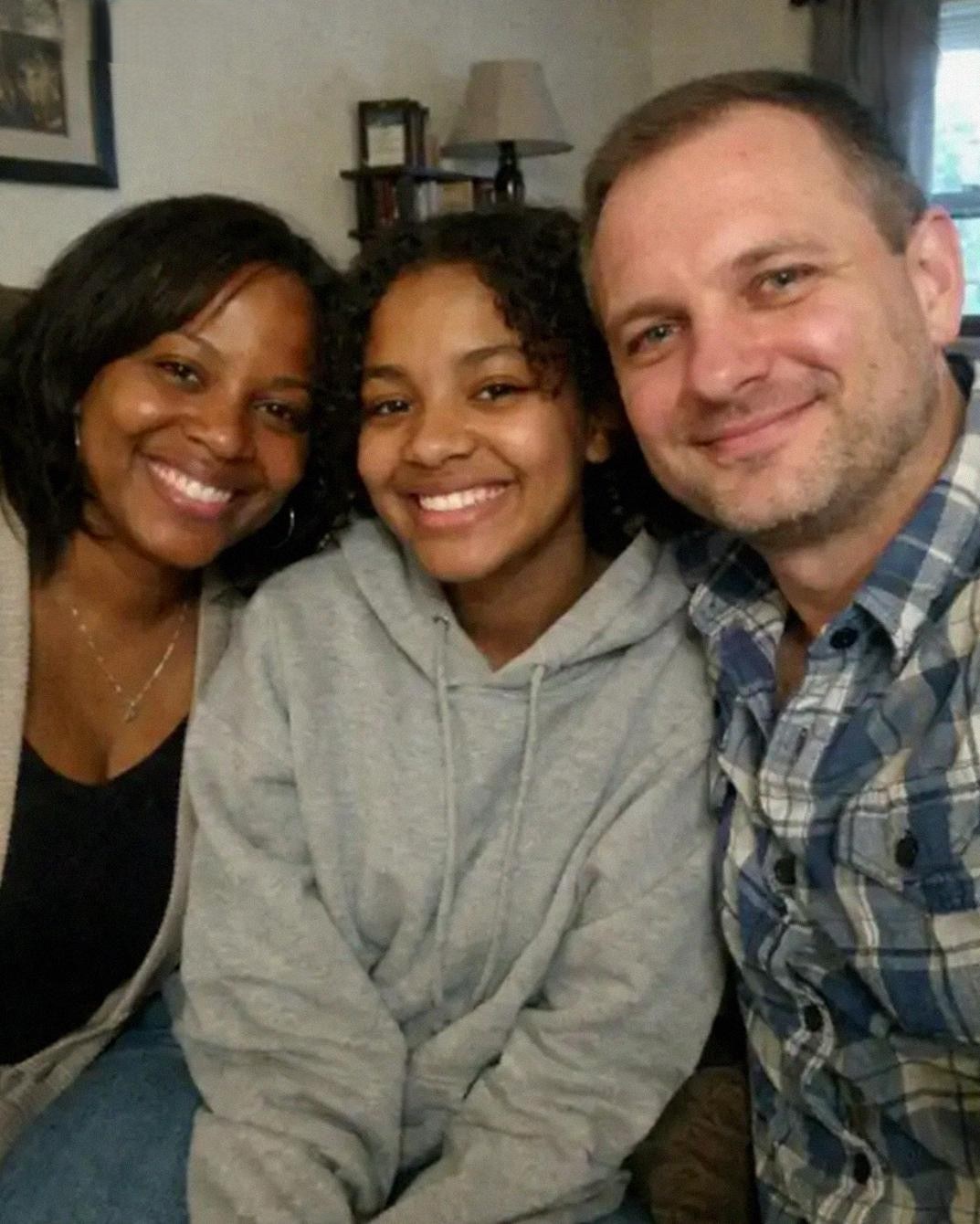
My daughter Avery is sixteen—old enough to start talking about getting her license, old enough to slam her bedroom door a little harder than she used to. But still young enough that I believed I’d always know when something was wrong.
Lately, she’d gone quiet.
Not the normal teenage quiet where she’s annoyed at the world. This was careful quiet. Measured. Like she was holding her breath in her own house.
She’d come home, go straight to her room, and barely touch her dinner. When I asked, she’d nod without meeting my eyes and say, “I’m fine, Mom.”
But she wasn’t. I could feel it in the way she moved through the rooms, like she was trying not to disturb anything. Like one wrong sentence could crack something open.
I told myself it was just adolescence. Hormones. Mood swings. The slow untangling of a child from her mother. I didn’t want to be the kind of parent who panicked over every sigh.
Then I heard her say it.
Last Tuesday, I was in the shower when I suddenly remembered the new hair mask I’d bought. I’d left it in my purse downstairs. I wrapped a towel around myself and hurried down the hallway, water still running behind me, leaving wet footprints on the wood.
It was supposed to take ten seconds. Grab the mask. Go back upstairs.
That’s when I heard voices in the kitchen.
Avery’s voice was low—almost shaking.
“Mom doesn’t know the truth,” she whispered.
I stopped so fast my stomach dropped.
“And she can’t find out.”
My mind went blank, then immediately filled with every nightmare a mother can invent. I pressed my hand against the wall to steady myself.
Then my bare foot creaked on the floor.
Silence.
I walked into the kitchen with my towel clutched tight, trying to look normal.
“What’s going on?” I asked, forcing lightness into my voice.
My husband Ryan—Avery’s stepdad—brightened instantly, like someone flipping a switch. “Oh, hey, honey. We were just talking about her school project.”
Avery jumped in too fast. “Yeah. I need a poster board for science tomorrow.”
They both smiled at me. Too normal. Too quick. Like they’d rehearsed it.
I nodded, even laughed softly, and walked back down the hallway as if I hadn’t just heard my daughter confess she was hiding something from me.
That night, I barely slept.
What truth? Why couldn’t I know it? What could be so bad they were whispering like conspirators in my own kitchen?
The next afternoon, right after school, Ryan grabbed his keys. “We’re going to get that poster board,” he said casually. “Maybe pick up pizza too.”
Avery slid on her sneakers without looking at me.
“You want me to come?” I asked.
“No,” Ryan said quickly. “We’ll be fast.”
The door shut behind them.
Seconds later, my phone rang. It was the school.
“Hi, ma’am,” the woman said. “I’m calling about Avery’s absences on Wednesday and Friday last week. We didn’t receive a note. I just wanted to make sure everything’s okay.”
My blood went cold.
Wednesday and Friday? I had watched Avery leave the house both mornings—Ryan driving her like he always did.
“Oh—yes,” I said, voice too tight. “Appointments. I’ll send a note.”
I hung up and stared at the wall.
Avery hadn’t been at school. Ryan had taken her somewhere else. And they’d lied to my face.
My hands shook as I grabbed my keys. I told myself I was overreacting. There was probably an explanation. But my body wasn’t buying it. Something was wrong. Big wrong.
I followed them.
Ryan didn’t drive toward Target. He turned the opposite way, away from the shopping center. I kept a few cars back, heart hammering, palms damp on the wheel.
Ten minutes later, their brake lights glowed as they pulled into a parking lot.
The local hospital.
My chest tightened so hard it hurt. Why the hospital? Was Avery sick? Was Ryan?
I parked a few rows away and watched. They got out, walked toward the entrance, and stopped at the small flower shop in the lobby. A few minutes later, Avery came out holding a bouquet—white lilies and yellow roses.
Then they disappeared into the main building.
I waited thirty seconds and went in.
The lobby smelled like antiseptic and burnt coffee. I stayed far enough behind that they wouldn’t notice me, close enough not to lose them. They stepped into an elevator. The numbers lit up: three.
I took the stairs. My legs felt like rubber.
On the third floor, they walked down the hallway and stopped outside a room near the end.
Room 312.
Ryan knocked softly. A nurse opened the door, smiled at them, and let them in. The door shut.
I stood there, frozen.
Who was in that room?
Ten minutes later, the door opened. Ryan and Avery came out. Avery’s eyes were red and swollen. Ryan’s arm was around her shoulders, guiding her gently, like she might collapse.
I ducked into a supply closet until they passed.
When the hallway cleared, I walked to room 312 and reached for the handle.
“Excuse me, ma’am.”
I turned. A nurse stood behind me, watchful.
“Are you family?”
“I—yes,” I started, then stopped because I realized I didn’t even know who I was lying about.
“His what?” she asked.
I swallowed. “I don’t know who’s in there.”
Her expression hardened with professional caution. “Then you can’t go in.”
“My daughter was just in there,” I said, voice breaking. “I need to know who—”
“I’m sorry,” she said, already moving away. “I can’t help you.”
I went home with my heart in my throat.
Ryan was setting pizza boxes on the counter when I walked in. “Hey,” he said too casually. “Where’d you go?”
“Store,” I lied. “Just looked around.”
Avery wouldn’t meet my eyes.
That night, sleep didn’t come. I replayed everything: the whisper, the school call, the flowers, the hospital room number burned into my brain.
The next day, Ryan tried another excuse. “Taking Avery to the library. She needs to work on that project.”
“Okay,” I said, steady as stone.
The minute they left, I grabbed my keys again. This time I wasn’t trailing behind. I wasn’t waiting for permission. I was done being handled like a child in my own life.
They went to the hospital again. The flower shop again. Another bouquet.
I followed, took the stairs, and walked straight to room 312.
I waited outside for a few minutes, then inhaled and opened the door.
Ryan and Avery turned toward me, both startled.
Avery went pale. “Mom—?”
But my eyes were on the man in the bed.
Thin. Gray. Hooked up to an IV. Hollow-cheeked.
David.
My ex-husband.
The room tilted. My mouth went dry.
Avery started crying immediately. “Mom, I’m sorry. I wanted to tell you but—”
“What is he doing here?” I demanded, voice sharp enough to cut.
Ryan stepped forward. “Sheila, let me explain.”
“Explain why you’ve been bringing my daughter to him behind my back?”
Ryan’s face crumpled. “Because he’s dying.”
The words hit like a slap. I looked at David. His eyes were tired, but he held my gaze.
“Sheila,” he said softly. “I know you don’t want to see me. But I needed to see Avery. Just once more.”
“Once more,” I repeated, disgust and panic mixing in my throat.
Ryan exhaled hard. “Stage four cancer. He showed up outside my office weeks ago. He said he didn’t have much time. He begged me to help him see Avery.”
I turned on Ryan. “And you didn’t think to tell me?”
“I was going to,” he said.
Avery sobbed harder. “I begged him not to,” she admitted. “I was scared you’d say no.”
I stared at her—my baby who wasn’t a baby anymore. “You lied.”
“I didn’t lie,” she whispered. “I just didn’t tell you.”
“That’s a lie,” I said flatly.
My mind flashed backward to the day I found out David had been cheating. The secretary ten years younger. The suitcase in the hallway. Avery nine years old, watching her father walk away without looking back.
“You left us,” I snapped at David. “You abandoned her.”
Tears pooled in his eyes. “I know. I was a coward. I regret it every day.”
“Then why didn’t you come back?”
“Because I didn’t think I deserved to,” he said, voice breaking.
Avery stepped closer, desperate. “Mom, I’m not asking you to forgive him. I’m asking you to let me be here. He’s still my dad. He’s dying.”
I couldn’t breathe. I turned and walked out before I said something I could never take back.
At home, Ryan and Avery found me sitting at the kitchen table, staring at nothing.
Avery sat across from me. “I’m sorry,” she said. “I didn’t want to hurt you.”
“So you hurt me anyway,” I said quietly.
Ryan sat beside me. “I’m sorry, Sheila. I crossed a line. As your husband, I should’ve told you. I should’ve trusted you. Instead, I went behind your back.”
“You did,” I said, voice steady. “You became her accomplice.”
He nodded. “And I was wrong.”
That night, I lay awake thinking about David’s face. About Avery’s shaking hands. About how much she needed closure, whether or not he deserved it.
And I realized the choice in front of me wasn’t about punishing him.
It was about protecting her.
The next afternoon, I walked into the kitchen while Ryan and Avery sat at the table.
“I’m coming with you,” I said.
Avery blinked, stunned. “To the hospital?”
“Yes.”
“Are you sure?”
“No,” I said. “But I’m coming anyway.”
I pulled out a pie dish and set it on the counter. Blueberry. David’s favorite. I’d made it that morning with hands that didn’t want to, because motherhood makes you do impossible things.
It wasn’t forgiveness. Not even close.
It was a boundary with a purpose.
In room 312, David looked up and froze when he saw me.
“Sheila?”
I set the pie on the table. “This doesn’t erase anything,” I said.
He swallowed. “I know.”
“I’m not here for you,” I continued. “I’m here so Avery doesn’t have to sneak around. I’m here so she doesn’t have to choose between her father and her mother.”
His eyes filled. “Thank you,” he whispered.
I sat down across from him. Avery and Ryan sat beside me, and Avery slid her hand into mine like she’d been holding her breath for weeks.
We didn’t pretend it was easy. We didn’t pretend it was clean.
But it was honest.
Over the following weeks, we visited together. I didn’t forgive David. I’m not sure I ever will. But Avery stopped disappearing into secrecy. She started sleeping again. Laughing again. Breathing like she wasn’t constantly bracing for impact.
And one night, when I tucked her into bed, she hugged me hard and whispered, “I’m glad you didn’t say no.”
Love doesn’t fix the past.
Sometimes it just gives you the strength to face what’s coming without letting it destroy the people you’re trying to protect.