When my daughter’s music teacher looked up across the auditorium and our eyes met, the past didn’t simply return. It slammed into me like a wave I hadn’t seen coming, cold and heavy, stealing my breath in front of a room full of parents and polite applause.
I’m 35, and I still know what it feels like to be blindsided by a memory you thought you’d buried properly. Some chapters don’t fade. They wait. They sit under your skin like a splinter until one random moment catches it and suddenly you’re bleeding again.
My husband, Callum, died a year and a half ago. One moment he was laughing at something stupid on TV, the next I was on the floor with him, pressing my hands to his face, begging him to breathe. It was sudden, brutal, and unfair in the way that makes the world feel rigged. After the funeral, I learned what silence sounded like. It sounded like our kitchen without his humming. It sounded like the guitar he never touched again. It sounded like my daughter closing her bedroom door and leaving it shut.
Wren was ten then. Before Callum died, she was fearless. The kind of kid who raced across playgrounds like she owned the whole place, made friends in five minutes, asked a thousand questions, talked so much Callum used to grin and say, “Does she even breathe between sentences?” After he passed, she folded inward. No more sleepovers, no more birthdays, no more spontaneous laughter. Just school, home, and her room. When I asked if she wanted to talk about her dad, she’d shake her head and whisper, “I’m fine, Mom,” like she’d memorized the line and didn’t know any others.
She wasn’t fine.
The only thing that still reached her was music. Callum had played guitar for her after dinner almost every night. It was his ritual, the way he stitched calm into our home. After he died, that guitar sat in the living room like a relic—leaning against the wall as if waiting for his hands to come back. Wren avoided it. She’d walk past it like it could hurt her.
Then, one afternoon about six months before the school recital, I heard chords from upstairs. Not random noise, not a kid banging strings, but actual music. I stopped outside her bedroom door, my fingers hovering near the knob, scared that if I opened it, the moment would vanish.
I knocked. “Wren?”
“Come in,” she said, too quickly.
She was sitting on the edge of her bed with Callum’s guitar in her lap. Her shoulders stiffened when she saw my face.
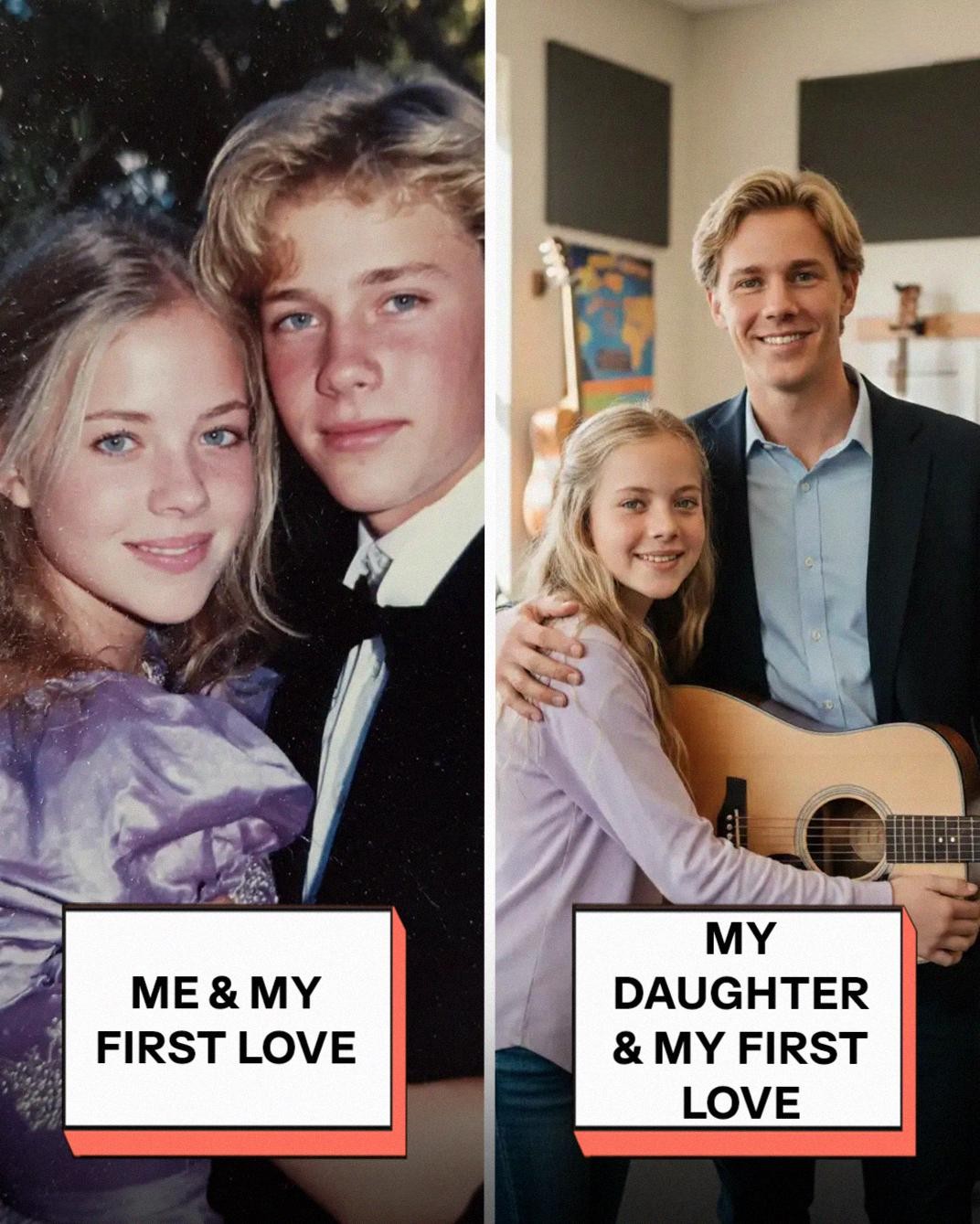
“It’s for school,” she blurted. “My music teacher. Mr. Heath. He said I could borrow one, but I wanted Dad’s.”
The word Dad hit like a bruise.
“You’re taking lessons?” I asked.
She nodded, eyes fixed on the strings. “It makes him feel closer.”
For the first time since the funeral, she didn’t look lost. She looked focused. Alive in a quiet way.
In the weeks that followed, I saw the change—small at first, like a crack in a wall letting light through. She started humming in the hallway. She left her door open a little. She smiled sometimes without forcing it. Then she asked to stay after school for extra practice.
“Mr. Heath gets it,” she told me while we cleared the table one night. “He doesn’t treat me like I’m broken.”
Broken. The word echoed in my chest.
“What does he do?” I asked.
“He just listens,” she said. “And when I mess up, he says it’s part of it. Like I’m allowed to be bad before I’m good.”
I wanted to feel nothing but gratitude. I tried to. But something in me stayed unsettled. A loose thread I couldn’t pull without unraveling everything.
A week later, Wren handed me a small envelope when she got home.
“He said this was for you,” she said.
Inside was a note, neatly written, simple but sharp in a way that felt too intimate for a teacher-parent exchange.
Grief is love with nowhere to go. Wren’s music is giving it somewhere.
I stared at the words until my eyes stung. It was kind. It was true. And it made my skin prickle, because it felt like Mr. Heath knew more about our home than he should.
The recital arrived faster than I expected. The auditorium smelled like floor polish and perfume and nervous sweat. Parents clutched programs. Kids fidgeted behind the curtain. When Wren stepped onto the stage holding Callum’s guitar, my throat tightened hard. Pride and grief are cousins, and they show up together when you least want company.
Behind her stood Mr. Heath—calm, steady, hands folded like the world had never broken anyone.
Then he looked up.
And I knew him.
The room didn’t change, but everything inside me did. My blood went cold. My stomach flipped. My hands clenched the program so tight the paper creased.
Heath.
My first love. The boy who promised forever and then disappeared without a word. The boy I’d waited for until my porch light burned out and my dignity followed it. I hadn’t recognized the name because it wasn’t his name back then. He’d changed it, or used something else, and I’d been too busy surviving my life to dig into why.
Wren began to play before I could stand up or breathe properly. Her fingers moved with careful confidence. The notes came out raw and honest, the kind of music that doesn’t show off—it tells the truth. When she finished, the applause rose like a wave and I clapped too, because I’m her mother and I’ve learned how to keep my face steady even when my insides are shaking.
Afterward, Wren ran to me, cheeks flushed.
“Mr. Heath wants to talk to you,” she said.
My pulse spiked.
I found him in the hallway near the music room. Up close, he looked older but unmistakable. Same eyes. Same way of holding himself like he was always bracing for impact.
“Delaney,” he said quietly.
I crossed my arms. “You knew. You knew who I was.”
His face tightened. “Yes.”
“You knew whose guitar she was holding. And you still got close to her. So what do you want?”
He exhaled and pulled a worn black notebook from his bag. “Your husband wrote in this.”
The hallway narrowed to that object. My hands took it without permission from my brain. I opened it and saw Callum’s handwriting, dated three weeks before he died.
Before I could speak, Wren stepped into the hallway like she’d been waiting for this moment.
“Mom,” she said, voice trembling but determined, “I asked him to find you.”
My head snapped toward her. “What?”
She swallowed. “I found Dad’s journal months ago. In the closet. Behind storage boxes.”
My stomach dropped. I’d shoved that journal there because I couldn’t bear to open it. Because grief isn’t just sadness. It’s avoidance dressed up as survival.
“There were pictures inside,” she continued. “Of you and Dad. And of you and Mr. Heath. From when you were younger. And there was something Dad wrote… about ‘the boy Mom used to love.’”
The air left my lungs.
I looked at Heath. He didn’t look surprised. He looked guilty.
“You read it?” I asked Wren.
“I wasn’t trying to snoop,” she said quickly, voice cracking. “I just wanted something of Dad’s. I miss him.”
My anger loosened, because grief lives inside her too and I can’t punish her for wanting pieces of her father.
“And you,” I said to Heath, sharper now. “You didn’t think to tell me?”
“She asked me not to,” he said. “And she was hurting. I wasn’t going to shut her down.”
Wren wiped her cheeks with her sleeve. “I gave him the journal because I wanted you to finally read it. You wouldn’t.”
That hit harder than any accusation. Because she was right.
Heath nodded toward the folded corner of the notebook. “You need to read what he wrote.”
I wanted to grab my daughter and leave. I wanted to run from the past the way I’d trained myself to. But if I did, I’d be choosing fear over truth, and Callum didn’t deserve that.
I opened to the marked page.
Delaney, there are things I never said out loud because I didn’t want to reopen wounds you worked hard to close.
My throat tightened.
I know Heath is Wren’s father.
The hallway tilted. My hand steadied against the wall.
Despite you being pregnant when I met you, I chose you anyway. I chose her, too. Wren has been my daughter from the first day I held her. But I also know you never told him.
Tears slid down my face before I could stop them.
I’ve known about my illness for a while. If something happens to me, I don’t want pride or old hurt to keep Wren from having every person who can love her. She needs all the support she can get. And maybe you do too.
If Heath is willing to show up, let him. Not to replace me. No one can. But to stand beside you both.
Love, Callum.
By the time I reached the end, I was crying openly in a school hallway and I didn’t care who saw.
“He had no right,” I whispered, even though the words didn’t match what I felt.
“He loved her,” Heath said softly. “He wasn’t trying to replace himself. He was protecting her.”
Wren looked up at me, eyes bright with tears. “Dad wasn’t scared of this. Why are you?”
Because I remembered being 25, standing on a porch, waiting for a man who never showed. Because humiliation hardens if you bury it long enough.
I faced Heath. “You left.”
His jaw tightened. “I didn’t know she existed.”
“You didn’t call. You didn’t come back.”
“I was young and stupid,” he said. “We fought. I thought shutting you out was what was best. And when I did come to see you… your father told me you didn’t want me. He told me to let you go. He never said you were pregnant.”
My stomach twisted as old memories reassembled into a new shape. My father’s anger. His control. The way he’d called Heath irresponsible, said he’d ruin my life.
Wren’s voice was small but steady. “So you didn’t leave because you didn’t care?”
He swallowed. “No. If I’d known about her, I would’ve fought.”
I closed the notebook, breathing through the ache.
Callum had known. He’d carried it quietly. He’d still chosen us.
I looked at Wren—this brave, hurting, brilliant child who refused to let our family live in half-truths.
“If this happens,” I said, voice firm, “it happens slowly.”
Heath nodded immediately. “Of course.”
“Boundaries,” I added. “You don’t get to show up and act like you’ve been here all along.”
“I wouldn’t.”
“Supervised at first,” I said. “And no more secrets. Not from her. Not from me.”
“Whatever you need,” he replied.
“I’m not doing this for you,” I told him. “I’m doing it because Callum asked me to. And because she deserves honesty.”
Wren reached for both of our hands, holding tight like she was afraid we’d slip away again.
“I just want everyone to stop hiding,” she whispered.
That night, back home, she sat with Callum’s guitar in her lap, fingers resting gently on the strings.
“Dad would still be proud of me, right?” she asked.
“Yes,” I said, steady this time. “He would.”
“And he’s still my real dad?”
“Yes,” I answered. “Always.”
I watched her shoulders loosen, just a little, and I understood something I’d been avoiding: I couldn’t protect my daughter from pain by hiding the truth. All I could do was stand beside her while she learned to carry it.