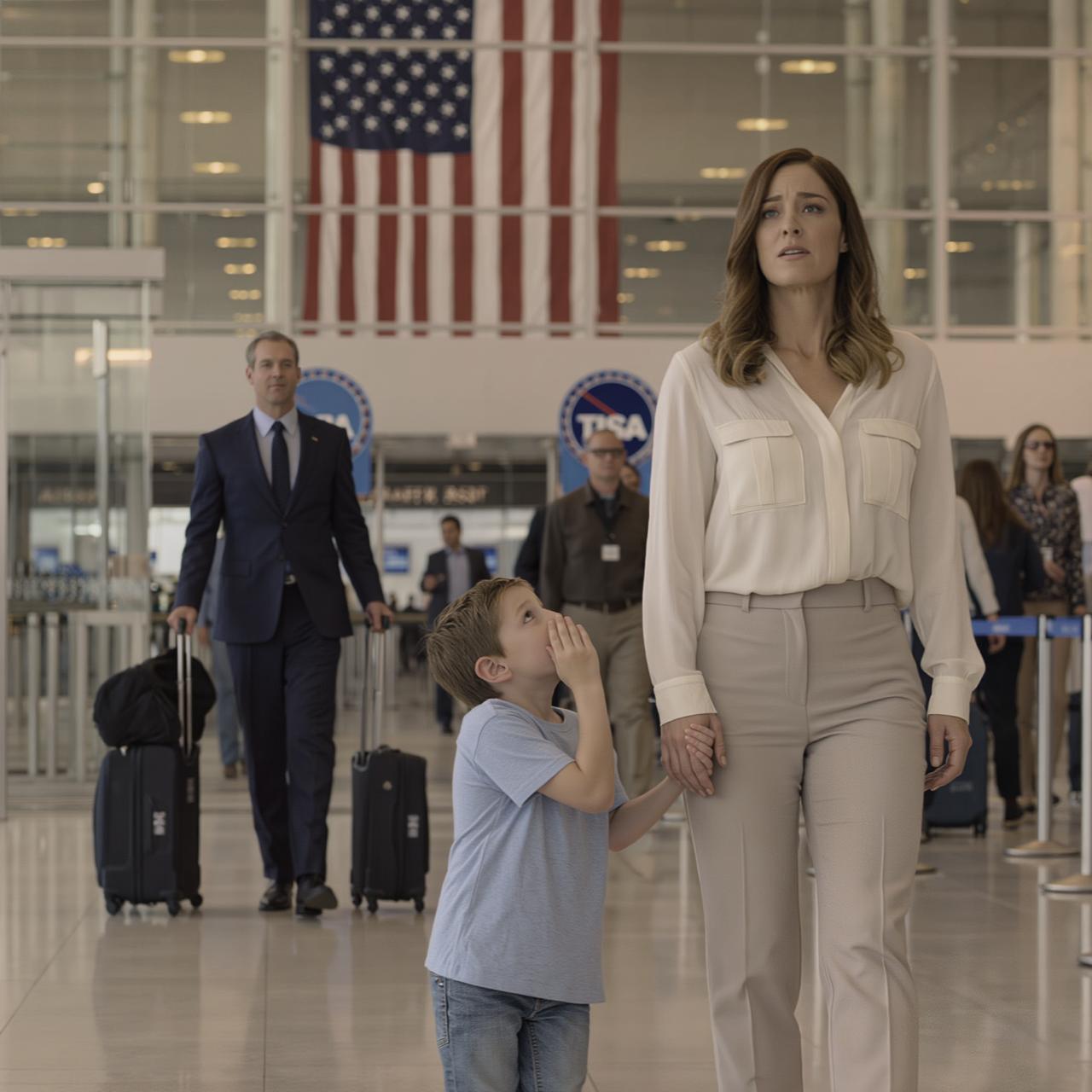
The atmosphere within Hartsfield-Jackson International Airport was a thick, sensory assault of roasted coffee, industrial-grade disinfectant, and the palpable, vibrating energy of human impatience. Standing near the primary security checkpoint, I felt the world rushing past in a blur of rolling hardshell suitcases and frantic travelers clutching half-finished lattes. Overhead, the fluorescent lighting hummed with an artificial, sterile brilliance that seemed to strip the color from everything it touched. High-mounted television monitors flickered with muted reports of gridlock on I-85 and a burgeoning storm system creeping toward the East Coast, their chatter reduced to a low-frequency drone that blended into the general cacophony of the terminal. It was a scene of total, mundane normalcy—the kind of setting where you expect nothing life-altering to happen.
I stood there, anchored by an exhaustion that had moved beyond mere sleepiness and into the marrow of my bones. It was the silent, perilous fatigue unique to those who have spent years maintaining the delicate architecture of a “perfect” life without ever being asked if they were crumbling under the weight. Beside me stood my husband, Quasi, a man who navigated the world with the precision of a master clockmaker. He was draped in a charcoal-gray custom suit, its creases sharp enough to draw blood, paired with Italian leather shoes that mirrored the terminal’s lights. He smelled of the expensive, woodsy cologne I’d bought for him at Lenox Mall, an olfactory mark of the success we were supposed to represent. To any casual observer, we were the quintessential Atlanta power couple: a rising Black executive, a poised wife, and a well-dressed child, performing the ritual of the business-trip send-off.
Kenzo, our six-year-old son, was anchored to my side. His small, damp hand was crushed into mine, his light-up sneakers flashing a frantic rhythm of red and blue every time he shifted his weight. Usually, Kenzo was a vibrant, inquisitive child, his mind a whirlwind of dinosaur facts and curiosities. Tonight, however, he was unnervingly still. He wore his favorite Hawks hoodie, his dinosaur-themed backpack slung awkwardly over one shoulder, but his eyes weren’t searching for planes or snacks. They were fixed, tracking the environment with a predatory focus that made the hair on my arms stand up. He looked like a small animal sensing a change in barometric pressure before a devastating hurricane.
“This Chicago merger is the pivot point, babe,” Quasi said, his voice smooth and reassuring as he pulled me into a hug. It was a familiar embrace, yet it felt strangely rehearsed, like a scene he had played out in his head multiple times to ensure the blocking was correct. “Three days. I’ll be back before the weekend even starts.” I offered the smile I had spent a decade perfecting—the one that kept the peace and smoothed over the cracks. I told him we would be fine, and I watched as he crouched down to Kenzo’s level, framing the boy’s face with his hands in a gesture that looked remarkably like a cinematic goodbye. “Look after your mother for me,” Quasi whispered. Kenzo didn’t speak; he simply stared at his father with an intensity that bordered on terror.
We watched Quasi merge into the river of travelers, his tall frame eventually swallowed by the TSA line. It was only after he vanished that I felt a slight loosening in my chest. I led Kenzo toward the parking deck, our footsteps echoing hollowly against the polished linoleum. The airport was beginning to settle into its late-night rhythm; metal grates were sliding down over shop entrances, and the flight boards were blinking with the final calls of the evening. Kenzo lagged behind, his feet dragging as if they were made of lead. When I asked if he was okay, he didn’t respond initially. Then, just as we reached the heavy glass doors leading to the humid Georgia night, he stopped dead.
“Mama,” he whispered, his voice cracking with a gravity that didn’t belong to a child. “We can’t go back to the house.”
I knelt in front of him, trying to maintain a veneer of maternal calm despite the sudden chill racing down my spine. I tried to reason with him, citing the hour and the comfort of his own bed, but Kenzo shook his head with a violent, desperate energy. Tears began to well in his eyes, reflecting the harsh yellow glow of the parking garage. “No. Please. Something bad is going to happen tonight. You have to believe me this time.”
The phrase “this time” hit me like a physical blow. It was a sharp reminder of the times I had dismissed his observations as overactive imagination—the dark car he claimed was idling outside our Buckhead home, or the snippets of hushed, aggressive phone calls he’d overheard coming from Quasi’s home office. I took a steadying breath and asked him exactly what he had heard. Kenzo leaned in, his lips brushing my ear as he recounted a scene from the early morning. He had gone to the kitchen for water and heard his father on a call. Quasi had said that “it” would happen tonight while we were sleeping, that he needed to be a thousand miles away for the alibi, and that we wouldn’t be “in the way” anymore.
The world felt like it was tilting on its axis. My mind raced to find a logical explanation, but the jagged pieces of the last few months began to click into place with sickening speed: the sudden increase in the umbrella insurance policy, the way Quasi had insisted on moving all our liquid assets into accounts only he could access, and the cryptic phrase I had once heard him mutter into his phone about making something “look accidental.”
Instead of driving our usual route home, I bypassed the main gates of our neighborhood and approached from a service road, parking the car under the heavy shadow of an oak tree several houses away. We sat in the dark, the engine ticking as it cooled, and we watched. Our home looked serene—the porch lights cast a warm, inviting glow against the brickwork, and the manicured lawn looked perfect. We waited for twenty minutes in a silence so heavy it felt difficult to breathe.
Then, a nondescript dark van rounded the corner, moving with a predatory slowness. It didn’t park in the driveway; it pulled up to the curb just outside the property line. Two men emerged, their movements coordinated and silent. My breath hitched when I saw one of them reach into his pocket and pull out a key—a key that should have only belonged to us. They entered through the front door as if they lived there.
Moments later, the sweet, cloying scent of accelerant seemed to drift through the air, even from a distance. A thin, wispy trail of smoke began to curl out from the eaves of the roof, followed by a sudden, violent orange glow that erupted in the living room. The men exited the house, vanished into the van, and the vehicle peeled away into the night just as the first windows began to shatter from the heat.
I sat on the curb, clutching Kenzo to my chest as the sirens of the Atlanta Fire Department began to wail in the distance. My phone vibrated in my pocket. It was a text from Quasi: “Just touched down in the Windy City. Hope you and the little man are tucked in and dreaming. Love you.”
Staring at the glowing screen while my life turned to ash in front of me, the reality settled in. The man I had married hadn’t just left for a business trip; he had orchestrated a funeral. If I hadn’t listened to the trembling voice of a six-year-old at the airport, we would have been part of the debris. As the flames reached for the sky, I realized that surviving the fire was only the beginning. The real battle would be ensuring that the man who lit the fuse never had the chance to finish what he started.