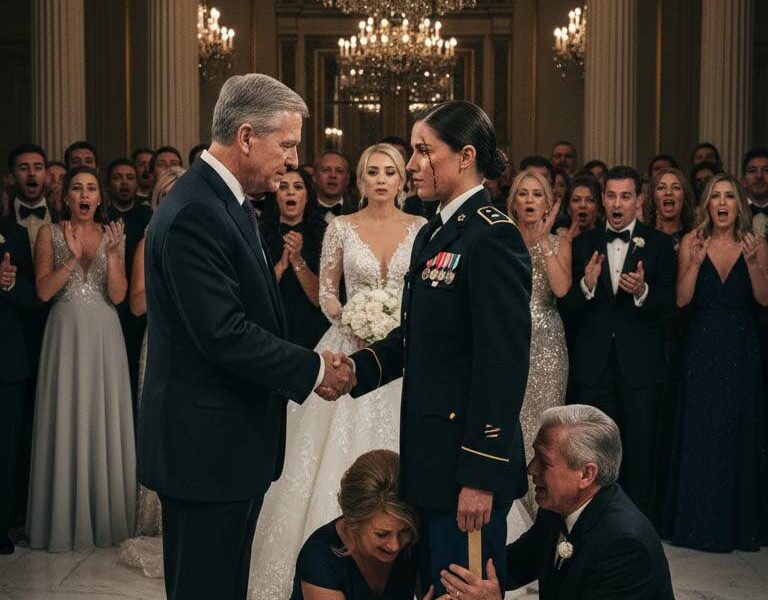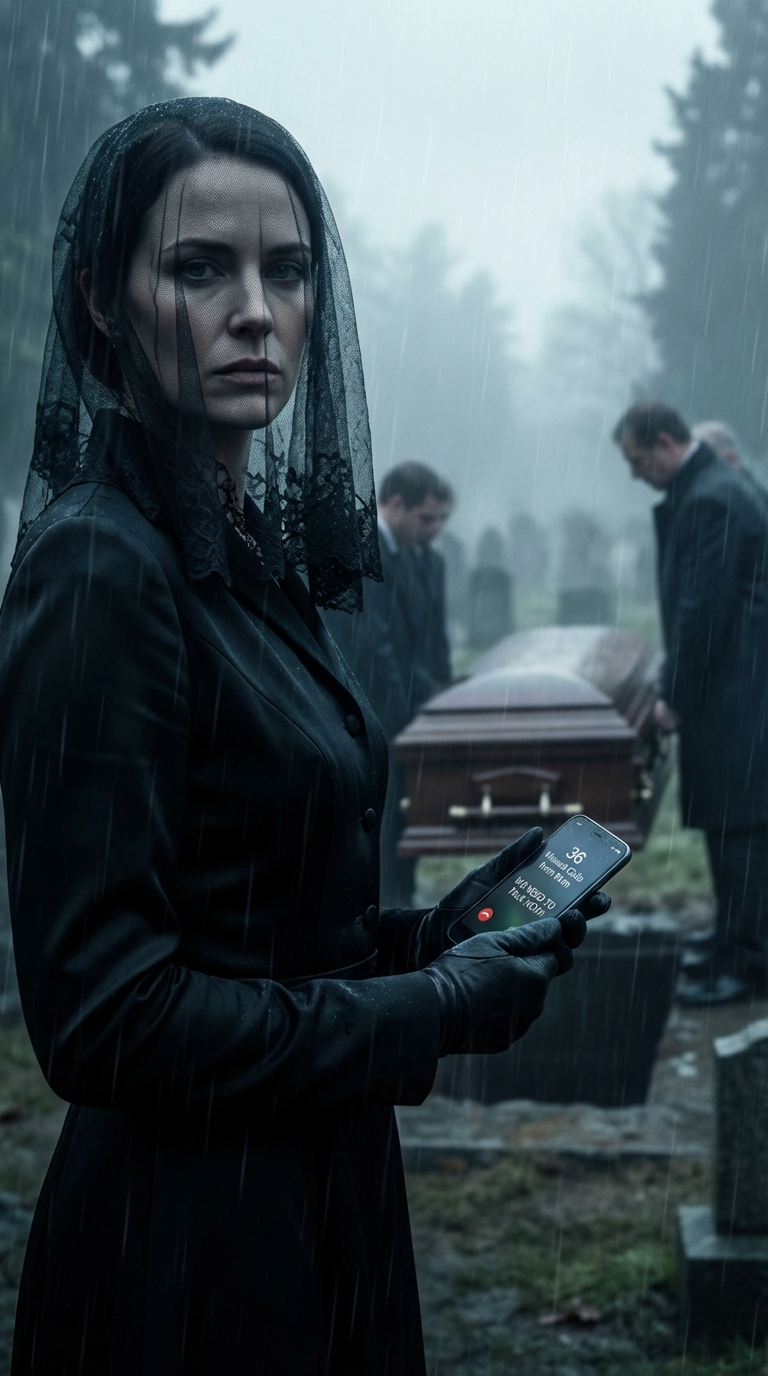
My name is Cassandra Mitchell, and at thirty-two years old, I found myself standing at the edge of an abyss.
I never imagined that the defining image of my husband’s funeral would not be the casket draped in the flag of the Fire Department, nor the sea of navy-blue dress uniforms standing at attention. No, the image that seared itself into my retinas, hotter than the fire that burns in a grieving heart, was the sight of three empty chairs in the front row.
They were reserved for the people who were supposed to be my bedrock: my mother, my father, and Stephanie, my best friend of twenty years. The people who had stood beside me in white silk and promised to support us “in sickness and in health.” Yet, when those vows were tested by the cruelest of fires, they didn’t just disappear—they evaporated.
If you are reading this, wondering how the people you love could ever turn on you, stay with me. Because what I discovered on the day I buried my husband changed everything I thought I knew about blood, loyalty, and the terrifying, predatory nature of greed.
Five years ago, my life was a meticulously planned itinerary of hospital shifts and lonely takeout dinners. I was a critical care nurse, exhausted after a double shift, running on caffeine and adrenaline. I was rushing out of a downtown coffee shop, head down, checking a pager, when I collided with a solid wall of a man.
My latte exploded. Hot liquid soaked into a heavy canvas jacket. I gasped, horrified, waiting for the inevitable shout of anger.
Instead, a deep, rumbling laugh filled the air.
“Well,” the man said, wiping foam from his lapel, his eyes crinkling at the corners. “That’s one way to warm up a freezing morning.”
That was Bobby. He didn’t see a stain; he saw a story. He didn’t feel the heat; he felt the warmth.
He asked for my number while dripping with coffee, and for the first time in my life, I threw caution to the wind. There was a magnetism in his warm brown eyes, an easy grace in his smile that disarmed my defenses. On our first date at Trattoria Rossi, a tiny hole-in-the-wall with checkered tablecloths, we talked until the staff began stacking chairs around us. He told me about the firehouse, about the boy who watched engines race by and dreamed of being a hero. I told him about the ICU, about the fragility of life.
We bonded over our shared vocation of service. We dealt in life and death, while others dealt in stocks and margins. Within six months, we were inseparable.
Bobby proposed on a hike overlooking the city skyline. The ring was a vintage solitaire, his grandmother’s. “I don’t have much in the bank, Cass,” he whispered, pressing his forehead against mine. “But everything I am, every breath I take, is yours.”
My parents, however, saw things differently.
When I called them, breathless with joy, my mother’s silence was deafening. “A firefighter, Cassandra?” she finally said, her voice dripping with that familiar, icy disapproval. “It’s hardly a… stable career path. Is it? And the salary?”
“He saves lives, Mom,” I defended, gripping the phone.
“Yes, well,” my father chimed in on the extension, his tone clipped. “We always expected you to marry someone with a bit more… prestige. A surgeon, perhaps. Someone who can provide the lifestyle you were raised in.”
They tolerated the wedding, largely because they couldn’t stop it. Stephanie, my Maid of Honor, was supportive on the surface, though her comments were laced with subtle venom. “It’s so… quaint,” she said, looking around the small community garden we’d chosen for the venue. “Your parents offered to pay for the Country Club, Cass. Are you sure you want to settle for this?”
“It’s perfect,” I said. And it was.
We bought a fixer-upper, a small Craftsman style bungalow that leaned a little to the left but had a front porch made for rocking chairs. We spent our weekends covered in paint and drywall dust, building a home not out of money, but out of sweat and laughter. We promised each other that we would grow old on that porch, drinking coffee and watching the world change.
But the universe, it seemed, had a different timeline.
It started two years into our marriage. Headaches. Not just tension, but blinding, white-hot spikes of pain that would wake Bobby from a dead sleep. He played it off, of course. “Just dehydration,” he’d say, forcing a smile. “Too many spicy wings at the station.”
Then came the call.
I was in the medication room at the hospital, organizing vials, when my phone buzzed. It was Captain Miller. My stomach dropped through the floor. Firefighters don’t call spouses during a shift unless the world has ended.
“Cassandra,” his voice was tight. “Bobby went down during morning checks. He had a seizure. We’re en route to Mercy General.”
The next few hours were a kaleidoscope of terror. I ran through the ER doors, still in my scrubs, screaming for my husband.
When the neurologist walked into the waiting room, I knew. I knew by the set of her jaw, the pity in her eyes.
Glioblastoma Multiforme. Grade 4.
The most aggressive form of brain cancer. Terminal.
“With aggressive treatment,” she said softly, “we are looking at twelve, maybe fifteen months.”
The room spun. Fifteen months. That wasn’t enough time to finish renovating the kitchen, let alone live a life. I felt Stephanie’s arm around me, but her touch felt distant, performative.
Bobby took the news with the courage of a man who ran into burning buildings for a living. “Hey, beautiful,” he whispered when I finally got to his bedside, his head wrapped in gauze from the biopsy. “Don’t look so scared. We’ve got this.”
But “we” quickly became “I.”
My parents visited once. My mother flinched at the surgical staples running across Bobby’s scalp. My father, standing at the foot of the bed, didn’t ask about Bobby’s pain or fear. He asked, “Have you thought about the finances, Cassandra? Disability doesn’t pay much. You might need to sell the house.”
“We have insurance,” Bobby said, his voice weak but firm. “Cassandra won’t have to worry.”
I took a leave of absence to become his full-time nurse. Our living room became a hospital ward. Oxygen tanks replaced the armchair; a hospital bed replaced the sofa. The radiation made him violently ill. The steroids bloated his face until he was unrecognizable.
And the costs… the costs were a hemorrhage that wouldn’t stop. Co-pays, out-of-network specialists, adaptive equipment. The savings Bobby had so carefully built began to drain away.
That’s when Stephanie swooped in.
“I got a bonus at work,” she said one evening, watching me agonize over a stack of bills. “Let me help. Here’s three thousand dollars. You can pay me back when the dust settles.”
I wept with gratitude. “Thank you, Steph. You don’t know what this means.”
“That’s what family does,” she said, hugging me.
But as the months dragged on, the dynamic shifted. Stephanie’s visits, once daily, became sporadic. Her texts became excuses: Work is crazy. Car trouble. Headache.
And strange things began to happen.
Six months in, the tumor was growing again. We were running out of options. But while I was fighting for Bobby’s life, it seemed everyone else was preparing for his death.
I first noticed the shift when I borrowed Stephanie’s phone to call the pharmacy because mine was dead. A text message popped up from my mother:
“Have you talked to Cassandra about the plan yet? He doesn’t have much time left.”
I froze. The plan? I swiped the notification away, telling myself they were planning a surprise, a fundraiser, something kind. I was in denial.
A week later, Stephanie was on our back porch, thinking I was out of earshot. I was just inside the screen door, holding a glass of water for Bobby.
“She’s not thinking clearly,” Stephanie whispered into her phone. “She’s dumping money into these treatments. We need to make sure she secures the assets before it’s too late… Yes, I agree. The house needs to go on the market the moment he passes.”
The moment he passes.
They weren’t mourning him. They were liquidating him.
That night, consumed by a paranoid itch, I logged into our joint bank account. My heart stopped. The three thousand dollars Stephanie had “lent” me? An identical withdrawal had been made from our savings account the very next day.
Had I done it? Caregiver brain fog was real. Maybe I transferred it back by mistake? But then I saw other things. Small cash withdrawals. A check from the Firefighter’s Union for five hundred dollars—aid for groceries—was marked as “deposited,” but the funds were transferred out to a generic Venmo account I didn’t recognize.
The next day, I confronted Stephanie.
“The money you lent us,” I said, trying to keep my voice steady as we stood in the kitchen. “Did you take it back?”
She laughed, a brittle, nervous sound. “Cass, honey, you’re exhausted. You’re imagining things. Why would I steal from you?”
“And the Union check?” I pressed.
Her face hardened. “Are you accusing me? After everything I’ve done? I’m the only one visiting you, Cass! Your parents can’t even bear to look at him!”
She stormed out, playing the victim perfectly. She didn’t come back for three weeks.
By the time she returned, Bobby was in his final decline. He was slipping in and out of consciousness, the tumor pressing on the centers of speech and memory. But in his lucid moments, his eyes were sharp. Observant.
“They’re scary, aren’t they?” he whispered one night, gripping my hand.
“Who, Bobby?”
“The people who can’t fix things,” he rasped. “They want the wedding, Cass. But they don’t want the marriage. They don’t want the blood.”
He pulled me closer. “Bring me the lockbox.”
It was a small, fireproof box kept in the back of his closet. Bobby’s hands were shaking too violently to work the key, so he guided my hands. Inside were our passports, the deed to the house, and a thick manila envelope sealed with red wax.
“Listen to me,” he said, his voice gaining a sudden, terrifying clarity. “You are not to open this until after the funeral. Promise me.”
“I promise,” I sobbed.
“And Cass… your parents. Stephanie. They aren’t who you think they are.”
“I know,” I whispered. “I think they’re taking money.”
Bobby closed his eyes, a look of profound sorrow crossing his face. “I know. I saw Stephanie take the cash envelope from the desk while you were sleeping last week. I pretended to be out of it.”
“Bobby, why didn’t you tell me?”
“Because you needed help,” he wheezed. “And I needed to be sure. I made… arrangements. Changes. Last month, when the notary came.”
“What changes?”
“Firefighters take care of their own,” he said, squeezing my hand with the last of his strength. “Promise me you will rebuild. Promise me you won’t let them break you.”
Two days later, at sunrise, Bobby slipped away.
I was holding him. I felt the exact moment the spirit left the vessel. The silence that followed was heavy, final, and absolute.
I called my parents.
“Oh, Cassandra,” my mother sighed, not a tear in her voice. “We’ll be there this afternoon. Have you called the life insurance company yet? You need to get that claim number immediately.”
He had been dead for ten minutes.
“I’ll handle it,” I said, and hung up.
Stephanie texted: I’m so sorry. I’m coming over. Get the paperwork ready, I can help you sort the policies.
The days leading up to the funeral were a blur of logistics. Captain Miller and the boys from the station took over. They handled the arrangements, the honor guard, the flag. My parents and Stephanie were “too distraught” to help with the planning, but they called daily to ask about the will.
Then came the morning of the funeral.
The service was at Oak Tree Memorial Park. The weather was insultingly beautiful—birds singing, sun shining. I stood at the entrance, waiting.
9:30 AM. No parents.
9:45 AM. No Stephanie.
My phone buzzed. A text from Stephanie: Emergency at work. Boss won’t let me leave. So sorry. Love you.
A voicemail from my father: Car trouble on the highway, Cassandra. We’re waiting for a tow. Unlikely we’ll make it. We’ll see you at the house later.
Lies. All of it.
I walked to the front row and sat alone.
Captain Miller sat behind me, his hand resting on my shoulder. “We’re here, Cass,” he whispered. “We’re your family.”
And as I looked around, I realized he was right. The pews were filled with firefighters, nurses, neighbors—people who had mowed our lawn, brought casseroles, and sat with Bobby so I could shower.
A man I didn’t recognize approached me after the service. He had Bobby’s jawline.
“I’m Jason,” he said awkwardly. “Bobby’s brother.”
I blinked. Bobby hadn’t spoken to his brother in a decade due to a feud over their parents’ estate.
“I saw the obituary,” Jason said, tears in his eyes. “I just… I had to come. I’m sorry I wasn’t there.” He looked at the empty chairs next to me. “Where is your family?”
“They chose not to be here,” I said, my voice turning to steel.
“Then they aren’t family,” Jason said. “If you need anything… anything at all.”
I went home alone. But I wasn’t the same woman who had left that morning. The grief had burned away the softness, leaving something harder, sharper underneath.
I walked into the quiet house, sat at the kitchen table, and broke the wax seal on the envelope.
My Dearest Cassandra,
If you are reading this, I’ve gone ahead to clear the path. My only fear in dying wasn’t the pain; it was leaving you alone with wolves.
I’ve known for a while that your parents and Stephanie were circling. I heard them talking. I saw the bank alerts. They view my death as a payday, a way to control you and strip-mine our life.
So, I played a little game. I contacted the Department Benevolent Fund. They helped me restructure everything. The house is paid off—the mortgage was cleared by the union’s catastrophic relief grant last week. It is yours, free and clear.
Regarding the life insurance: I removed you as the direct beneficiary.
My heart stopped. What?
Instead, the entire policy payout has been placed into a blind trust. The trustee is Sam Wilson, a financial advisor who answers only to you. The terms of the trust are specific: The money cannot be accessed by anyone but you, and it cannot be transferred to any family member or friend for a period of five years. It is legally locked down.
Included in this envelope are the logs of unauthorized access to our accounts—traced to Stephanie’s IP address—and copies of texts your mother sent me, asking me to sign over power of attorney “for Cassandra’s own good.”
You are stronger than them, Cass. You are the wife of a firefighter. You survived the fire. Now, go live.
Love, Bobby.
I sat there for a long time, the papers trembling in my hands. The tears that fell weren’t of sadness, but of fierce, overwhelming pride. Even while dying, he had protected me.
Then, the doorbell rang.
I checked the peephole. It was the unholy trinity: My mother, my father, and Stephanie.
My mother was holding a foil-covered dish. Stephanie was clutching a gift bag. They wore expressions of practiced mourning.
I opened the door, but I didn’t step back to let them in.
“Darling!” my mother cried, reaching for me. “We are so devastated about the car trouble. We brought lasagna.”
“And a little keepsake,” Stephanie added, holding up the bag. “A necklace.”
“Come in,” I said, my voice flat. “We have business.”
They filed into the living room, looking around with assessing eyes.
“So,” my father said, setting the lasagna on the coffee table. “We need to talk about next steps. This house… it’s too big for you. The market is hot. We should list it next week. You can move back home until you’re stable.”
“And the insurance,” Stephanie said, sitting too comfortably on my sofa. “I have a friend in wealth management. We can set up an account that—”
“Stop,” I said.
I walked to the desk and picked up the file.
“When were you going to tell me you were discussing my inheritance before my husband was even cold?” I asked.
The room went silent.
“I don’t know what you mean,” Stephanie stammered.
I threw the papers on the table. The bank logs. The IP addresses. The printed text messages.
“Bobby knew,” I said. “He saw you stealing, Stephanie. He heard you plotting, Mother.”
My father stood up, his face red. “This is absurd. We are trying to help you! You’re hysterical with grief.”
“Am I?” I picked up the Trust document. “Bobby changed the policy, Dad. The money is in a blind trust. It’s locked. You can’t touch a cent. And the house? Paid off. In my name. It’s not being sold.”
My mother gasped. “He can’t do that! That money is—”
“Is what?” I cut her off. “Yours? Because I married ‘down’? Because you think you’re entitled to compensation for having a firefighter as a son-in-law?”
“We deserve respect!” my father shouted. “We are your parents!”
“Parents show up to the funeral,” I said, my voice shaking with rage. “Friends don’t steal from dying men. You aren’t family. You’re vultures. And the feast is over.”
I walked to the front door and threw it open.
“Get out.”
“Cassandra, you’re making a mistake,” Stephanie cried, tears streaming down her face—tears of panic, not sorrow. “Please, I needed the money, I was in debt—”
“Get out!” I screamed, a sound that tore from the bottom of my lungs.
They scrambled out, clutching their purses and their dignity, leaving the lasagna on the table. I slammed the door and locked the deadbolt.
I slid down the door to the floor, buried my face in my knees, and for the first time in two years, I breathed.
It has been two years since that day.
I never spoke to my parents again. They tried to sue for “grandparents’ rights” to future children I didn’t have, a frivolous attempt to maintain control, but Bobby’s lawyer, Sam Wilson, shut them down with a single letter. Stephanie wrote me a long apology letter six months later, claiming she had found God. I burned it in the fireplace.
I didn’t sell the house. I finished it. I sanded the floors myself, crying into the sawdust, then sealing them with clear ambition.
I used a portion of the trust to start the Robert Mitchell Foundation, a scholarship fund for the children of fallen first responders.
And I found family. Real family.
Jason and his wife, Rachel, have me over for Sunday dinner every week. Their twin boys have Bobby’s laugh. We talk about him, not as a saint, but as a man who loved spicy wings and bad jokes. Captain Miller and the crew from Station 42 still come by to clean my gutters and check the smoke detectors.
Last spring, I bought a small cottage by the lake, the one Bobby and I used to dream about.
I’m sitting on the dock right now, feet in the water, watching the sunset bleed purple and gold across the sky. I am alone, but I am not lonely.
I learned the hard way that blood is just biology, but loyalty? Loyalty is a choice. Betrayal clears the field, burning down the dead wood so that something new, something stronger, can grow in the ashes.
Bobby was right. I did find joy again. It’s different now—quieter, deeper, earned through fire.
If you are going through the darkness right now, if the people who should love you are the ones holding the knife, listen to me: You are stronger than you know. Let them go. The empty chairs at your table are not a tragedy; they are an opportunity to invite the people who actually deserve a seat.
My name is Cassandra Mitchell. I am a widow, a survivor, and finally, free.