I have spent twelve years as an ER nurse, training my body to function on caffeine and adrenaline, training my face to remain stoic while witnessing the worst moments of people’s lives. I know how to triage a gunshot wound. I know how to hold the hand of a dying stranger. But nothing in my medical training prepared me for the triage I had to perform on my own heart when my family decided my daughter was disposable.
My name is Lauren Mitchell. I am thirty-five, a single mother, and the fiercely protective guardian of Harper, my sixteen-year-old daughter. For years, I played the role of the dutiful daughter to Richard and Eleanor, the peacekeeper to my golden-child sister Amanda, and the apologist for a family dynamic that treated my child like a second-class citizen.
But last Christmas, the peacekeeper died. And a warrior took her place.
It started, as tragedies often do, with a scheduling conflict. A nationwide nursing shortage had hit Memorial Hospital like a tidal wave. By early December, the roster was decimated. I was scheduled for a double shift on Christmas Day—7:00 AM to midnight. It was the nature of the beast, the oath I took.
“I tried to swap it, Harper,” I told her one evening, the scent of pine and cinnamon filling our small apartment as we hung ornaments on our artificial tree. “I feel terrible leaving you alone.”
Harper, with her auburn hair tucked behind her ears and a maturity far beyond her years, just smiled. “Mom, stop. I’m sixteen, not six. Besides, Grandma called. She said I should still come for dinner. I can drive myself now, remember?”
I hesitated, holding a fragile glass star. My parents’ home in the affluent suburbs was a temple of perfection—immaculate carpets, coordinated decor, and an atmosphere that usually suffocated me. Harper had always been the afterthought there, overshadowed by Amanda’s children, Ethan (13) and Zoe (10), who were showered with the kind of lavish attention Harper only read about in books.
“Are you sure?” I asked. “It can be… intense without me there as a buffer.”
“I want to go,” Harper insisted, her eyes bright with a hope that made my chest ache. “Grandma said she needs help with the cranberry tarts. I think… I think this year might be different.”
I wanted to believe her. I wanted to believe that my parents could love her the way she deserved to be loved. So, against my better judgment, I agreed.
“Text me,” I commanded on Christmas morning, hugging her tightly in the kitchen before I left for the hospital. “Text me when you arrive, text me when you eat, text me if you sneeze.”
“I’ve got this, Mom,” she laughed, pushing me toward the door. “Go save lives.”
I walked out into the cold December morning, unaware that while I was off saving strangers, my own family was preparing to break my daughter’s heart.
The Triage
The ER was a war zone. The holidays bring out a specific brand of chaos—kitchen burns, alcohol poisoning, and heart attacks trigger-pulled by family stress. By noon, I was running on autopilot.
At 12:15 PM, my phone buzzed.
Made it to Grandma’s. Grandpa says hi. Helping with prep.
I exhaled, a knot of tension loosening in my shoulders. Maybe it would be okay. Maybe they were finally seeing her.
The afternoon blurred into a haze of sutures and IV lines. I checked my phone sporadically. The texts from Harper became shorter, the gaps between them longer.
1:30 PM: Aunt Amanda is here. She brought extra people. Colleagues of Uncle Thomas.
2:45 PM: Dinner is delayed.
3:50 PM: It’s fine. Just busy.
“Just busy.” I knew that code. It was Harper-speak for I am uncomfortable, but I don’t want to worry you.
At 5:30 PM, the ER reached critical mass. A multi-car pileup on the icy interstate brought in four trauma alerts simultaneously. I was hip-deep in chaos for ninety minutes, my phone forgotten in my locker. When the dust finally settled and the patients were stabilized, I rushed to the breakroom, needing to hear her voice.
I pulled my phone out. One new message.
Coming home. Don’t worry about me.
The blood drained from my face. It was barely 5:45. Dinner wasn’t supposed to be served until 5:00.
I dialed her number, my hands shaking. It went to voicemail. I dialed again. Nothing.
“Lauren?” Dr. Meredith Wilson, my closest friend and confidante at the hospital, stepped into the breakroom. She took one look at my face and closed the door. “What is it?”
“Something happened,” I whispered. My phone rang in my hand. Harper.
“Harper!” I answered, my voice pitching up. “Where are you? Are you okay?”
“I’m fine, Mom.” Her voice was terrifyingly flat. Devoid of emotion. A defense mechanism I recognized all too well. “I’m driving home.”
“Why? It’s Christmas dinner. Did you eat?”
“No.” A pause. A heavy, wet intake of breath. “There wasn’t room.”
“What do you mean, there wasn’t room?”
“Aunt Amanda brought four extra people. Colleagues of Uncle Thomas who were in town. Grandma said… she said the dining room table was full. She told me to eat at the kitchen counter.”
I gripped the edge of the table so hard my knuckles turned white. “She what?”
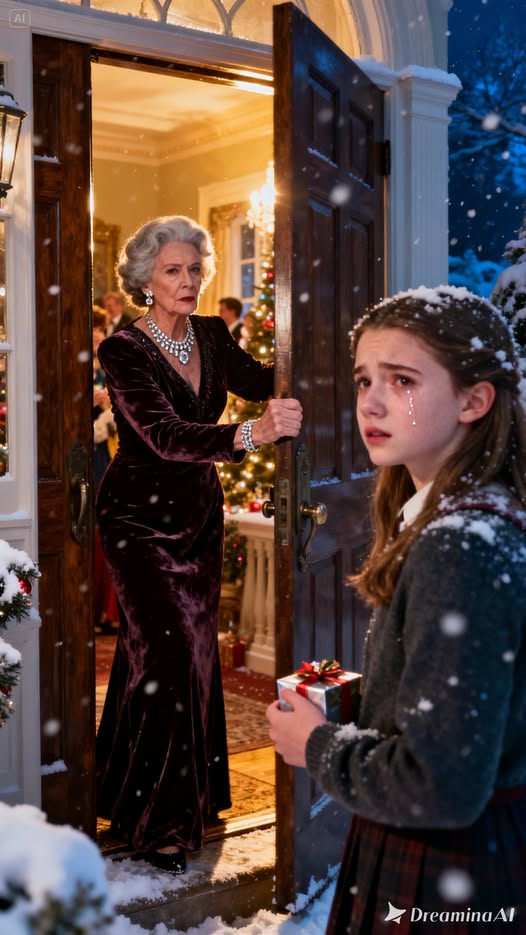
“I said it was fine,” Harper continued, her voice cracking now. “I tried to be helpful. But then Grandma started rearranging the seating chart. She made sure Ethan and Zoe had seats at the main table. When I walked into the kitchen with my plate… Grandma came in. She said having me in the kitchen was making it hard for the caterers to stage the food. She said it was too chaotic. She said…”
Harper began to sob. “She told me maybe I should just come back another time. When there was more room. She sent me home, Mom.”
The rage that surged through me was not hot; it was absolute zero. It was a cold, clarifying fury that sharpened my vision.
“Did anyone defend you?” I asked, my voice deadly quiet. “Grandpa? Amanda?”
“Grandpa was carving the turkey. Amanda just looked away. Uncle Thomas said I could sit in their car if I wanted to wait for dessert.”
“Where are you right now?”
“Ten minutes from home.”
“Go home. Lock the door. Turn on the location sharing. I am going to call Reynolds and get coverage—”
“No,” Harper interrupted. “Mom, please. Don’t leave work. Patients need you. I just want to go home, put on pajamas, and sleep. Please don’t make a scene right now.”
I looked at Meredith, who was listening with a darkened expression. I looked out the window at the ER floor, where people were bleeding and dying.
“Okay,” I said, tears streaming down my face. “Okay. Go home. I will handle this, Harper. I swear to you, I will handle this.”
I hung up. Meredith put a hand on my shoulder. “What do you need?”
“I need to finish this shift,” I said, wiping my eyes with a ferocious swipe of my sleeve. “And then, I need to burn my family’s dynasty to the ground.”
The Silent Night
The rest of the shift was a blur of mechanical efficiency. I intubated, I medicated, I charted. But my mind was in the suburbs, imagining my sixteen-year-old daughter walking out of that house, humiliated, while her cousins feasted on roast turkey and validation.
I texted my neighbor, Rachel, a godsend of a woman.
Emergency. Harper is home alone. My parents kicked her out. Do you have food?
Rachel’s reply was instantaneous. Say no more. Brian is plating up ham, stuffing, and pie. We are heading over now.
I finished my shift at midnight. Dr. Nathan Pierce, the night shift physician—a man whose kindness I had often noted but never acted upon—took my handoff.
“Rough night, Lauren?” he asked, noting the tightness around my eyes.
“You have no idea,” I said. “Merry Christmas, Nathan.”
I drove home through the empty streets. The Christmas lights on the houses mocked me. Joy to the World. Peace on Earth.
I entered my apartment quietly. The living room was dark, save for the twinkling lights of our tree. On the coffee table sat a paper plate with the remnants of the meal Rachel had brought—a half-eaten slice of ham, a cold roll. Next to it was an unopened package of store-bought cookies with a Post-it note: Saved for Mom.
I walked into Harper’s room. She was curled on her bed, still wearing the green sweater she had bought specifically to impress her grandmother. She had cried herself to sleep.
I sat on the edge of the bed and stroked her hair. She stirred, her eyes fluttering open.
“Mom?”
“I’m here, baby.”
She sat up, and the dam broke. She told me everything. The way the guests looked at her like she was the hired help. The way her grandmother had ushered her out the back door like a dirty secret. The way her aunt had watched it happen and said nothing.
“I’m so sorry,” I whispered, holding her as she shook. “I enabled this. For years, I let them treat you like an option instead of a priority because I wanted to keep the peace. I am so sorry.”
“It’s not your fault,” she sniffled.
“It is,” I said firmly. “But the peace is over. Tomorrow, we go to war.”
I didn’t sleep. I sat in the kitchen, drinking black coffee, and formulated a plan. I could scream. I could drive over there and throw a brick through their window. But that would make me the “crazy daughter” they always claimed I was. That would give them the high ground.
No. This required surgery. Precision.
At 7:00 AM, I called the hospital and took a personal day—something I hadn’t done in five years. Then, I walked around the apartment and gathered every single Christmas gift my parents had sent. Every ornament. Every obligation. I packed them into boxes.
Then, I picked up the phone.
The Strike
I called my parents’ house first. Voicemail. They were sleeping in, exhausted from their hosting duties.
“Mom, Dad, this is Lauren,” I said, my voice steady as a surgeon’s scalpel. “What you did to Harper yesterday was unforgivable. I am taking the day off to spend it with the daughter you discarded. I am returning your gifts. We will be creating our own traditions from now on. If you want a relationship with us, it will be on my terms. Do not come to my apartment.”
Next, I texted Amanda.
Harper told me everything. A sixteen-year-old girl drove home alone to an empty house because you couldn’t find a chair. You accommodated strangers over your own niece. I am beyond disappointed.
Her reply came fast, defensive.
Lauren, you’re overreacting. It was chaotic. Mom was stressed. Harper seemed fine.
I typed back: She cried herself to sleep in her clothes, Amanda. Is that fine? Would you accept that for Zoe? Do not contact me until you are ready to own your part in this.
I put the phone down. Harper walked into the kitchen, looking weary but surprised to see me.
“You’re home?”
“I called in,” I said, pouring pancake batter onto the griddle. “Today is our Christmas. Just us. No judgment, no green sweaters, no waiting in the car.”
We spent the morning eating chocolate chip pancakes and watching bad movies. But the phone kept ringing. My father. My mother. Amanda.
“Are you going to answer?” Harper asked, eyeing my vibrating phone.
“Not yet,” I said. “Let them sweat.”
Around noon, the doorbell rang. Harper froze. “Is it them?”
I looked through the peephole. It wasn’t them. It was Meredith, holding two massive shopping bags. Behind her were Rachel and Brian, carrying a pot of chili.
“Reinforcements,” Meredith announced as I opened the door. “I heard we were having a ‘Real Family’ Christmas.”
The apartment filled with laughter, food, and people who actually gave a damn. And then, at 2:00 PM, a knock came that I was expecting.
It was Amanda.
She stood in the hallway alone, looking uncharacteristically disheveled.
“Can I come in?” she asked quietly.
I blocked the doorway. “Are you here to defend Mom, or are you here to apologize?”
She looked past me at Harper, who was sitting on the sofa. Amanda’s eyes filled with tears. “I’m here to apologize. I was… I was a coward yesterday.”
I stepped aside. Amanda walked straight to Harper and sat down on the floor in front of her.
“I am so sorry,” Amanda said, her voice trembling. “I saw what was happening, and I didn’t stop it because I didn’t want to upset Mom. I valued my comfort over your feelings, and that was wrong.”
Harper, with a grace her grandmother never possessed, nodded. “It really hurt, Aunt Amanda. I felt like garbage.”
“I know. And I promise, never again.”
Amanda stayed for dinner. She helped clean up. For the first time in our lives, the dynamic shifted. She wasn’t the Golden Child; she was just my sister, trying to do better.
But the real boss battle was yet to come. My parents.
The Summit
I agreed to meet my parents the next day at a coffee shop on Maple Street. Neutral territory. Public. Harper insisted on coming.
“I need to say it to their faces,” she told me, lifting her chin. “I’m not hiding anymore.”
We arrived at 11:00 AM. My parents were already there. My mother looked perfect, as always, but her hands were fidgeting with her napkin. My father looked gray.
We sat down. I didn’t order coffee.
“We want to apologize,” my father started, his voice heavy. “We didn’t realize—”
“Stop,” I said. “Dad, you were there. You saw her leave. You didn’t ‘not realize.’ You chose not to see.”
My mother bristled. “Lauren, it was a misunderstanding. The guests—”
“The guests were strangers, Mother,” I cut in. “You kicked your granddaughter out for strangers. You told her there was ‘no room’ at the inn. Do you have any idea how biblical that cruelty is?”
My mother flushed. “I was stressed. I didn’t handle it well.”
“That is not an apology,” Harper said.
We all turned to her. Harper’s hands were shaking under the table, but her voice was strong.
“I spent weeks making those cranberry tarts,” Harper said, looking directly at her grandmother. “I bought a new outfit so you wouldn’t criticize my clothes. I tried so hard to be perfect for you. And you looked at me and decided I was the one person in that house who didn’t matter.”
“Harper, dear, I—”
“I don’t want to be ‘dear,’” Harper continued. “I want to be respected. If I am going to be in your life, I need to know that I am just as important as Ethan and Zoe. I need you to stop comparing me. And I need you to never, ever treat me like a inconvenience again.”
The silence that followed was heavy. My mother looked at Harper—really looked at her—and for the first time, I saw the armor crack. She saw the pain she had caused, stripped of excuses.
“I am sorry,” my mother whispered. And for the first time in my life, it sounded real. “I was wrong. I was worried about appearances, and I hurt you. I am so sorry.”
“We are going to make changes,” my father added, reaching for Harper’s hand. “Starting now.”
“We have conditions,” I said, sliding a piece of paper across the table. “Boundaries. Equal treatment. No criticism of our lives. If you cross these lines, we leave. Immediately. No arguments.”
My father picked up the paper. He read it, then nodded. “Agreed.”
Epilogue: The Harvest
Six months have passed since the Christmas Eviction.
The changes were not overnight, but they were tangible. My father started picking Harper up on Saturdays to teach her photography—he built a darkroom in his basement, something he had never done for Ethan’s tennis or Zoe’s ballet. They found a shared language in the quiet of the developing room.
My mother is… trying. It’s a work in progress. She still bites her tongue when she sees Harper’s ripped jeans, but she bites it. She invited Harper to a museum exhibition, just the two of them, and Harper came back beaming because Grandma had actually asked her opinion on the art.
Amanda has stepped up. She invites Harper over to hang out with the cousins, not as a babysitter, but as family. The competitive edge that defined our sisterhood has dulled into a tentative alliance.
And me?
I got promoted to Charge Nurse. Standing up to my mother unlocked a level of confidence I didn’t know I possessed. I stopped apologizing for taking up space.
And then there’s Nathan.
Dr. Pierce and I had that coffee. Then dinner. Then he came over to help Harper with a biology project.
Last night, we were sitting on my balcony, the warm June air smelling of jasmine. Harper was inside, laughing on the phone with Zoe.
“You know,” Nathan said, tracing the line of my jaw with his thumb. “I was terrified for you that night. You looked like you were going to burn the hospital down.”
“I considered it,” I laughed. “But burning down the old dynamic was more effective.”
Harper stepped out onto the balcony, holding her camera. “Hey, the light is perfect right now. Can I get a shot of you guys?”
I looked at my daughter. She stood tall, confident, capturing the world on her own terms. She wasn’t the girl crying in the green sweater anymore. She was the girl who had demanded a seat at the table and, when denied, built her own.
“Take the shot,” I said, leaning into Nathan.
The shutter clicked. It was the sound of a memory being made, not out of obligation, but out of love.
We didn’t just survive that Christmas. We redefined what family means. It isn’t about whose blood runs in your veins; it’s about who is willing to bleed for you when it matters. And for the first time in a long time, my table is full.