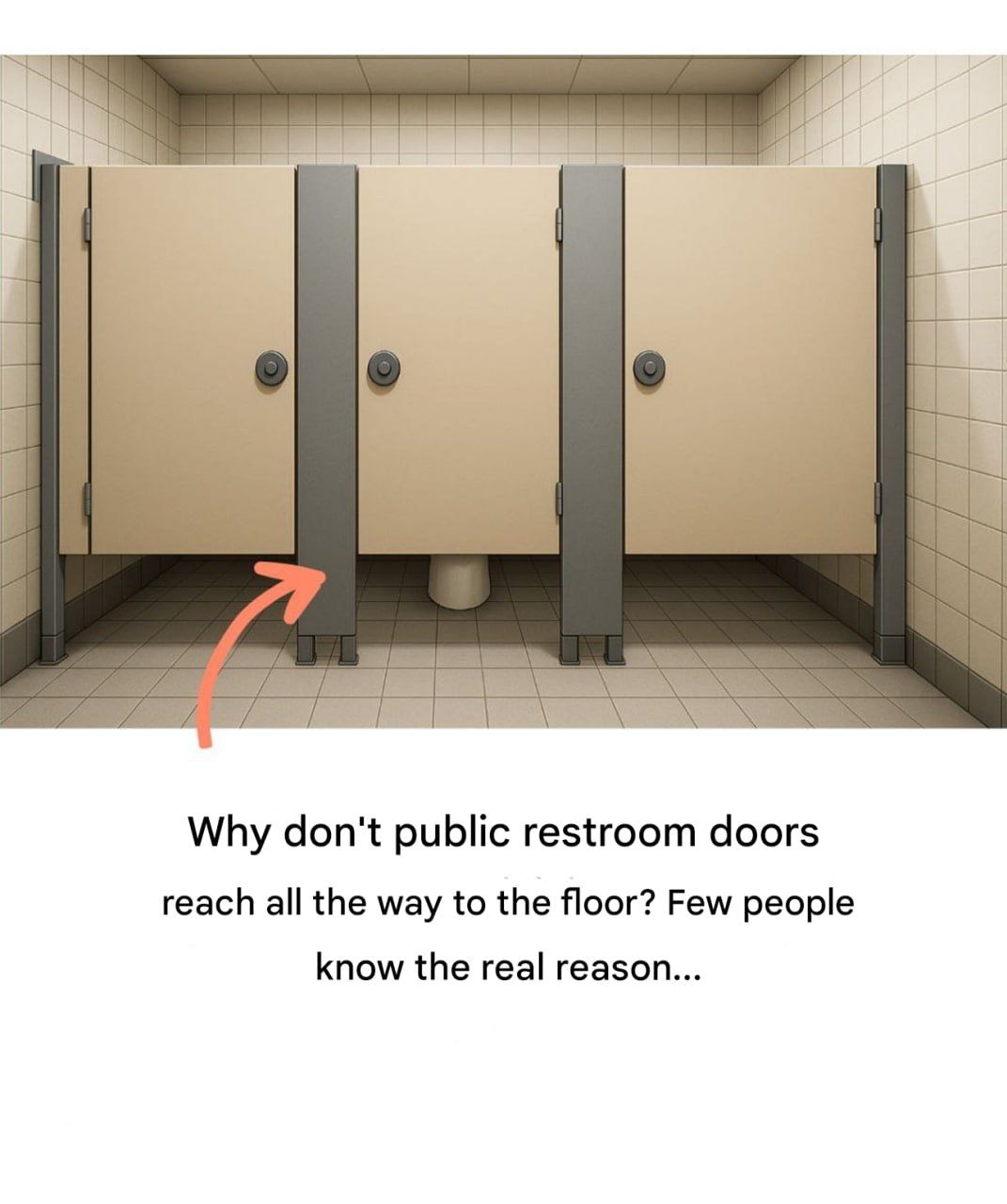
It’s often one of the first things you notice when you enter a public restroom: the space under the doors, sometimes quite ample. Many see it as a drawback or a cost-cutting measure. Yet, it’s a deliberate choice, intended to improve the user experience and ensure smooth operation, especially in crowded spaces. Once you understand the reasons, everything becomes much clearer.
Safety first
One of the most important benefits—and paradoxically the least known—is safety. If someone feels unwell, gets stuck, or needs assistance in a restroom, the open space allows for quick identification of the problem. In a public space where staff aren’t always present, this visibility can truly make a difference. This is one of the reasons why this system is preferred in train stations, shopping malls, and airports.
Check if a restroom is available at a glance.
Who hasn’t hesitated to push open a door for fear of disturbing someone? Thanks to this open space, a quick glance is all it takes to see if a restroom is available. No need to knock, test the door handle, or wait in uncertainty. This small detail streamlines traffic flow, shortens queues, and prevents awkward situations in crowded spaces – a crucial time-saver.
Significantly more effective ventilation.
It’s rarely discussed, but the air in public restrooms needs to be refreshed very quickly. Thanks to underfloor ventilation, air circulation is significantly improved. Odors dissipate more quickly, the atmosphere remains more pleasant, and the temperature doesn’t rise unnecessarily. It’s a simple yet remarkably effective solution for maintaining a minimum level of comfort without having to invest in expensive ventilation systems.
An economical… and logical design
Installing shorter doors is simply cheaper: less material, less weight, and less maintenance. In high-traffic areas, these savings are significant. The doors are also easier to replace or repair. And in the event of a leak or plumbing problem, water can drain more quickly, preventing water buildup and reducing slippery areas.
A way to limit inappropriate behavior.
Partial visibility also acts as a deterrent. Because the restrooms aren’t completely hidden from view, certain inappropriate behavior is automatically avoided. This design encourages respectful use of the facilities and reduces problematic situations in public restrooms – a subtle preventative measure.
A discreet advantage for the cleaning staff
Cleaning is much easier. Staff can quickly check the condition of the restrooms without opening them, sweep efficiently, or direct cleaning water to the correct nozzles. In busy areas, this speed ensures that the restrooms are cleaned more often.
A small opening… for maximum benefits.
Ultimately, what might seem like a drawback is actually a combination of ingenious features brought together in a single design choice. Safety, hygiene, functionality, cost-effectiveness, maintenance… It’s all there. As is so often the case, the small details of everyday life are considered much more carefully than you might think.
Because sometimes a simple change in floor space is enough to improve the experience for thousands of people.