The morning had begun with the unremarkable cadence of a Tuesday commute. I was navigating the sidewalk with my head down, mentally rehearsing a presentation for work, unaware that the trajectory of my life was about to intersect with a nightmare. The urban symphony of honking horns and distant jackhammers was suddenly punctuated by a sharp, crystalline explosion from above. I looked up just as a window on the fifth floor of an apartment complex shattered into a thousand glittering shards.
For a heartbeat, I thought it was just debris. Then I saw the movement—the small, flailing limbs of a toddler tumbling through the void. There was no conscious decision-making process, no weighing of risks or heroic aspirations. Physics and instinct took over. I dropped my briefcase and bolted toward the projected point of impact. The world slowed into a series of jagged frames: the blur of the red brick wall, the gasps of onlookers, and the terrifyingly fast descent of a child who was seconds away from a lethal encounter with the asphalt.
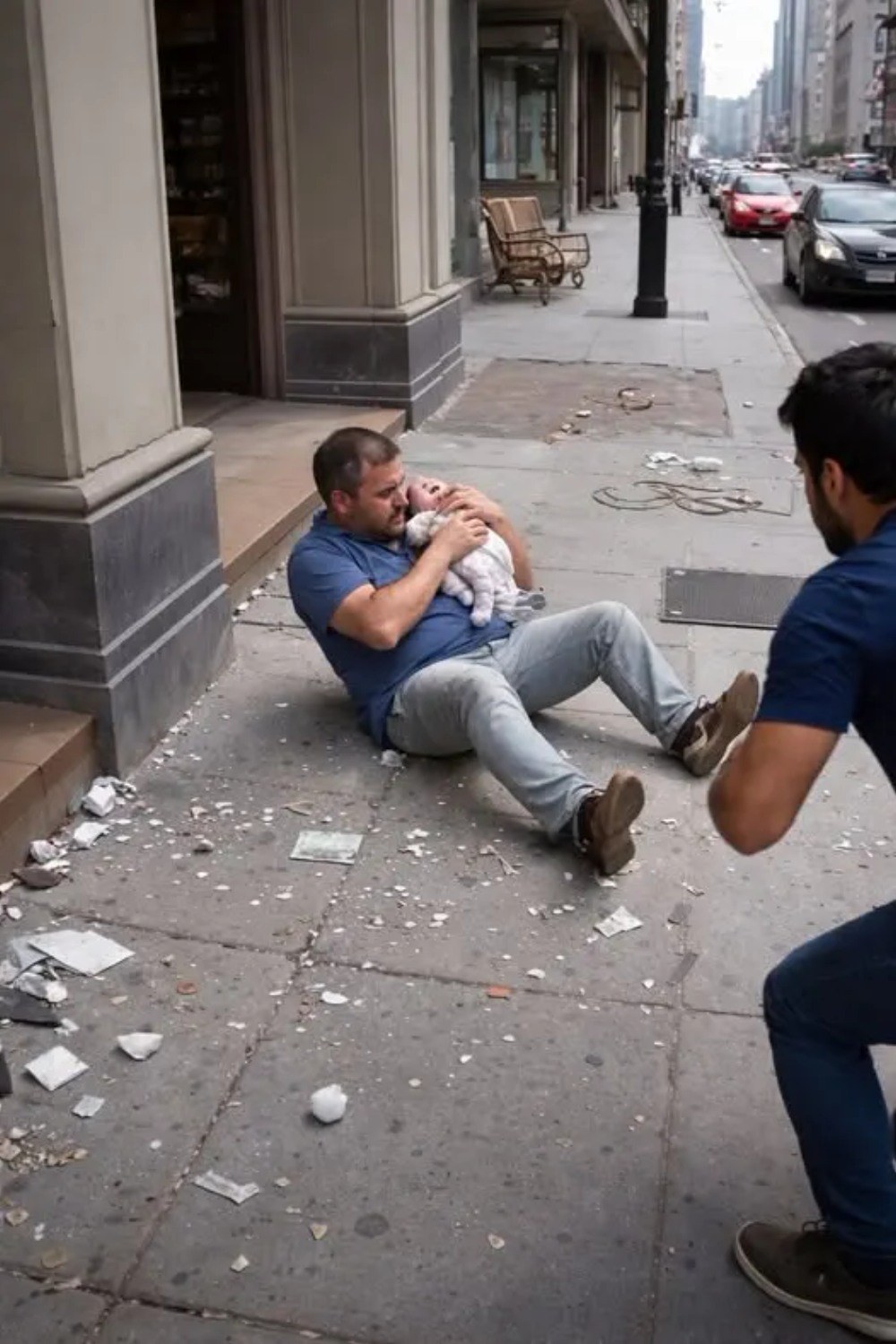
I reached out, my muscles screaming with the sudden exertion, and braced for an impact I wasn’t sure I could survive. The child hit my arms like a falling anchor. The momentum slammed us both into the unforgiving ground. I felt a white-hot flash of pain as my head bounced off the pavement and my spine jarred against the curb. Darkness threatened the edges of my vision, a heavy, suffocating veil of concussion-induced fog. But through the ringing in my ears, I heard the most beautiful sound in the world: a sharp, lung-filled cry. He was alive.
In the chaotic minutes that followed, the world became a kaleidoscope of faces. Passersby knelt beside me, their hands steadying my shoulders, their voices repeating a mantra I couldn’t quite process: “You’re a hero. You saved him. Just keep breathing.” An ambulance eventually carried us both away, and as I lay on the gurney, staring at the sterile ceiling of the vehicle, I felt a profound, quiet peace. I had traded a few bruises and a concussion for a human life. It seemed like the best bargain I had ever made.
However, the “hero” narrative proved to be a fragile thing. A week later, while I was still nursing a lingering headache and a back that felt like it was made of broken glass, a knock came at my door. It wasn’t a thank-you note or a bouquet of flowers. It was a process server handing me a court summons.
The child’s parents were suing me.
The shock was more debilitating than the concussion. The lawsuit alleged that my “reckless rescue” had caused the child unnecessary trauma and physical injury. They claimed my intervention was clumsy and dangerous, arguing that perhaps the child would have been better off had a “professional” intervened—ignoring the reality that a professional was five minutes away and the child was half a second from death.
When I attempted to reach out to the family, hoping this was some bureaucratic misunderstanding or a byproduct of their own shock, I was met with a wall of pure vitriol. The father stood in the doorway of their home, his face contorted not with gratitude, but with a terrifying, litigious rage. “You hurt our boy!” he screamed, his voice echoing in the hallway before he slammed the door with a force that rattled my teeth.
The courtroom was a theater of the absurd. Their lawyer was a man who specialized in twisting the miraculous into the criminal. He presented high-resolution photos of the child’s minor bruises—bruises earned from being caught at terminal velocity—and spoke of them as if I had inflicted them in a dark alley. The parents sat at the plaintiff’s table, dabbing at their eyes, painting a picture of a peaceful afternoon shattered not by their own negligence, but by my “interference.”
They even produced “witnesses”—people I didn’t recognize from that morning—who testified that I had looked distracted, that I had stumbled, and that I had handled the child with “unnecessary roughness.” My own lawyer, seeing the tide turn and sensing the judge’s growing skepticism toward my defense, pulled me aside during a recess. “The optics are terrible,” he whispered. “They’re playing on the heartstrings of the jury. It might be better to settle. Pay the damages, sign the non-disclosure, and let this go.”
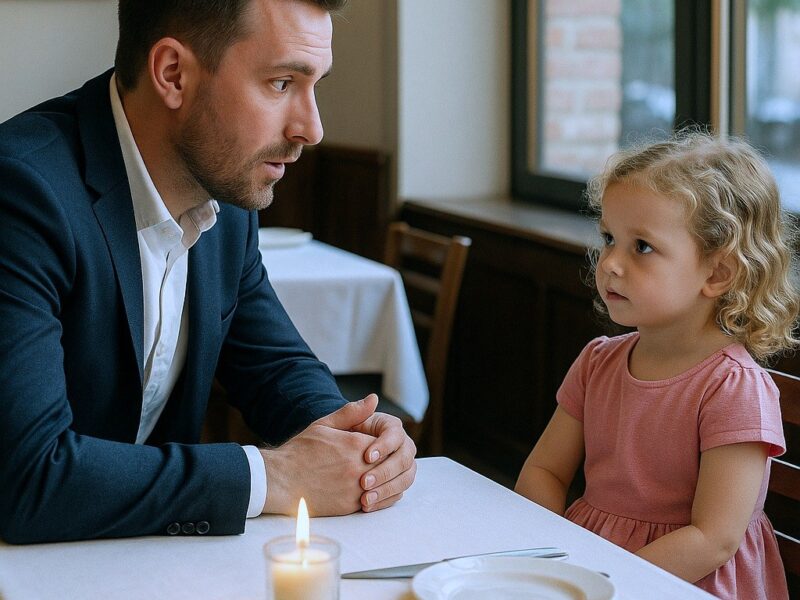
I looked at him with a cold clarity. “I didn’t do anything wrong,” I said. “I won’t pay for the privilege of saving a life.”
On the final day of the trial, the atmosphere was suffocating. I sat in the defendant’s chair, feeling the crushing weight of a system that seemed designed to punish the Good Samaritan. The judge began his closing remarks, and his tone suggested that he was leaning toward a judgment of negligence. I felt a sense of total, hollow despair. I wondered if I had been wrong—if the world was really a place where you should just keep your head down and let the tragedy happen.
Then, the heavy oak doors at the back of the courtroom swung open.
A woman, breathless and clutching a smartphone, walked toward the bench. She wasn’t a witness called by either side. She was a tourist who had been visiting the city that day, someone who had been filming the architecture of the street when the window shattered. She had only just seen the news of the trial and realized she held the only objective record of the event.
The prosecution tried to object, but the judge, perhaps sensing the shift in the room’s energy, allowed the footage to be played. The courtroom fell into a silence so deep it felt as though the air had been sucked out of the room. On the screen, the truth played out in grainy, undeniable detail.
The video didn’t just show me catching the child; it showed the fifth-floor window clearly. It showed the mother leaning out, distracted and seemingly shouting at someone inside, while the toddler climbed onto the sill. It showed her hand actually pushing against the child in a moment of reckless, frustrated movement before he slipped. It showed the terrifying, silent fall, and then it showed me.
In the footage, my movements weren’t “reckless” or “clumsy.” They were desperate and precise. It showed me sprinting across two lanes of traffic, diving into the path of the falling body, and absorbing the entire impact with my own frame. It showed me curling around the baby to protect his head from the pavement.
The parents’ lawyer turned a pale, sickly shade of gray. The mother’s tears dried instantly, replaced by a mask of sheer panic.
The judge’s face transformed from skepticism to a righteous, simmering fury. He didn’t just dismiss the lawsuit; he ordered the immediate arrest of the parents for perjury and child endangerment. The evidence on the video was so damning that social services were called into the courtroom that very hour. By the end of the day, the parents had been stripped of their rights, and the child—the little boy whose life I held in my hands—was placed in a safe environment.
I walked out of the courthouse into the bright afternoon sun, my back still aching, but the weight in my chest finally gone. A reporter stopped me on the steps, shoving a microphone into my face. “After all of this—the injury, the lawsuit, the betrayal—would you do it again?”
I didn’t have to think. I looked into the camera and said, “Yes. Every single time.”
Because I realized that the true “reckless” act isn’t helping someone in need; it’s living in a world where we are too afraid of the consequences to be human. The parents were punished by their own greed and the truth of that video, but I walked away with something far more valuable than a legal victory. I walked away knowing that for one brief, terrifying moment, I was exactly where I was supposed to be.