My parents didn’t just cancel my birthday; they erased it. Year after year, like clockwork, my existence was redacted to accommodate the travel schedule of a brother who was statistically destined for mediocrity. I learned the art of disappearance early, perfecting the skill of being present but unseen, a ghost haunting the hallways of a suburban Ohio home that looked, from the outside, like a Norman Rockwell painting brought to life.
We had the manicured lawn, the two-story colonial with the wraparound porch, and Biscuit, the Golden Retriever who was treated with more consistent affection than I was. But behind the heavy oak door, the family dynamic was a rigid, unyielding hierarchy. At the pinnacle sat Gavin, the golden boy, the “Chosen One.” Below him, my parents, his devoted acolytes. And somewhere in the subterranean depths, beneath the basement and the foundation, was me: Ethan.
Gavin was a travel baseball player. To hear my father tell it, Gavin was the second coming of Mike Trout, a prodigy destined to deliver the family name into the pantheon of athletic glory and secure millions in endorsement deals.
Spoiler alert: Gavin’s fastball topped out at 84 miles per hour. He never made it past community college ball.
But I am getting ahead of myself. The indoctrination began when Gavin was eight. From that moment, our lives ceased to be a democracy and became a dictatorship ruled by the Little League schedule. The calendar on our refrigerator didn’t list doctors’ appointments or school plays; it listed showcases, double-headers, and batting cage sessions.
My parents funneled an estimated $200,000 into this delusion. I saw the credit card statements once when I was sixteen—a kaleidoscope of charges for private swing coaches, specialized composite bats, and hotel stays in places like Cooperstown and Myrtle Beach. I nearly choked on the air in my lungs. That sum could have funded a medical degree. Instead, it funded a vanity project.
I, meanwhile, existed in the periphery. I was the “easy” child. I made the Honor Roll every semester, won regional science fairs, and was inducted into the National Honor Society. My parents acknowledged these feats with the same enthusiasm one might show for a functional toaster. It was expected, useful, but hardly worth applause. My achievements didn’t require them to sit in bleachers wearing custom jerseys, preening in front of other parents. Therefore, they didn’t matter.
But the birthdays… that was where the knife twisted.
I was born on July 14th. In the world of elite travel baseball, mid-July is the apex of the season. It is a gauntlet of regional championships and showcase tournaments. For nearly a decade, my birthday was “cancelled.”
I don’t mean they forgot. Forgetting would have been a mercy. No, they looked me in the eye and negotiated my birthright away.
“We’ll celebrate later, champ,” my dad would say, tossing a duffel bag into the trunk. “Gavin needs us in Indianapolis.”
“Later” was a mythical concept. It was a horizon line that moved as you approached it. The tournament would end, followed immediately by fall ball, then winter conditioning, then spring training. By the time the dust settled, the leaves were turning brown, and my birthday was an ancient artifact, buried and forgotten.
I remember turning eleven. We were en route to a tournament in Indiana. I sat in the backseat of the minivan, the air conditioning blasting, sandwiched between cooler bags and equipment. I summoned the courage to speak.
“Mom,” I asked softly, “could we stop for a cake before we get to the hotel?”
My mother let out a sigh that sounded like tearing silk. She turned in the passenger seat, looking at me not with love, but with exhaustion. “Ethan, we just don’t have time, sweetie. The team meeting is at six. Maybe we can find something at the hotel.”
We did not find something at the hotel. We found a vending machine in the lobby that hummed with a dying fluorescent light. My father fished a dollar out of his pocket, bought a Snickers bar, and tossed it to me.
“Happy birthday, champ,” he said, checking his watch.
I ate that candy bar in the backseat of the van while watching Gavin warm up for his first game. The chocolate tasted like wax and resentment.
The breaking point—the moment the fracture in my soul became a canyon—was my sixteenth birthday.
Sixteen is monumental. It is the threshold of adulthood, the driver’s license, the first taste of autonomy. For once, I allowed myself the luxury of hope. My parents had promised. They swore we would do something special. Emboldened by their word, I invited five friends over for a small gathering on Saturday night.
Two days before the party, I walked into the kitchen to find my mother packing suitcases.
“What’s going on?” I asked.
“Gavin got a spot in the Elite Showcase in Georgia,” she said, not looking up from her folding. “It’s a huge opportunity. A scout from Vanderbilt might be there.”
“But… my party,” I stammered. “It’s Saturday. I invited people.”
She finally looked at me, her expression a mix of pity and annoyance. “Ethan, you can’t expect your brother to miss this. It’s his future. Call your friends. We’ll throw you an even bigger party when we get back. I promise.”
I promise. The currency of liars.
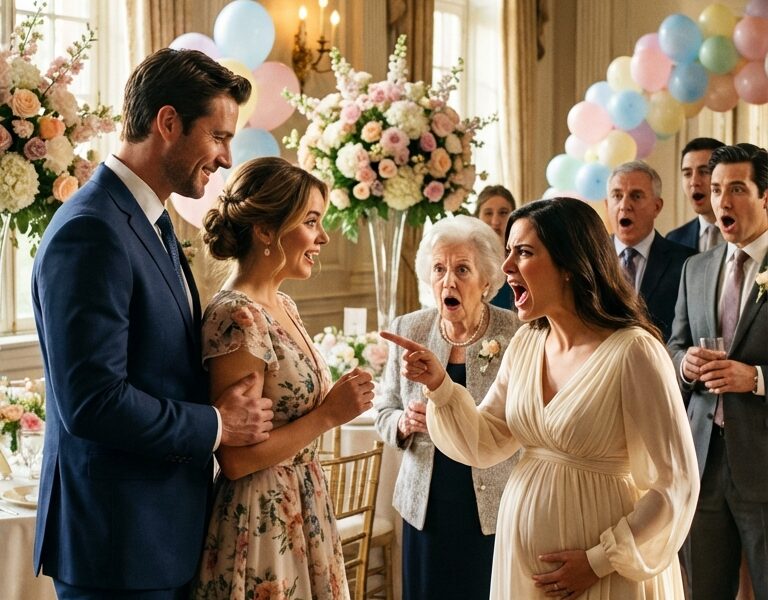
I had to make those calls. At sixteen, having to explain to your peers that your birthday is being cancelled because your brother might play baseball in front of a guy who knows a guy… it’s humiliating. It cements your status as the secondary character in your own life.
When I asked my dad if I could just stay home—maybe stay with Grandma—he looked at me as if I had suggested burning the American flag on the front lawn.
“This is a family,” he snapped, his voice hard. “We support each other. Your brother needs us there.”
What about what I need? The question died in my throat.
We went to Georgia. Gavin’s team won. We celebrated at his favorite steakhouse. My birthday was never mentioned again.
That was the day the “Old Ethan” died. The boy who craved their validation withered away, and in his place, a strategist was born. I stopped competing for a spotlight I could never touch. I realized that if I wanted a life of substance, I would have to build it myself, brick by brick, on a foundation far away from them.
———–
I executed the “slow fade” with surgical precision.
I maintained my 4.0 GPA, not for their praise, but for the scholarship money. I treated high school like a prison sentence with a release date. When senior year arrived, I applied to fourteen colleges. I was accepted to eleven. I chose a state university four hours away—far enough to deter casual visits, close enough to avoid accusations of abandonment. It offered me a full academic ride.
My parents barely noticed my acceptance letters. They were too busy touring Division II schools with Gavin, trying to sell coaches on a fastball that lacked movement.
On move-in day, they dropped me off at my dorm. The entire process took forty-five minutes. There was no tearful hug, no lingering advice about laundry or studying. My dad kept the engine running.
“Call us if you need anything,” my mom said, giving me a side-hug. They needed to get back for Gavin’s showcase game that evening.
Watching their minivan fade down the street, I didn’t feel sad. I felt weightless.
College was oxygen. For the first time, I wasn’t “Gavin’s brother.” I was Ethan. I majored in Accounting and minored in Finance. I fell in love with the absolute truth of numbers. In a spreadsheet, everything balances. There is no favoritism in a ledger; there are only assets and liabilities.
I graduated Summa Cum Laude. My parents attended the ceremony, took two photos, and spent the lunch afterwards complaining about the traffic. Gavin, meanwhile, was bouncing around community colleges, struggling to maintain eligibility, his dreams of the MLB slowly rotting on the vine.
I moved to North Carolina immediately after graduation. I secured a job at a mid-sized accounting firm and began to construct a life that was entirely my own.
The fade intensified. I stopped going home for Thanksgiving (“Work is crazy during year-end audit prep”). I skipped Christmas (“I picked up an extra shift”). I sent generic gift cards for birthdays. I called once a month for five minutes.
And the most damning part? They didn’t notice.
They were so consumed by the slow-motion car crash of Gavin’s failing athletic career that my absence barely registered. I was out of sight, and therefore, out of mind.
Then, I met Olivia.
She was a pediatric nurse with a laugh that could crack the hardest armor. We met at a friend’s barbecue. She was fierce, compassionate, and possessed a zero-tolerance policy for nonsense.
When I finally introduced her to my backstory—the cancelled birthdays, the neglect, the shrine to Gavin in the living room—she didn’t offer platitudes. She didn’t say, “But they’re your parents.”
She looked at me, her eyes blazing, and said, “Their loss. Seriously, they missed out on knowing someone incredible.”
Spending time with Olivia’s family was like landing on an alien planet where the inhabitants were suspiciously kind. Her parents, Mark and Sarah, had been married for thirty-five years. They held hands. They asked me questions and—this was the shocking part—listened to the answers.
“So, Ethan,” Mark asked during one Sunday dinner, “tell me about this merger you’re working on. It sounds intense.”
I waited for the pivot. I waited for him to cut me off and talk about his golf game or his nephew’s football stats. The pivot never came. He actually wanted to know.
Three years into our relationship, on a hiking trail overlooking the Blue Ridge Mountains, I asked Olivia to marry me. She said yes before the ring was even out of the box.
When we began planning the wedding, Olivia asked the question I had been dreading.
“How involved do you want your family to be?”
I looked out the window of our condo. I thought about the vending machine Snickers bar. I thought about the texts I sent that went unanswered. I thought about the 16th birthday that wasn’t.
“I don’t want them there,” I said. The words tasted like freedom.
Olivia didn’t push. She simply nodded. “Then they won’t be there. This is our day.”
We chose Costa Rica. A boutique resort on a private beach. Palm trees, white sand, and an ocean so blue it looked Photoshopped. We kept the guest list tight—forty people. Olivia’s family, my college roommate Jake (my best man), my work colleagues, and my cousin Jaime.
Jaime was the only blood relative invited. She was the only one who had ever treated me like a human being rather than a prop.
The wedding was a dream sequence. I stood at the altar, the tropical breeze tugging at my linen suit, and watched Olivia walk down an aisle of seashells. I cried. I’m not ashamed to admit it.
During the reception, under a canopy of fairy lights, I looked around. Every single person there had paid money and traveled thousands of miles because they loved us. There was no obligation. No “family duty.” Just pure, distilled affection.
My parents and Gavin never crossed my mind. Not once. They were characters in a book I had finished reading a long time ago.
We danced until midnight. We were happy. We were safe.
We had no idea that a digital storm was gathering just over the horizon.
————
It started innocuously.
Three weeks after the wedding, Olivia posted a carousel of photos on Instagram. Just standard “Just Married” content. Her cousin, a semi-professional photographer who had captured the weekend, posted a few “Golden Hour” shots on her business page.
The algorithm is a fickle, chaotic god. One of the photos—a candid shot of us laughing on the beach, soaking wet from a post-reception swim—was picked up by a major wedding inspiration account. Then another. Then a viral “Feel Good” aggregator shared it with the caption: Dreamy Costa Rica Elopement Goals.
Within a week, the photos had millions of views.
I was at work, deep in a spreadsheet, when my phone vibrated. It was Cousin Jaime.
“Dude,” she whispered, her voice tight. “Have you checked Facebook?”
“I haven’t logged into Facebook since the Obama administration,” I joked. “Why?”
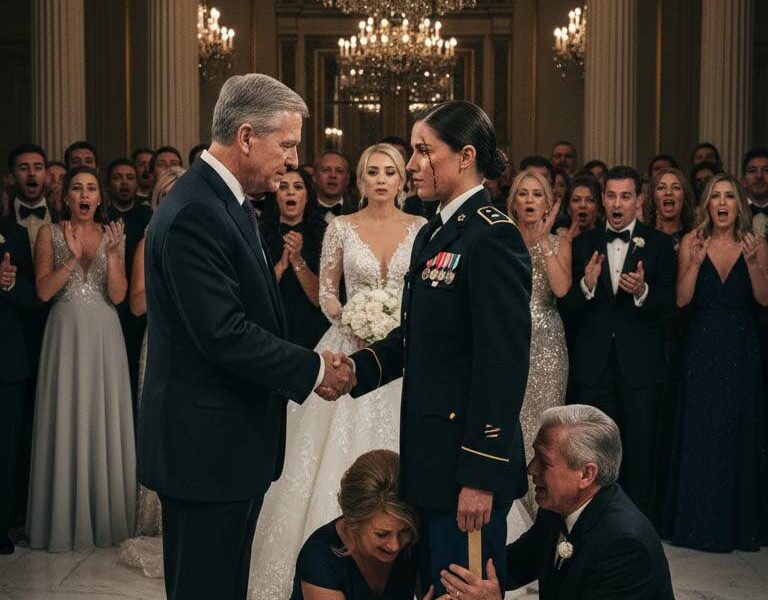
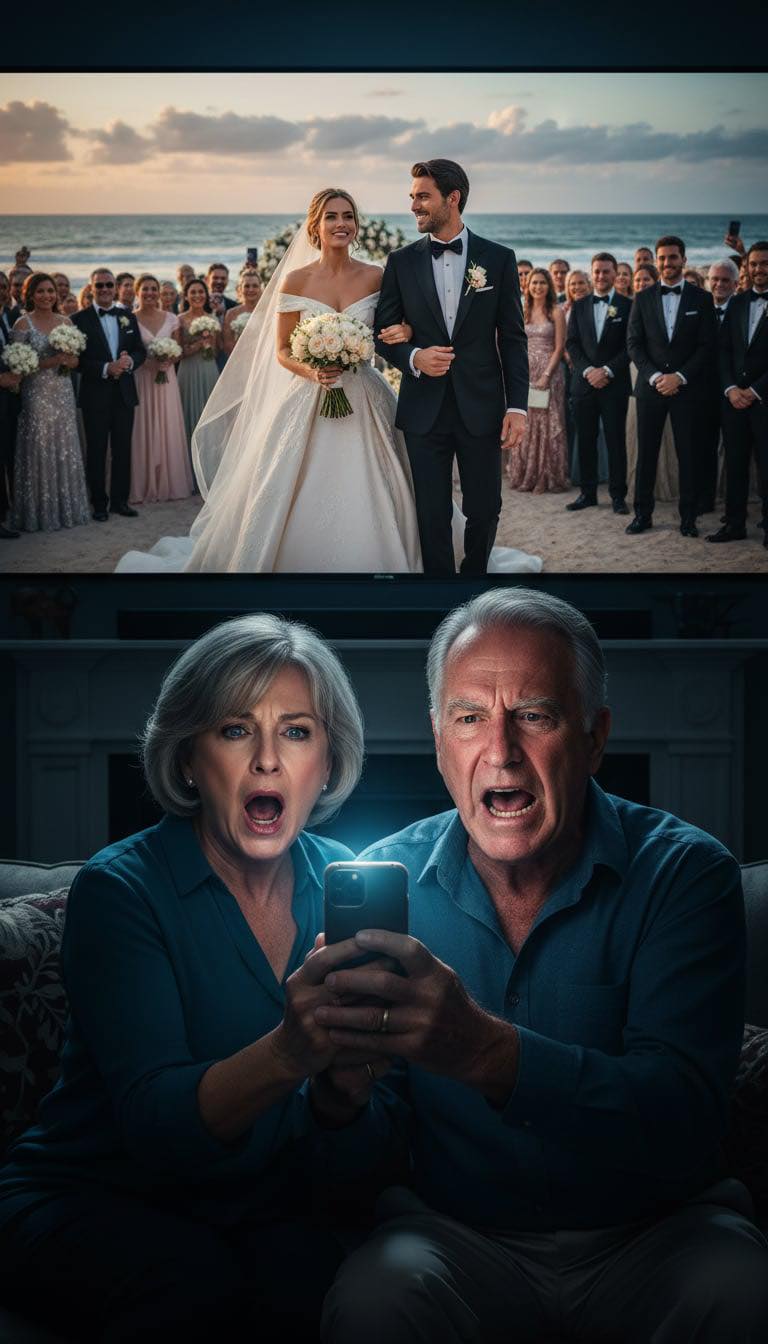
“Your mom is losing her mind. Like, nuclear meltdown. She saw the viral photos. She posted this massive diatribe about finding out her son got married via the internet. She’s playing the victim, Ethan. And people are eating it up.”
My stomach dropped, but it wasn’t fear. It was the cold resignation of a man who knows the other shoe has finally dropped.
I pulled up Facebook. There it was. A wall of text on my mother’s page.
“I am absolutely devastated. I wake up this morning to find out from a STRANGER sharing a viral photo that my eldest son, Ethan, got married in Costa Rica. No phone call. No invitation. We have been erased from his life. I don’t understand what we did to deserve this cruelty. A mother’s heart is broken…”
The comments were a cesspool of sympathy.
“How ungrateful!”
“Kids these days have no respect.”
“He’ll regret this when you’re gone.”
My father had commented, brief and stern: “I didn’t raise my son to behave this way.”
Funny. I didn’t remember him raising me at all. I remembered him raising a baseball player while I sat in the car.
Then I saw Gavin’s post. He had shared the photo with his own commentary: “Imagine finding out your brother got married because a picture went viral. Blood is supposed to be thicker than water. Guess fame is more important to some people.”
My phone began to ring. Mom. Dad. Mom again. A barrage of unknown numbers.
I stared at the screen, watching the names flash.
Beep.
Voicemail from Mom: “Ethan, please call me. I am your mother. I deserve an explanation.”
Deserve.
That word triggered something primal in me. After twenty-eight years of silence, of being placed on the shelf like an dusty ornament, she felt she deserved access to my joy?
I sent one text message to the group chat I knew they shared.
Me: “You had 28 years to show up for me. You chose not to. I am choosing the same.”
Then, I blocked them. All of them.
I thought that would be the end of it. I thought I could retreat back into my fortress of silence. But narcissistic injury is a powerful fuel, and my family was running on high octane.
They kept posting. They did an “interview” with a local mommy-blogger. They painted a portrait of a spoiled, wayward son who had abandoned his loving, supportive family for a “high-maintenance” wife.
That was the mistake. They brought Olivia into it.
And that was when Cousin Jaime decided to burn the whole kingdom down.
————-
Jaime didn’t ask for permission. She just went rogue.
She wrote her own post, tagging my mother, father, and Gavin. It was a masterpiece of forensic evidence.
“I was at the wedding,” Jaime wrote. “It was beautiful. You know why you weren’t there? Because you spent 18 years treating Ethan like he was invisible. You want to play the victim? Let’s look at the receipts.”
And she posted them. Screenshots of text messages she had saved or that I had sent her over the years.
Screenshot 1 (My 14th Birthday):
Me: “Can we do dinner for my birthday this Friday?”
Mom: “Can’t. Gavin has a double-header. We’ll grab drive-thru.”
Screenshot 2 (My 16th Birthday):
Me: “Mom, I already invited friends. Can we please go to Georgia one day later?”
Dad: “The tournament bracket doesn’t revolve around your social calendar. You will survive.”
Screenshot 3 (The Science Fair):
Me: “I won first place at District!”
Mom: “That’s nice honey. Gavin, tell your dad what the scout said about your bat speed.”
Jaime captioned the photo dump with a sentence that should be carved on a stone tablet: “You don’t get to spend 18 years treating someone like furniture and then act shocked when they decide to move out.”
The internet, previously sympathetic to the “abandoned mother,” pivoted with the speed of a striking cobra.
The phrase “You will survive” went viral in its own right. People were furious. Strangers began doing the math in the comments.
“Wait,” one user commented. “Travel baseball costs like
10k−10k−
15k a year. If he played for ten years, plus coaching… these parents spent over $200,000 on one kid and wouldn’t buy the other a birthday cake? This isn’t neglect; it’s financial abuse.”
Another person, a former neighbor, chimed in: “I lived next door to them in 2008. I remember seeing Ethan sitting on the porch alone while they had ‘team parties’ inside for the brother. This story is 100% true.”
The narrative collapsed. My parents went from martyrs to pariahs in less than twenty-four hours.
My mother tried to damage control. She posted a follow-up claiming Jaime was exaggerating, that “every family has favorites.” That comment was ratioed into oblivion.
A week later, a letter arrived at my office. It was hand-addressed in my mother’s floral script. She had to have dug deep to find my work address.
I sat in my office, the letter unopened on my desk. I debated shredding it. But curiosity is a curse. I opened it.
Four pages. Single-spaced.
It started with an apology—or what a narcissist considers an apology.
“I am sorry if you felt overlooked…”
Not “I am sorry we overlooked you.” But “I am sorry you felt that way.”
She went on to explain that Gavin had “special talents” that required nurturing. She claimed I was “independent” and didn’t need them as much. She wrote about how she had been robbed of the experience of her son’s wedding.
She ended with: “I hope we can put this behind us and move forward as a family. I love you no matter what. Love, Mom.”
I showed it to Olivia that night. She read it, her face hardening.
“This is the most tone-deaf manifesto I have ever read,” she said, tossing it onto the coffee table. “She spent four pages justifying why you didn’t matter.”
“I’m not writing back,” I said.
“Good.”
Three months passed. The internet moved on to the next viral drama. We settled back into our lives. Then, my phone rang.
It was Jaime again.
“Heads up,” she said, breathless. “Aunt Linda just told me. Your parents booked flights to Charlotte. They rented a car. They’re driving to your house. They want to ‘force a sit-down.’”
“How did they get my address?” I asked, my blood running cold.
“Public property records. I tried to stop them, Ethan, but they’re convinced if they just see you, you’ll snap out of it.”
I hung up and looked at Olivia. “They’re coming. This weekend.”
“To ambush us?” Olivia asked, eyes wide.
“Yes.”
She didn’t hesitate. “Pack a bag. We’re going to Charleston.”
————-
We left on Friday morning. We drove three hours south to Charleston, checked into a bed and breakfast, turned off our phones, and spent three days eating shrimp and grits and walking through cobblestone streets.
We refused to be hostages in our own home.
When we returned late Sunday night, the house was dark. But taped to the front door was a note on hotel stationery.
“We sat on your porch for four hours. We flew across the country to fix this. Please call us. We love you.”
Below the note sat a gift bag. Inside was a generic “For My Son” card and a framed photo of the four of us from when I was ten—me looking awkward in the background while Gavin held a trophy.
I threw the entire bag, frame and all, into the outdoor trash bin. The glass shattered with a satisfying crunch.
Two days later, my dad called from a burner number. I answered without checking.
“Ethan, this is ridiculous,” his voice boomed. He sounded angry, not sad. “We flew to North Carolina and you hid from us like a child. Your mother cried the entire flight home.”
“I didn’t ask you to come,” I said, my voice steady. “In fact, I explicitly told you I wanted no contact. You showed up uninvited.”
“We are your parents!” he shouted. “We don’t need an invitation!”
“Actually,” I said, leaning back in my office chair, “you do. That is exactly how adulthood works. You don’t have a key to my life anymore.”
“I don’t know what we did to make you hate us so much,” he sputtered.
“I know you don’t,” I said softly. “And that is exactly the problem.”
I hung up. I blocked the number.
A few weeks later, the contrast between the families was painted in stark relief.
I was promoted to Director at my firm. It was a massive career jump. Olivia organized a celebratory dinner at The Capital Grille.
Her parents drove four hours from Virginia. Jake flew in from Atlanta. Jaime came.
During dessert, Mark—Olivia’s dad—stood up. He raised a glass of Cabernet.
“To Ethan,” he said, his voice thick with emotion. “I’ve watched you work harder than anyone I know. You are a man of integrity and grit. I am proud to call you my son-in-law. Actually, I’m just proud to call you my son.”
Olivia’s mom handed me a small wrapped box. Inside was a vintage Omega watch—something classy, timeless.
“We saw this and thought of you,” she said. “We see you, Ethan. We have always seen you.”
We see you.
I looked around the table. These people—my chosen family—had done more for me in three years than my biological family had done in twenty-eight.
—————
It has been a year since the viral storm.
My parents tried a few more times. A certified letter (returned to sender). A phone call to Olivia’s parents (shut down brutally by Olivia’s mom).
Gavin slid into my DMs once. He said he missed his brother. I checked his profile; he’s still living in his childhood bedroom, working part-time at a sporting goods store, posting videos of his “glory days” swing. I didn’t reply.
I don’t hate them. Hate requires energy. I just feel… nothing. They are strangers who share my DNA.
Olivia and I bought a new house—a craftsman bungalow with a massive porch. We got a dog, a goofy Golden Retriever we named Hank. We are talking about having kids soon.
And if we do have a child, I know one thing for certain.
If that kid loves baseball, I’ll buy them a glove. If they love science, I’ll buy them a microscope. If they love painting, I’ll buy them an easel.
And on their birthday, no matter what else is happening in the world, there will be a cake. There will be candles. And I will be there, in the front row, cheering the loudest.
Because I know what it feels like to be invisible. And my child will never, ever have to learn that lesson.